


Garage Epoxy Flooring in Sandpiper Bay, FL
A Garage Floor That Actually Survives Florida
Hear from Our Customers
Epoxy Floor Coating Built for Sandpiper Bay
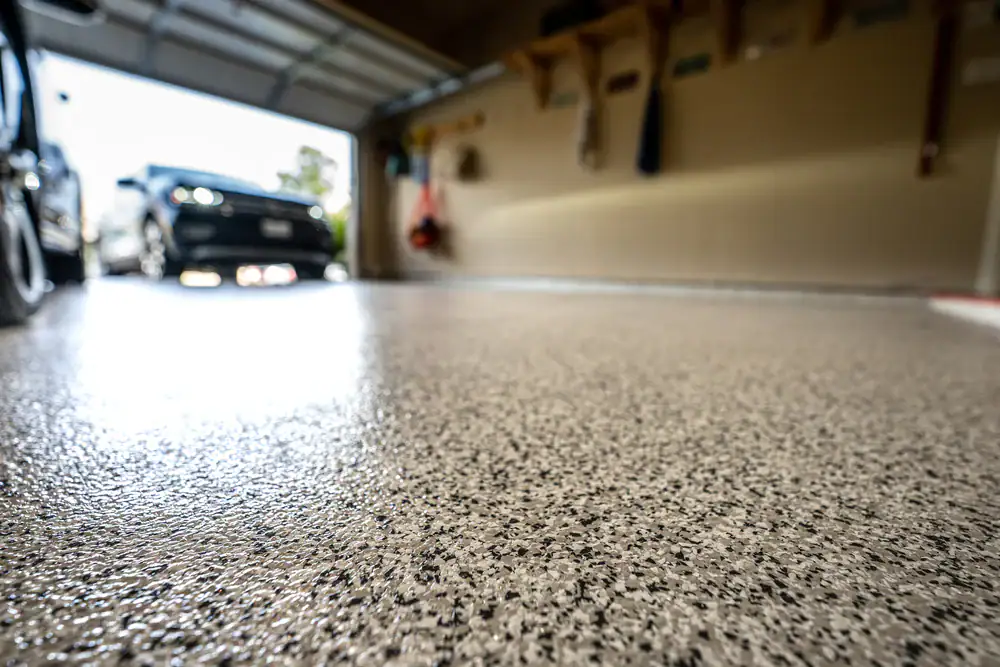
You’ll have a floor that doesn’t stain when oil drips or chemicals spill. It wipes clean in seconds, no scrubbing required.
The surface stays intact when you drag toolboxes across it or park hot tires on it daily. No bubbling after the first rainy season. No slick spots forming when humidity spikes.
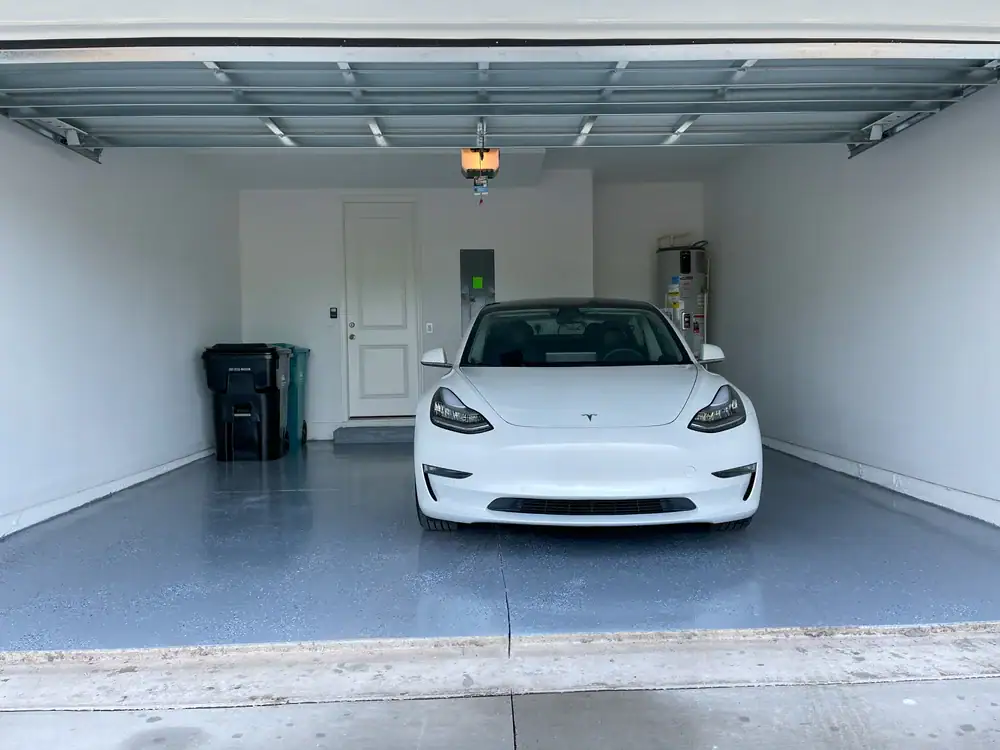
Your garage becomes a space you can actually use. Better lighting from the reflective finish means you can see what you’re doing. The seamless surface means no dirt or moisture gets trapped in cracks. And when someone walks through during a showing, they notice the difference immediately.
This isn’t about making your garage look nice for a weekend. It’s about installing a floor system that performs for 15 to 20 years without needing touch-ups, resealing, or replacement. That’s what happens when the prep work is done correctly and the materials are matched to Florida’s climate.
Garage Floor Coating Contractors in Sandpiper Bay
We handle epoxy flooring and concrete polishing across South Florida. We’ve worked with the Coast Guard, the U.S. Army, the City of Doral, and Sunny Isles. Schools, municipal buildings, and residential garages throughout Palm Beach, Broward, and Miami-Dade.
We’re not the cheapest option in Sandpiper Bay, and that’s intentional. You’re paying for surface prep that actually prevents failures, materials from Sherwin Williams and Fosroc that hold up in this climate, and installation crews who’ve seen what goes wrong when shortcuts get taken.
Most of our work comes from referrals or from homeowners who tried a cheaper option first and watched it fail within two years. We’d rather do it once and have it last than redo someone else’s work in 18 months.
Our Garage Epoxy Flooring Process
We start with a consultation at your property. We’ll look at your concrete, check for moisture issues, and talk through what you’re using the space for. If there are cracks or surface damage, we’ll tell you what needs fixing before any coating goes down.
Surface prep comes next. This is where most failures happen, so we don’t rush it. We grind the concrete to open the pores, remove any existing coatings or sealers, and make sure the surface is completely clean and dry. If moisture levels are too high, we wait. Coating over trapped moisture is how you get bubbling and delamination.
Then we apply the epoxy system in layers. Primer first, then the base coat, then the topcoat with whatever finish you’ve chosen. If you want slip resistance, we add aluminum oxide or another aggregate. The floor needs time to cure properly between coats, especially in Florida’s humidity.
Most garage projects finish in one to two days, depending on size and condition. You’ll need to stay off the floor while it cures. We’ll give you an exact timeline before we start. Once it’s cured, you’re done. No annual maintenance. No resealing. Just regular sweeping and occasional mopping with a pH-neutral cleaner.
Ready to get started?
Epoxy Garage Flooring Options in Sandpiper Bay
You’re getting a complete floor system, not just a coating. That includes surface preparation, crack repair if needed, moisture testing, primer, base coat, and a UV-stable topcoat designed for Florida’s sun exposure.
We use products that won’t yellow or fade when your garage door stays open all afternoon. The formulations are made to handle temperature swings and high humidity without losing adhesion. This matters more in Sandpiper Bay than it would in other parts of the country.
You’ll also get options for finish type. High-gloss reflects more light and makes the space brighter. Satin finishes hide dust better. Slip-resistant additives give you traction when the floor gets wet. We’ll walk through what makes sense for how you use the space.
The installation comes with transparent pricing. No surprise fees for prep work or materials. We’ll tell you upfront what the project costs and what that includes. If we find issues during prep that need addressing, we’ll discuss it before moving forward. And if you’re a new client, military, or a senior, ask about our discount options.
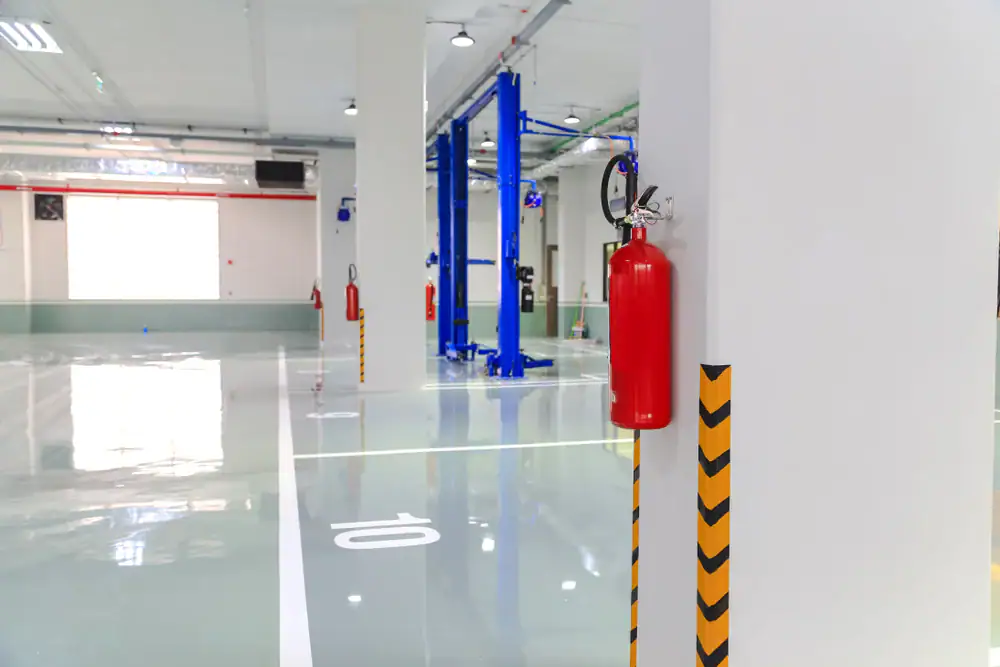
How long does epoxy flooring last in Florida’s climate?
A professionally installed epoxy floor lasts 15 to 20 years in Florida when the prep work is done right and the materials are climate-appropriate. The key is using UV-stable formulations that won’t break down under constant sun exposure and ensuring the concrete is properly prepared before any coating goes down.
Most failures happen in the first two years, and they’re almost always caused by poor surface prep or applying epoxy over moisture. If the concrete isn’t ground correctly, the epoxy won’t bond. If moisture is trapped underneath, it creates pressure that lifts the coating. We test for both before starting any job.
The cheap kits you buy at a big box store might last two or three years if you’re lucky. They’re not designed for Florida’s humidity and heat. Professional systems use different chemistry and much thicker applications. That’s why the lifespan is so different.
What’s the actual cost of garage floor epoxy in Sandpiper Bay?
Most residential garage floors in Sandpiper Bay run between $1,800 and $4,500 depending on the size, condition of the concrete, and what finish you choose. A standard two-car garage with minimal prep usually falls in the $2,500 to $3,200 range.
If your concrete has significant cracking, oil stains, or previous coatings that need removal, the prep work adds to the cost. Same if you want decorative flakes, metallic finishes, or custom colors. We’ll give you an exact number after seeing the space.
The price difference between us and a cheaper contractor usually comes down to materials and prep time. We’re using commercial-grade products and spending more time on surface preparation. That’s why our floors last 15 years instead of failing in two. You’re paying more upfront to avoid paying again in a couple years when a cheaper job peels up.
Can epoxy flooring handle hot tires and Florida heat?
Yes, but only if it’s installed correctly with the right products. Hot tires can lift cheap epoxy coatings, especially if the concrete underneath gets too hot during application. The epoxy cures too fast, doesn’t bond properly, and becomes brittle.
We avoid this by controlling application conditions and using formulations designed for high-temperature environments. The concrete needs to be within a specific temperature range when we apply the coating. If it’s too hot, we wait or work during cooler parts of the day.
The topcoat also matters. UV-stable formulations resist heat damage better than standard epoxy. They’re designed to handle Florida’s intense sun without softening or losing adhesion. This is one of those areas where using the right product makes the difference between a floor that lasts and one that fails within a year.
How do you prevent moisture problems with epoxy garage floors?
We test the concrete for moisture before any coating goes down. If the levels are too high, we either wait for the slab to dry or use a moisture-mitigating primer. Skipping this step is the fastest way to end up with bubbling and delamination.
Florida’s humidity makes moisture testing even more important. Concrete is porous, and water vapor can push up from underneath with enough force to lift epoxy right off the surface. This is especially common in garages built on slabs without proper vapor barriers.
If we find moisture issues, we’ll tell you before starting the job. Sometimes it just means waiting a few days for the concrete to dry. Other times it requires a different approach or product. Either way, we’re not coating over a problem that’s going to cause failure in six months.
What maintenance does an epoxy garage floor need?
Almost none. Sweep it regularly to keep dirt and debris from getting ground into the surface. Mop it monthly with a pH-neutral cleaner and water. That’s it.
You don’t need to wax it, reseal it, or refinish it. The coating is non-porous, so spills sit on the surface instead of soaking in. Oil, gasoline, chemicals—they all wipe up without leaving stains. This is one of the main reasons people choose epoxy over other garage flooring options.
The only thing to avoid is using harsh chemicals or acidic cleaners that can dull the finish over time. Stick with mild, pH-neutral products. If something spills, wipe it up when you get a chance. The floor will look the same in ten years as it does the day we finish it.
Why do some epoxy floors fail after one rainy season?
Because the contractor didn’t prepare the surface correctly or applied the coating over moisture. Surface prep causes about 80% of epoxy failures. If the concrete isn’t ground properly, the epoxy doesn’t have anything to grip. It just sits on top and eventually peels up.
Moisture is the other major culprit. Florida’s rainy season brings high humidity and water intrusion. If there’s moisture in or under the concrete when the epoxy is applied, that moisture will try to escape. It creates pressure underneath the coating, and that pressure causes bubbling and lifting.
The cheap jobs that fail quickly almost always skip proper moisture testing and rush through surface prep. They’re trying to get in and out fast to keep costs down. But cutting corners on prep is how you end up redoing the floor in 18 months. We’d rather spend the extra time upfront and install a floor that actually lasts.
Other Services we provide in Sandpiper Bay
Leave a Reply