


Garage Epoxy Flooring in Schall Circle, FL
Florida-Engineered Floors That Don’t Fail in the Heat
Hear from Our Customers
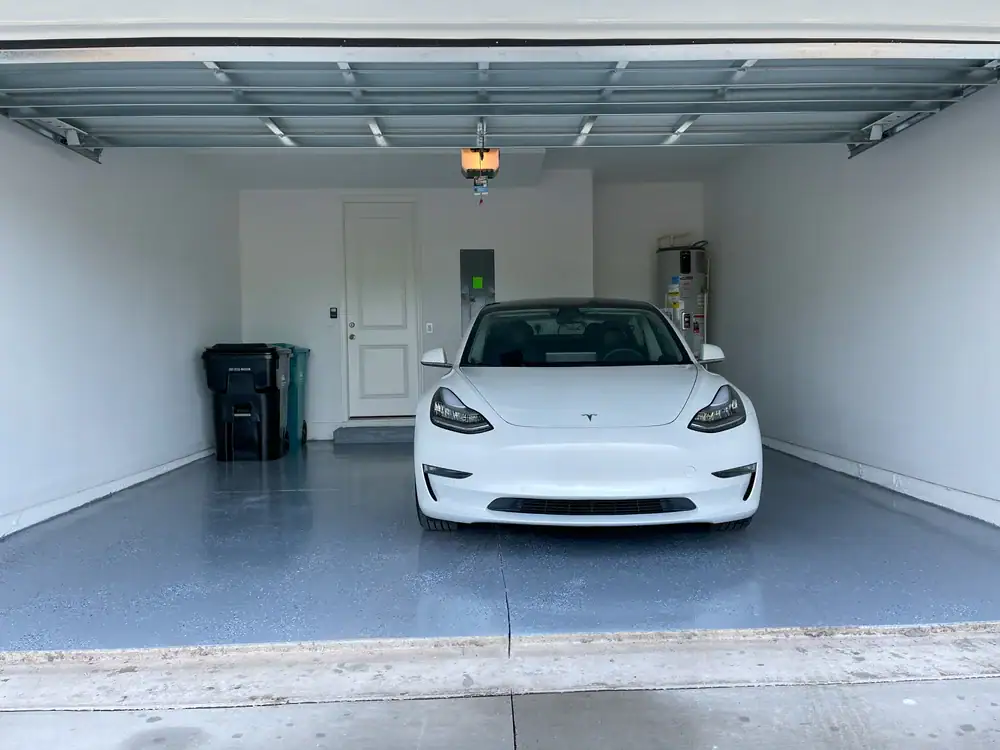
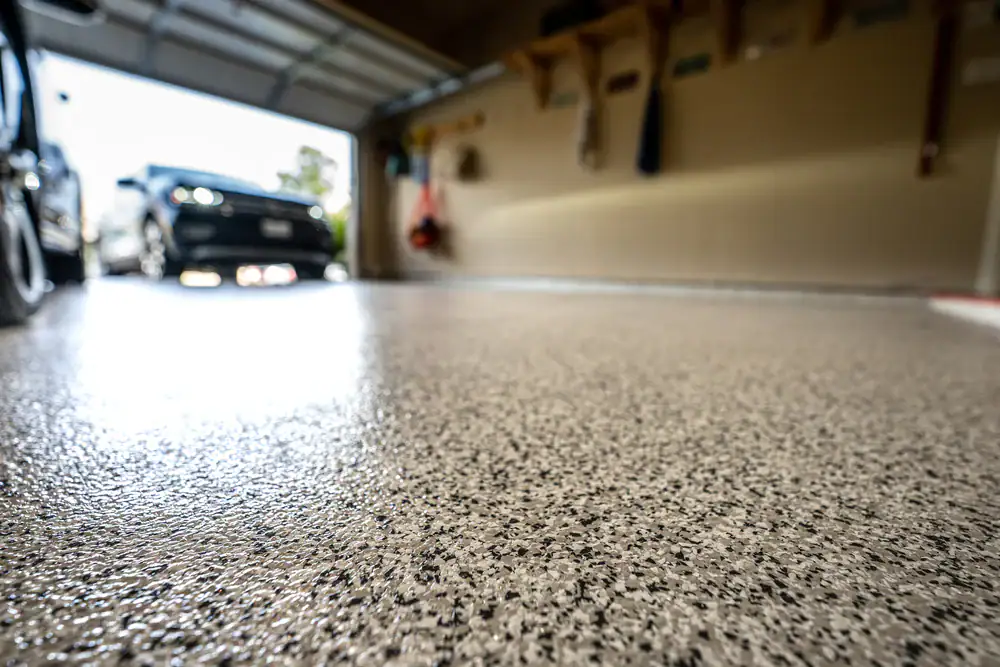
Epoxy Floor Coating Built for Florida Garages
Most epoxy garage floors fail within two years in Florida. The coating softens when your garage hits 120°F, tires pick up the finish, and you’re left with bare concrete patches that look worse than when you started.
That’s not a maintenance issue. That’s a formula problem.
The epoxy flooring we install in Schall Circle uses higher moisture vapor resistance than standard products and advanced mineral additives that handle tire temperatures exceeding 140°F. Your floor stays intact through summer heat, tropical storms, and daily wear. You get a non-porous surface that sheds oil, chemicals, and dirt with a quick rinse—no scrubbing, no staining, no constant upkeep.
Walk on it in 12 hours. Park on it in 72. Then forget about it for the next decade while your neighbors deal with their third failed DIY kit. That’s what happens when the product is engineered for the climate instead of just marketed to it.
Veteran-Owned Epoxy Garage Floor Installers
We’ve been installing garage floor coatings across South Florida since 2020. We’re veteran-owned, which means we show up when we say we will and do the work right the first time.
Our crews have handled projects for the Coast Guard, US Military, City of Doral, and Broward County schools. When government facilities need floors that last, they call us. When homeowners in Schall Circle want the same level of durability without the bureaucracy, they get it.
We don’t use subcontractors. Every person who touches your floor is a trained SPF employee using commercial-grade products from Sherwin Williams and Fosroc. You’re not getting a DIY kit with 5% epoxy and 95% latex paint. You’re getting 100% solids epoxy installed by people who’ve done this hundreds of times in Florida’s exact conditions.
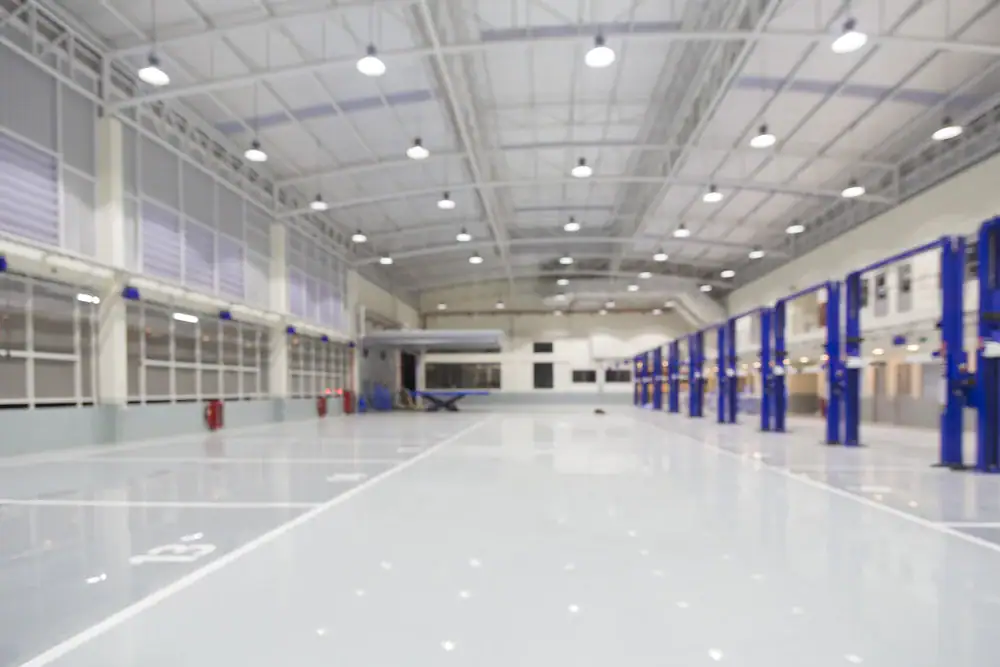
Professional Garage Floor Coating Process
The difference between a five-year floor and a fifteen-year floor comes down to preparation. Most contractors acid-etch the concrete because it’s fast. We diamond-grind it because it works.
Diamond grinding opens the concrete pores properly so the epoxy floor coating bonds at a molecular level. We’re not relying on surface tension—we’re creating a mechanical lock that won’t let go. Then we apply a moisture-resistant primer specifically formulated for Florida’s humidity levels, which regularly exceed 70% even inside your garage.
The epoxy goes down next with 1,600% more decorative chips than typical installations. That’s not for looks—though it does look sharp. Those chips add texture for slip resistance and create a thicker wear layer that protects the base coat. We finish with a polyaspartic polyurea topcoat that resists UV fade and chemical damage better than standard epoxy alone.
You’ll have foot traffic access in 12 hours and full vehicle use in 72. No lingering fumes, no VOCs, no wondering if it’s actually cured. Just a finished garage floor you can use.
Ready to get started?
What’s Included in Garage Epoxy Flooring Installation
Every garage floor coating project starts with a site assessment. We check for moisture issues, existing damage, and any substrate problems that could compromise the install. If your concrete needs repair, we handle that first with professional-grade resurfacing—not patch compound from a big-box store.
Surface prep includes complete diamond grinding or shot-blasting depending on your concrete’s condition. We remove any existing coatings, sealers, or contaminants that would prevent proper adhesion. Then we vacuum and clean the surface to eliminate dust that could create weak spots in the bond.
The epoxy application includes primer, base coat, broadcast chips in your choice of color blend, and polyaspartic topcoat. We seal the perimeter and any floor drains to prevent moisture intrusion. You also get clear guidance on cure times and maintenance—which is minimal. Use a neutral cleaner like Simple Green when needed. That’s it. No waxing, no resealing, no annual maintenance contracts.
Schall Circle properties benefit from our experience with Florida’s specific challenges. We account for the moisture that comes through concrete slabs in this climate and the thermal expansion that happens when your garage swings from 70°F at night to 115°F by afternoon. Your floor is built to handle those swings without cracking, peeling, or delaminating.
How long does garage epoxy flooring actually last in Florida’s heat and humidity?
Professionally installed epoxy garage floors last 10-15 years in Florida when installed correctly with climate-appropriate products. The key factors are proper surface preparation, moisture-resistant primers, and topcoats that handle UV exposure and thermal cycling.
DIY kits typically fail within 1-3 years because they contain mostly latex paint with minimal epoxy content. They can’t handle the moisture vapor transmission that happens through Florida concrete slabs, especially in coastal areas like Schall Circle where humidity stays high year-round.
Commercial-grade 100% solids epoxy with polyaspartic topcoats resists the specific challenges Florida creates: hot tire pickup when garage temps exceed 120°F, UV degradation from sunlight exposure, and moisture that would cause lesser coatings to bubble and peel. When you see an epoxy floor failing in Florida, it’s usually because someone used the wrong product or skipped proper prep work—not because epoxy can’t handle the climate.
What’s the difference between epoxy and polyaspartic garage floor coatings?
Epoxy provides the structural foundation and chemical resistance. Polyaspartic provides the UV protection and faster cure time. The best garage floor coating uses both in a layered system.
Epoxy bonds incredibly well to concrete and creates a thick, durable base that resists impacts, chemicals, and abrasion. But epoxy yellows under UV exposure and takes 3-5 days to fully cure in humid conditions. Polyaspartic topcoats cure in hours, resist UV fade completely, and add extra chemical resistance on top of the epoxy base.
Using polyaspartic alone skips the superior bonding and thickness you get from epoxy. Using epoxy alone leaves you vulnerable to sun damage and extends your cure time. The combination gives you the best of both: epoxy’s toughness with polyaspartic’s speed and UV stability. That’s why we layer them instead of choosing one or the other.
How do you prevent hot tire pickup on epoxy garage floors?
Hot tire pickup happens when garage temperatures exceed 100°F and tire heat softens the epoxy enough that the tire’s weight and friction pull the coating off the concrete. Preventing it requires the right product formulation and proper curing.
Standard epoxy has a heat deflection temperature around 120°F. When your garage floor reaches that temperature—which happens regularly in Florida summers—the coating enters a semi-soft state. Add a hot tire from highway driving and you get pickup. Commercial-grade epoxy formulated with mineral additives raises that heat deflection temperature to 160°F or higher, keeping the coating rigid even in extreme conditions.
Proper curing matters just as much. Epoxy needs a full 72 hours at stable temperatures to reach maximum hardness. Rushing that cure or installing during temperature swings compromises the final hardness and makes hot tire pickup more likely. We time installations to avoid temperature extremes and ensure full cure before any vehicle traffic. That’s why we can warranty against hot tire pickup when most contractors won’t even mention it.
Can you install epoxy flooring over existing garage floor coatings or paint?
No, and any contractor who says otherwise is setting you up for failure. Epoxy needs to bond directly to concrete—not to whatever’s currently on your floor.
Existing coatings, paints, and sealers create a barrier between the epoxy and concrete. Even if the epoxy adheres to that old coating, you’re only as strong as the weakest layer. When that old paint or sealer eventually fails, your new epoxy comes up with it. You’ve just paid for a temporary fix that looks good for six months before it starts peeling.
Professional installation includes complete removal of existing coatings through diamond grinding or shot-blasting. We take the floor down to bare concrete, which also opens the pores for proper mechanical bonding. It adds time to the project, but it’s the only way to ensure your floor lasts a decade instead of a year. Shortcuts in prep work always show up later—usually right after the warranty expires.
What’s the real cost difference between DIY kits and professional epoxy installation?
DIY kits run $200-400 for a two-car garage. Professional installation costs $1,800-3,500 for the same space. But DIY kits fail within 1-3 years and professional floors last 10-15 years, which changes the math significantly.
When your DIY floor fails, you’ll spend another $200-400 on a second kit, plus your time doing the work again. After the second failure, most people call a professional anyway—but now we have to remove the failed coating before installing the real product. That removal adds $500-800 to the project cost. You’ve now spent $2,500-4,700 total and wasted two weekends for a result you could have had from the start.
The cost difference isn’t just about the product. It’s about diamond grinding vs acid etching, 100% solids epoxy vs latex paint with epoxy additives, and polyaspartic topcoats vs basic epoxy finishes. Our installations include proper moisture mitigation, climate-appropriate cure times, and products that handle Florida’s heat. You’re not paying more for the same thing done by someone else—you’re paying for a completely different product that actually works in this climate.
How soon can I use my garage after epoxy flooring installation?
You can walk on the floor in 12 hours and drive on it in 72 hours. Those timelines assume normal temperature and humidity conditions—roughly 70-85°F with humidity below 80%.
The 12-hour foot traffic window lets you access the garage for basic needs without compromising the cure. The epoxy has hardened enough to support foot traffic but hasn’t reached full strength yet. Driving on it before 72 hours risks tire marks, indentations, or hot tire pickup because the coating hasn’t fully cross-linked.
Florida’s humidity can extend cure times slightly, which is why we monitor conditions during installation and adjust our timeline if needed. Installing during a cold snap or heat wave changes the cure chemistry. We’d rather have you wait an extra day than risk compromising a floor you’ll use for the next 15 years. Most contractors give you generic timelines regardless of conditions. We adjust based on what’s actually happening in your garage during cure.
Other Services we provide in Schall Circle
Leave a Reply