


Garage Epoxy Flooring in South Miami, FL
Floors That Actually Hold Up in South Florida
Hear from Our Customers
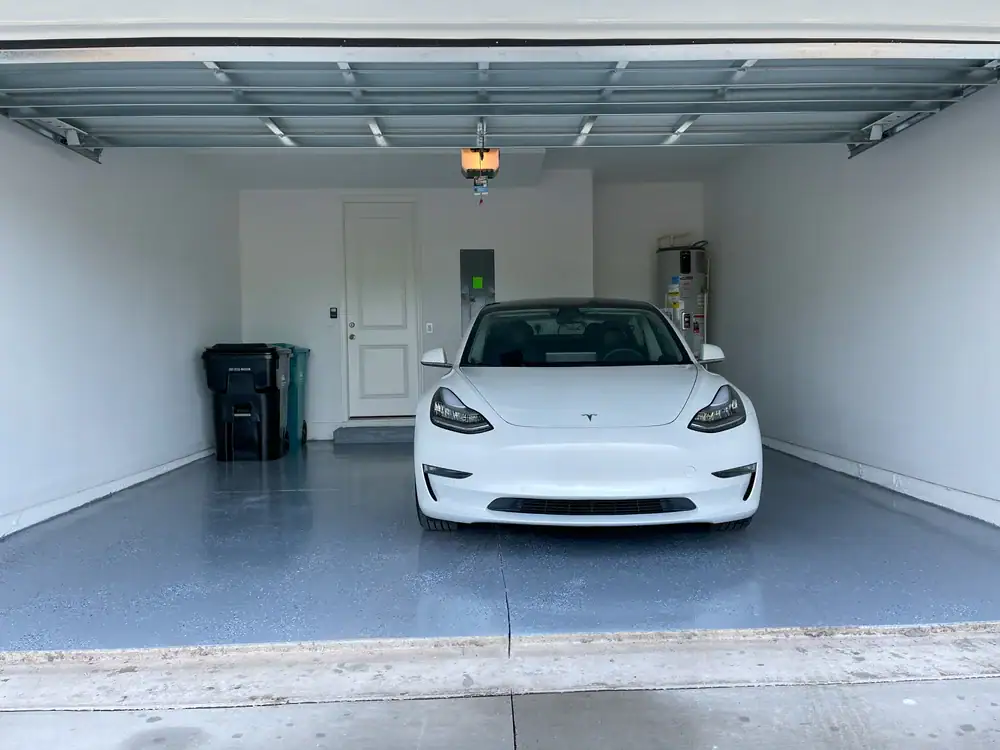
Epoxy Garage Floor Solutions South Miami
Your garage floor takes a beating. Cars drip oil and fluids. Humidity creeps in from every direction. Summer storms dump water faster than you can squeegee it out. And that concrete slab you’re staring at right now? It’s either stained beyond recognition, cracking in three places, or already peeling from whatever coating the last guy talked you into.
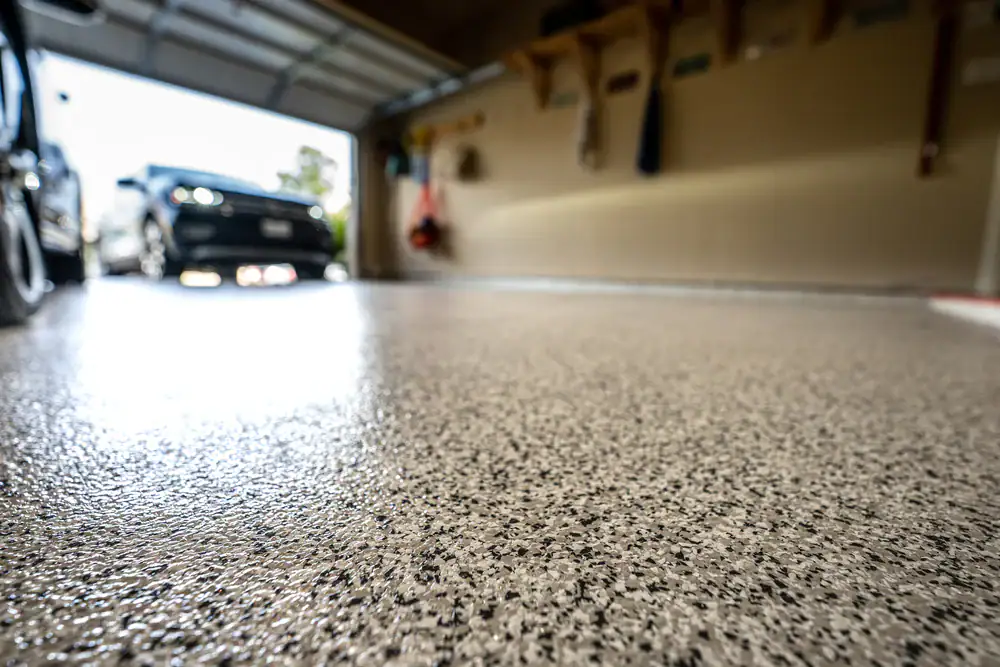
Here’s what changes when you install an epoxy garage floor that’s actually built for South Miami. The surface becomes completely sealed against moisture, so you’re not dealing with that slick condensation every morning or worrying about water sitting in cracks after a storm. Spills wipe up in seconds instead of staining permanently into porous concrete. And the floor itself stops looking like a liability and starts looking like the kind of space you’d actually want to park in, work in, or show off.
You’re not just covering up the problem. You’re installing a system that handles South Florida’s climate because it was designed for it, not just sold into it.
Trusted Epoxy Flooring Contractors South Miami
We’ve been installing epoxy and polished concrete systems across South Florida since 2020. We’ve worked with the U.S. Military, Coast Guard facilities, the City of Doral, the City of Sunny Isles, and county projects that required precision, durability, and zero room for failure.
We handle residential garages in South Miami the same way we handle a military warehouse floor. That means moisture testing before we start, climate-controlled application when it matters, and coatings from Sherwin Williams and Fosroc that are built to last 10 to 20 years in this humidity.
You’re not getting a crew that shows up, rolls something on, and disappears. You’re getting the team that government contracts trust when the floor actually has to perform.
Garage Floor Coating Process South Miami
We start with a consultation at your property. You show us the floor, we measure moisture levels in the slab, check for cracks or damage, and talk through what you’re dealing with. No pressure, no upselling—just a clear assessment of what your garage needs.
Once we’re on the same page, we prep the concrete. That means grinding down the surface to remove old coatings, stains, and any weak spots that would cause future failures. We repair cracks, address any drainage issues, and make sure the slab is ready to bond. This step is where most cheap jobs fall apart, and it’s where we don’t cut corners.
Then we apply the epoxy system. Depending on your garage and what you’re using it for, that could be a solid color epoxy, a decorative flake system, or a high-build coating with a polyaspartic topcoat for UV stability. We control humidity and temperature during application using dehumidifiers and monitoring equipment because South Miami’s climate doesn’t cooperate on its own.
Most residential garages are done in one to two days. You’ll get a follow-up call after the project wraps to make sure everything is exactly what you expected. If it’s not, we handle it.

Ready to get started?
Epoxy Floor Coating Options South Miami
You’re getting a moisture-tested, climate-controlled installation using commercial-grade products. That includes full surface preparation with diamond grinding, crack repair and joint filling where needed, and a multi-layer epoxy system with your choice of finish. We use Sherwin Williams and Fosroc coatings exclusively because they’re proven to handle South Florida’s humidity and temperature swings without blistering or peeling.
For garages in South Miami, we typically recommend a polyaspartic topcoat. Traditional epoxy can yellow under UV exposure, and if your garage door faces south or west, that sun is relentless. Polyaspartic stays clear, cures faster, and gives you a surface that’s ready for vehicle traffic in 24 hours instead of three days.
You’ll also get transparent pricing during the consultation. Epoxy installations in South Miami generally run between $5 and $15 per square foot depending on the system, the condition of your concrete, and any custom colors or flake patterns you want. We’re not the cheapest option you’ll find, and that’s intentional. You’re paying for a floor that doesn’t fail in six months when the humidity spikes or a storm rolls through.
We also offer rapid turnaround for time-sensitive projects and emergency response if you’re dealing with a flooring failure that needs immediate attention. Most contractors in South Miami will put you on a waitlist for weeks. We move faster because we know your time matters.
Why do garage floor coatings fail so often in South Miami?
Moisture. That’s the short answer. South Florida has some of the highest humidity levels in the country, and concrete slabs here are constantly dealing with moisture vapor transmission from the ground below. When a contractor skips moisture testing or applies a coating during the wrong conditions, that trapped moisture creates pressure under the coating. Eventually it pushes the epoxy right off the slab, and you’re left with bubbling, peeling, or a floor that looks like it’s melting.
The other common failure point is surface prep. If the concrete isn’t properly profiled—meaning ground down to expose a clean, porous surface—the epoxy has nothing to grip. It might look fine for a few weeks, but as soon as your car tires start turning on it or the summer heat kicks in, it starts lifting. A lot of low-cost contractors in South Miami skip the grinding step entirely or use acid etching, which doesn’t create a strong enough bond for long-term durability.
We test every slab for moisture before we start. If the levels are too high, we either delay the project or use a moisture mitigation primer. And we always grind the surface with diamond tooling, not shortcuts. That’s how you get a floor that actually stays down.
How long does an epoxy garage floor last in South Florida’s climate?
If it’s installed correctly with the right products, you’re looking at 10 to 20 years. That’s assuming normal residential use—parking cars, occasional spills, foot traffic, and the usual wear from South Miami’s heat and humidity. Commercial or heavy-use garages might see slightly shorter lifespans depending on the load, but a properly installed residential epoxy floor should outlast most other flooring options by a significant margin.
The key is using a system that’s designed for moisture and UV exposure. Standard DIY epoxy kits from the hardware store might last a year or two before they start breaking down. Professional-grade products from Sherwin Williams or Fosroc, combined with a polyaspartic topcoat, are chemically formulated to resist moisture infiltration, temperature swings, and UV degradation. That’s the difference between a floor that fades and cracks in three years versus one that still looks clean and intact 15 years later.
You’ll also want to keep up with basic maintenance. Sweep or blow out debris regularly, mop with a mild cleaner when it gets dirty, and avoid dragging heavy metal objects across the surface. Epoxy is durable, but it’s not indestructible. Treat it reasonably and it’ll last.
What’s the difference between epoxy and polished concrete for a garage?
Epoxy is a coating system that gets applied on top of your existing concrete. It seals the surface, adds color or decorative flake patterns, and creates a smooth, stain-resistant finish. It’s the faster option, usually completed in one to two days, and it gives you a completely customizable look. Most homeowners in South Miami choose epoxy because it’s cost-effective, durable, and handles moisture well when installed properly.
Polished concrete is a mechanical process where we grind down the existing slab using progressively finer diamond pads until the surface is smooth and reflective. There’s no coating involved—you’re essentially exposing and refining the concrete itself. It takes longer, typically costs less per square foot than high-end epoxy systems, and it’s extremely low maintenance. The downside is you’re limited to the natural color and aggregate of your existing concrete, so there’s less design flexibility.
Both options work in South Florida’s climate, but they serve different priorities. If you want a specific color, a decorative finish, or a completely sealed surface that repels stains and moisture, epoxy is the better choice. If you want an industrial look with minimal upkeep and you’re okay with the natural concrete appearance, polished concrete makes sense. We install both, so during the consultation we’ll walk through which one fits your garage and your goals.
Can you install epoxy over cracked or damaged concrete?
Yes, but the cracks need to be addressed first. Epoxy doesn’t fix structural problems—it just covers them. If your concrete has cracks from settling, shifting soil, or heavy loads, those cracks will continue to move over time. If we apply epoxy directly over them without repair, the coating will eventually crack in the same spots.
What we do is assess the severity of the damage during the consultation. Hairline cracks and small surface imperfections can be filled with an epoxy crack filler or polyurea joint filler before we apply the main coating. Larger cracks or areas where the slab has shifted might require grinding, patching with a concrete repair compound, or in some cases, a full resurfacing layer before the epoxy goes down.
South Miami’s sandy soil and frequent rain can cause concrete slabs to move more than in other parts of the country. That’s why we don’t skip the inspection step. If your slab has significant structural issues—like large voids underneath, major heaving, or widespread cracking—we’ll tell you upfront. Sometimes the concrete needs more than epoxy. Sometimes it just needs proper prep and a flexible coating system. Either way, you’ll know what you’re dealing with before we start.
How much does garage epoxy flooring cost in South Miami?
For most residential garages in South Miami, you’re looking at $5 to $15 per square foot depending on the system, the condition of your concrete, and any custom finishes you want. A standard two-car garage (around 400 square feet) typically runs between $2,000 and $6,000 for a complete epoxy installation. That includes surface prep, crack repair, the epoxy coating, and a topcoat.
If you want decorative flake, metallic pigments, or a high-build system with extra durability, the cost moves toward the higher end of that range. If your concrete is in rough shape and needs significant repair or leveling, that adds to the total. We give you transparent pricing during the consultation so there are no surprises when the invoice shows up.
Polished concrete usually costs less—somewhere between $2 and $8 per square foot—but it’s a longer process and you’re limited to the natural look of your existing slab. Some homeowners in South Miami prefer it for the industrial aesthetic and low maintenance. Others want the color and customization that epoxy offers.
We’re not the cheapest contractor you’ll find, and that’s intentional. You’re paying for moisture testing, proper surface prep, commercial-grade materials, and a team that’s installed floors for military facilities and municipal projects. The floor doesn’t peel in six months. It doesn’t bubble when the humidity spikes. And it doesn’t require a redo in two years because someone cut corners to hit a low bid.
What should I do to prepare my garage before installation?
Clear everything out. We need full access to the floor, so move cars, storage bins, tools, shelving units, and anything else sitting on the concrete. If you have built-in cabinets or workbenches that can’t be moved, we can work around them, but the more floor space we can access, the better the final result.
If there are any oil stains, fluid leaks, or chemical spills on the concrete, try to clean them up before we arrive. We’ll handle the deep prep work with grinders and degreasers, but removing surface contaminants ahead of time helps the process move faster. Don’t worry about perfection—we’re grinding the concrete down anyway—but a basic sweep and wipe-down makes a difference.
You should also check for any active moisture issues. If you notice water pooling in certain areas after it rains, or if your garage floor “sweats” on humid mornings, let us know during the consultation. We’ll test for moisture vapor transmission, but visible water problems give us a head start on diagnosing what’s happening under the slab. In some cases we’ll need to address drainage or use a moisture barrier primer before the epoxy goes down.
Finally, plan for the floor to be out of commission for 24 to 48 hours depending on the system we install. Polyaspartic topcoats cure faster and you can usually park on them within a day. Traditional epoxy takes longer. We’ll give you an exact timeline during the consultation so you can plan accordingly.
Other Services we provide in South Miami
Leave a Reply