


Garage Epoxy Flooring in St. Lucie Village, FL
Garage Floors That Actually Hold Up in Florida
Hear from Our Customers
Professional Epoxy Floor Coating Services
Your garage floor takes a beating. Hot tires on scorching concrete. Oil drips that sit for weeks. Humidity that never quits. Most epoxy garage floor coatings aren’t built for that kind of abuse, especially not in Florida.
The floors we install use commercial-grade chemistry designed for humid climates. The same systems we install in food processing plants and high schools across South Florida. These aren’t the kits you pick up at a hardware store on Saturday morning.
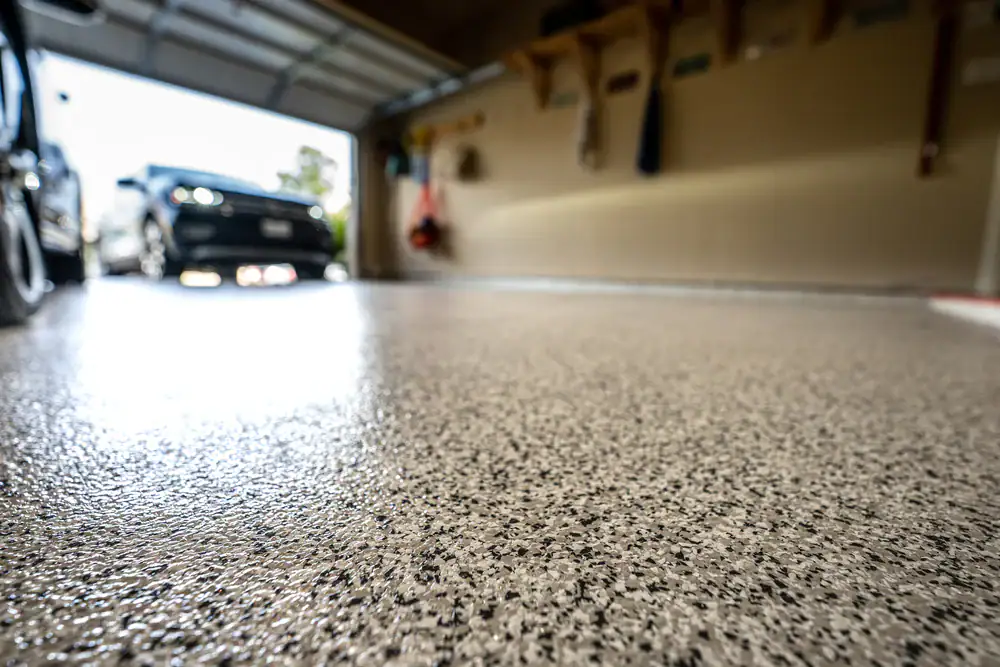
You get a non-porous surface that repels oil, gasoline, brake fluid, and antifreeze without staining. Spills sit on top instead of soaking in. You can wipe up motor oil with a paper towel months after it drips. The coating bonds directly to your concrete through shot-blasting and diamond grinding, not just a quick acid wash that fails in two years.
Most residential garages in St. Lucie Village are done in 24 to 48 hours. You’re not waiting weeks to park your car again.
Epoxy Flooring Contractors in St. Lucie Village
We’ve installed flooring systems for the Coast Guard, US Army, City of Doral, and City of Sunny Isles. Sports stadiums, grocery stores, food processing facilities. Places where failure isn’t an option and downtime costs real money.
That same crew handles residential garage floor coatings in St. Lucie Village. No subcontractors. No handoffs to a different team on weekends. Every installation uses our full-time employees who’ve worked together for years.
We work exclusively with Sherwin Williams and Fosroc products. Industrial-grade materials that meet commercial specifications. You’re getting the same coating chemistry used in facilities that see forklift traffic and chemical exposure daily, just scaled for a two-car garage.
How Garage Floor Coating Installation Works
The process starts with a free consultation. Someone from our team comes out to look at your concrete, check for moisture issues, measure the space, and walk through what you’re dealing with. Cracks, stains, previous coatings that failed. All of it matters for prep work.
Preparation is where most garage epoxy flooring projects fail or succeed. We use shot-blasting or diamond grinding to open up the concrete pores. Not just an acid wash. Cracks get repaired. Uneven spots get leveled. The surface has to be completely clean and profiled correctly or the epoxy won’t bond.
Once prep is done, the epoxy floor coating goes down in layers. Base coat, color coat, topcoat. Each layer is applied at specific temperatures and humidity levels. Florida’s climate makes timing critical. Too hot and the epoxy sets too fast. Too humid and it won’t cure right.
Most residential projects in St. Lucie Village take 24 to 48 hours from start to finish. You’ll need to keep vehicles off the floor for about 24 hours after the final coat. Full cure takes about a week, but you can walk on it much sooner.

Ready to get started?
Garage Floor Painting and Coating Options
Every garage floor coating project includes full concrete preparation. That means shot-blasting or diamond grinding to open the concrete surface, crack repair with epoxy or polyurethane injection, and surface leveling where needed. Shortcuts here are why most DIY kits and cheap installations fail within three years.
The coating itself is commercial-grade epoxy from Sherwin Williams or Fosroc. These aren’t consumer products. They’re formulated for high-traffic environments and chemical exposure. The system includes a primer coat, pigmented base coat, optional decorative flakes, and a clear topcoat with UV inhibitors. Florida sun is brutal on coatings. UV resistance keeps your floor from yellowing or losing gloss.
St. Lucie Village sits in a humid coastal zone where moisture is constant. We test for vapor transmission before installation. If your concrete is sweating or has a defective vapor barrier, that gets addressed before any coating goes down. Trapped moisture is the number one reason epoxy floors fail in Central and South Florida.
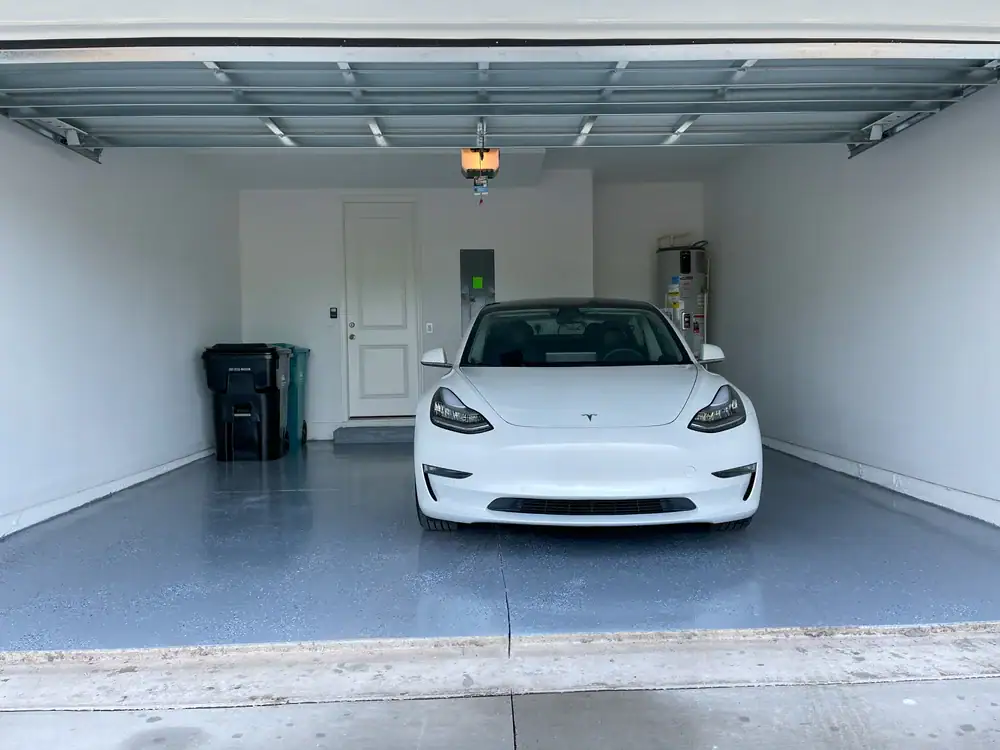
You also get transparent pricing upfront. No surprises after the work starts. The quote includes materials, labor, prep work, and cleanup. Most residential garages run between $2,000 and $8,000 depending on size and condition, but you’ll know the exact number before anyone shows up with equipment.
How long does epoxy garage flooring last in Florida’s climate?
Commercial-grade epoxy floor coatings installed with proper preparation typically last 10 to 20 years in Florida. The key word is “proper preparation.” Most failures happen because the concrete wasn’t prepped correctly, not because the epoxy itself failed.
Florida’s humidity and temperature swings are tough on coatings. Cheap kits from home improvement stores usually start peeling within two to three years because they don’t bond deep enough into the concrete. Professional installations use shot-blasting or diamond grinding to open the concrete pores so the epoxy can penetrate and create a mechanical bond.
UV inhibitors in the topcoat also matter. Florida sun will yellow and degrade coatings that aren’t UV-stable. The systems we use include UV protection in the clear topcoat, which is why our installations in Bay Harbor Islands still look new after a decade of heavy use.
What’s the difference between epoxy and the kits sold at hardware stores?
The chemistry is completely different. Consumer kits use water-based or low-solids epoxy that’s designed for easy application, not durability. Professional epoxy floor coatings use 100% solids or high-solids formulations that create a much thicker, harder surface.
Application matters just as much as the product. DIY kits usually recommend an acid wash for prep. That’s not enough in Florida’s humid climate. You need mechanical abrasion—shot-blasting or diamond grinding—to properly profile the concrete. Without that, even good epoxy won’t bond correctly.
The other difference is cure time and temperature sensitivity. Professional coatings require specific application conditions. Too hot, too cold, too humid, and the epoxy won’t cure right. We monitor temperature and humidity throughout the process. That’s not something you can easily control in a garage on a Saturday afternoon with a kit and a roller.
Can you install epoxy over cracked or stained concrete?
Yes, but the cracks and underlying issues need to be addressed first. Small hairline cracks get filled with epoxy or polyurethane injection. Larger cracks or areas where the concrete has settled require more extensive repair, sometimes including grinding down high spots or filling low areas to level the surface.
Stains don’t usually affect adhesion, but oil stains need to be cleaned thoroughly. Oil penetrates concrete and can prevent epoxy from bonding. We use degreasers and sometimes grind away the top layer of contaminated concrete to get down to clean material.
Florida’s sandy soil shifts easily after heavy rain. That causes concrete slabs to lose support and crack. If your garage floor has significant cracking, it’s worth having us evaluate whether the slab needs structural repair before coating it. Epoxy will bridge small cracks, but it won’t fix a slab that’s actively moving or settling.
How much does garage floor coating cost in St. Lucie Village?
Most residential garages in St. Lucie Village run between $2,000 and $8,000 for a complete epoxy floor coating installation. The range depends on square footage, current concrete condition, and how much prep work is needed.
A standard two-car garage with minimal cracking and no major moisture issues usually falls in the $3,000 to $5,000 range. Larger garages, three-car setups, or floors that need significant crack repair and leveling will cost more. If your concrete has a moisture problem that requires remediation, that adds to the scope.
The price includes all prep work, materials, labor, and cleanup. We provide transparent pricing upfront during the free consultation. You’ll know exactly what you’re paying before any work starts. There’s no hourly rate that creeps up or surprise charges for “unexpected” issues that should have been caught during the estimate.
How soon can I park my car on a new epoxy garage floor?
You can typically walk on the floor within 24 hours and park a car on it within 48 to 72 hours. Full cure takes about seven days, but the coating is hard enough for normal use well before that.
Timing depends on temperature and humidity during installation. Hotter weather speeds up cure time. High humidity can slow it down. We schedule installations based on weather conditions to optimize cure times and avoid issues.
The first 24 hours are critical. The floor needs to be completely clear—no foot traffic, no tools, nothing. After that, light use is fine. By 48 hours, the epoxy is hard enough to support vehicle weight, but you should avoid sharp impacts like dropping heavy tools or dragging metal objects across the surface for the first week.
Does epoxy flooring increase home value in St. Lucie Village?
A professionally installed epoxy garage floor can add $2,000 to $8,000 to your home’s value in South Florida’s real estate market. Buyers notice finished garages. It signals that the home has been maintained and upgraded beyond the basics.
Garages have shifted from purely functional storage spaces to extensions of the home’s overall design. A clean, glossy epoxy floor makes the space feel more finished and usable. That matters in competitive markets like St. Lucie Village where buyers are comparing similar homes.
The return on investment isn’t just about resale value. You get immediate benefits: easier cleaning, better lighting from the reflective surface, protection for your concrete, and a space that actually looks good. Most homeowners who install epoxy flooring wish they’d done it sooner because of how much more usable the garage becomes.
Other Services we provide in St. Lucie Village
Leave a Reply