


Garage Epoxy Flooring in Stacey Street, FL
Garage Floors That Actually Last in Florida Heat
Hear from Our Customers
Epoxy Garage Floor Coating Near Stacey Street
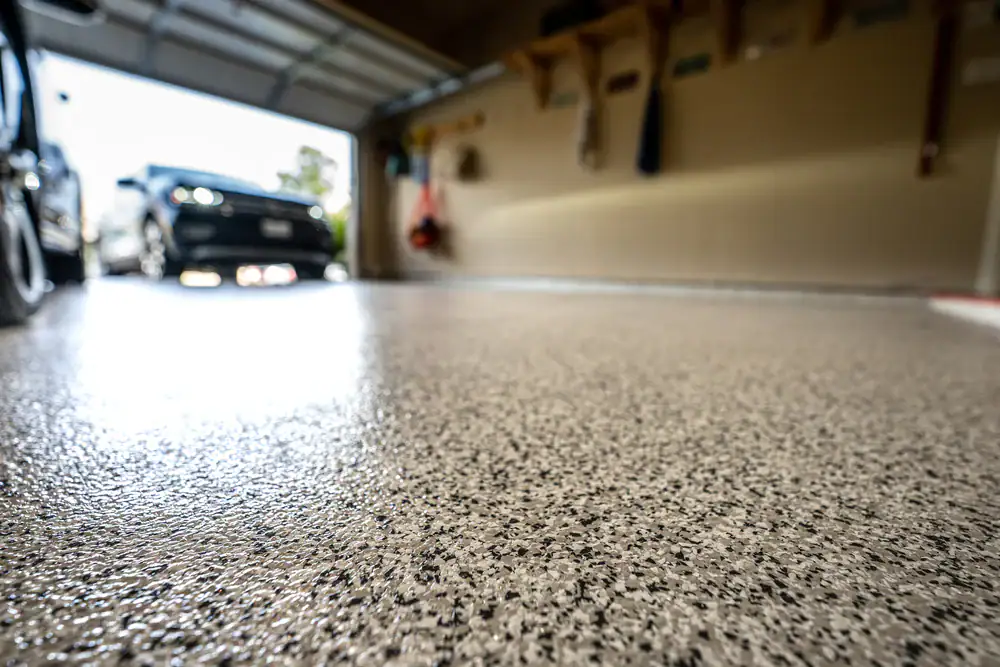
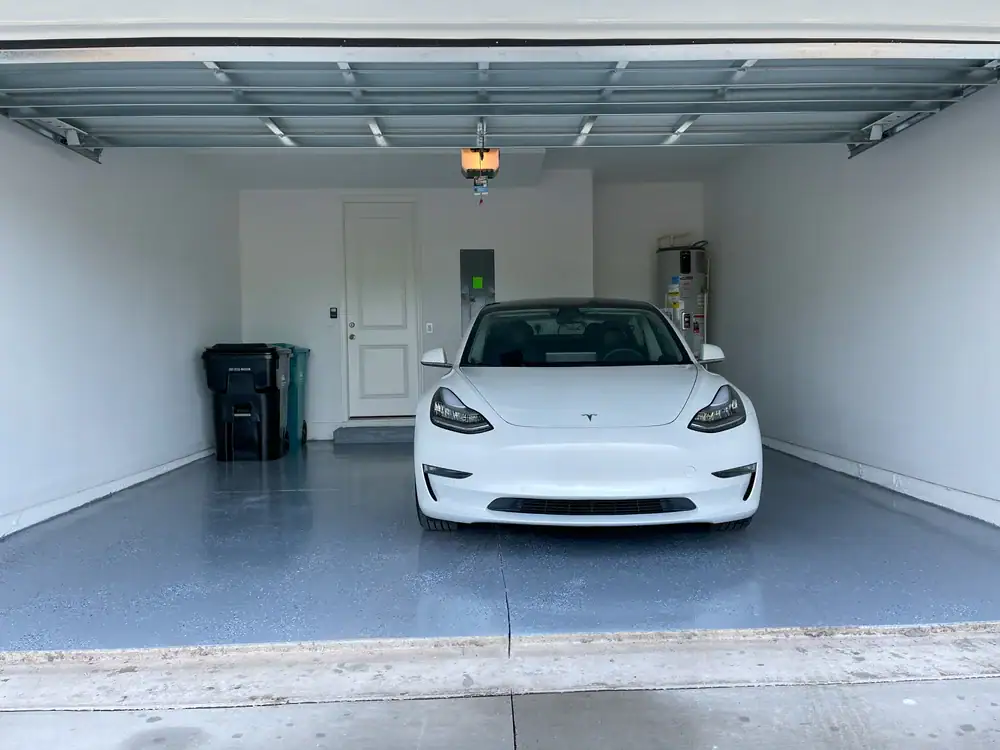
Your concrete stops absorbing oil stains. Cleanup becomes a quick wipe instead of a scrubbing project. The floor actually reflects light instead of looking like a dull slab.
If you’re selling anytime soon, you’re looking at a real bump in property value. Recent data shows epoxy-coated garages increase home value by $2,000 to $8,000 in Florida markets. Buyers notice the difference immediately because it signals the home has been maintained, not just patched up for listing photos.
The surface stays intact for 10 to 20 years when installed correctly. That means no resealing every couple years, no constant touch-ups, and no regret about choosing the cheapest option. You get a floor that handles hot tires, spilled chemicals, and daily wear without breaking down or looking worn out after the first year.
Garage Floor Painting Contractor in Stacey Street
We specialize in epoxy flooring and polished concrete across South Florida. We work directly with homeowners and commercial property owners in Stacey Street and surrounding areas, handling everything from residential garages to government facilities.
Our client list includes the Coast Guard, US Army, City of Doral, and City of Sunny Isles. We’ve completed projects for high schools and municipal buildings where the floor needs to hold up under serious use. That same attention to detail applies to every residential garage we coat.
We don’t subcontract the work or hand it off to a crew that’s never worked in Florida’s climate. Every install accounts for local humidity levels, temperature swings, and the reality that your garage floor will face intense heat from both the sun and your car. You get transparent pricing, a one-on-one consultation, and a team that shows up when we say we will.
Epoxy Flooring Installation Process in Stacey Street
We start with surface prep, which is the most important step and the one most DIY kits and cheap contractors skip. Your concrete gets diamond-ground to remove contaminants, open the pores, and create the profile epoxy needs to bond properly. If there’s existing coating or sealant, it comes off completely.
Next, we test for moisture. Florida concrete holds water, and if we coat over it without addressing vapor drive, the epoxy will lift within months. We adjust our resin ratios based on real-time humidity readings the day of installation, not some generic mix that works in Arizona but fails here.
The epoxy goes down in layers. We apply a primer coat, then the base color coat with any flake or texture you’ve chosen, then a clear topcoat for UV and chemical resistance. If you want a non-slip finish, we add that into the topcoat. Cure time depends on the product—polyaspartic systems can handle light traffic in 24 hours, while traditional epoxy needs 48 to 72 hours before you park on it.

Ready to get started?
Garage Floor Coatings and Options in Stacey Street
You’re getting a full system, not just a coat of paint. That includes surface grinding, crack repair if needed, moisture mitigation, primer, base coat, topcoat, and any custom color or flake options you choose. We use Sherwin Williams and Fosroc products—commercial-grade materials that hold up in Florida’s climate.
Stacey Street homeowners deal with the same challenges as the rest of South Florida: high humidity, salt air if you’re near the coast, and concrete that stays warm year-round. Standard garage floor paint can’t handle it. Epoxy floor coating creates a chemical bond with the concrete and forms a protective layer that resists stains, chemicals, and impact damage.
We also offer polyaspartic coatings, which cure faster and handle UV exposure better than traditional epoxy. If your garage gets direct sunlight or you need the space back quickly, polyaspartic is the better choice. Both options give you a finished look that’s cleanable, durable, and visually miles ahead of bare concrete. The difference shows up immediately and lasts for years, not months.
How long does garage epoxy flooring take to install in Stacey Street?
Most residential garage floors take one to two days from start to finish, depending on the size and condition of your concrete. Surface prep usually takes half a day. We grind the concrete, repair any cracks, and clean everything down to bare substrate.
The coating process itself takes several hours. We apply primer, let it tack up, then roll out the base coat and broadcast any color flakes if you’ve chosen that finish. The topcoat goes on last. After that, it’s all cure time.
You’ll need to stay off the floor for at least 24 hours with polyaspartic systems, and 48 to 72 hours with traditional epoxy. We don’t rush cure times to get to the next job. Florida’s humidity slows the curing process, and if you walk or park on the floor too early, you’ll leave marks or damage the bond. We give you a realistic timeline based on the actual product and conditions, not the best-case scenario.
Will epoxy garage floor coating hold up in Florida’s heat and humidity?
It will if it’s installed correctly with the right products. Florida’s climate is tough on epoxy. High humidity interferes with curing, and heat from the sun or your car’s tires can cause cheap coatings to soften or peel.
We adjust our resin ratios based on humidity levels the day we install. That’s not something you can do with a DIY kit, and it’s not something every contractor bothers with. The mix has to account for moisture in the air and moisture coming up through the concrete itself. If we don’t address vapor drive, the coating will blister or delaminate within months.
We also use commercial-grade products designed for high-temperature environments. Sherwin Williams and Fosroc systems are tested in climates like ours. The topcoat includes UV inhibitors to prevent yellowing and breakdown from sun exposure. Recent clients report 40% fewer maintenance issues compared to standard installations, and that’s because we’re using the right materials and applying them correctly for Stacey Street’s conditions.
What’s the difference between epoxy and garage floor paint?
Garage floor paint sits on top of the concrete like a coat of wall paint. It doesn’t bond chemically, so it chips and peels as soon as you drag something heavy across it or park a hot tire on it. Most floor paints fail within a year in Florida because they can’t handle moisture or heat.
Epoxy floor coating bonds to the concrete at a molecular level. It’s not just sitting on the surface—it’s part of the substrate. That bond makes it exponentially more durable. Epoxy handles oil, chemicals, impact, and abrasion without breaking down.
The other major difference is thickness. Paint goes on thin, maybe a few mils. Epoxy systems are applied in multiple coats and can be 10 to 20 mils thick or more, depending on the product. That thickness gives you a protective layer that actually does something. You’re not repainting every year or dealing with constant touch-ups. Epoxy is a long-term solution, not a temporary cover-up.
How much does epoxy garage flooring cost in Stacey Street, FL?
Professional epoxy garage floor installations typically run between $3 and $12 per square foot, depending on the system, prep work required, and any custom finishes. A standard two-car garage usually falls between $1,200 and $4,800 for a complete job.
That price includes surface grinding, crack repair, moisture mitigation if needed, primer, base coat, color flakes or solid color, and a clear topcoat. If your concrete is in rough shape or needs significant repair, the cost goes up. If you want a decorative metallic finish or a thicker polyaspartic system, that also affects pricing.
We give you transparent pricing upfront during the consultation. No surprises, no upsells after we start the job. You’ll know exactly what you’re paying for and why. Cheaper quotes usually mean skipped prep work, thinner coatings, or products that aren’t designed for Florida’s climate. You end up paying twice—once for the bad install, and again to have it stripped and redone correctly.
Can you apply epoxy over my existing garage floor coating?
Not if you want it to last. Epoxy needs to bond directly to clean, prepared concrete. If there’s old paint, sealer, or a failing coating on the surface, the new epoxy will only be as strong as whatever it’s sitting on top of. That existing layer will eventually fail, and the new coating comes up with it.
We remove old coatings completely before we start. That’s part of the surface prep process. We grind down to bare concrete, which also opens up the pores so the epoxy can penetrate and bond properly. It’s extra work, but it’s the only way to get a long-lasting result.
Some contractors will try to coat over existing finishes to save time and underbid the job. It looks fine for a few months, then starts peeling or bubbling. If someone tells you they can just coat over what’s already there without any prep, that’s a red flag. Proper prep is 80% of the job, and skipping it is the number one reason epoxy floors fail in Florida.
How do I maintain my epoxy garage floor after installation?
Maintenance is simple. Sweep or blow out dirt and debris regularly so it doesn’t get ground into the surface. For spills, wipe them up with a damp mop or rag. Epoxy doesn’t absorb oil or chemicals, so cleanup is fast—nothing soaks in and stains the concrete underneath.
For deeper cleaning, use a mild detergent and warm water. Avoid harsh acidic cleaners or solvents that can dull the finish over time. A soft-bristle broom or microfiber mop works fine. You don’t need special equipment or products.
The floor doesn’t need resealing or recoating for 10 to 20 years if it’s installed correctly. You’re not dealing with annual maintenance like you would with bare concrete or garage floor paint. If you ever notice a spot that needs attention, give us a call. We do follow-up checks and can handle any touch-ups if something unexpected happens, though that’s rare with a proper install.
Other Services we provide in Stacey Street
Leave a Reply