


Garage Epoxy Flooring in Sunset, FL
Floors That Handle Florida Heat, Humidity, and Everything Else
Hear from Our Customers
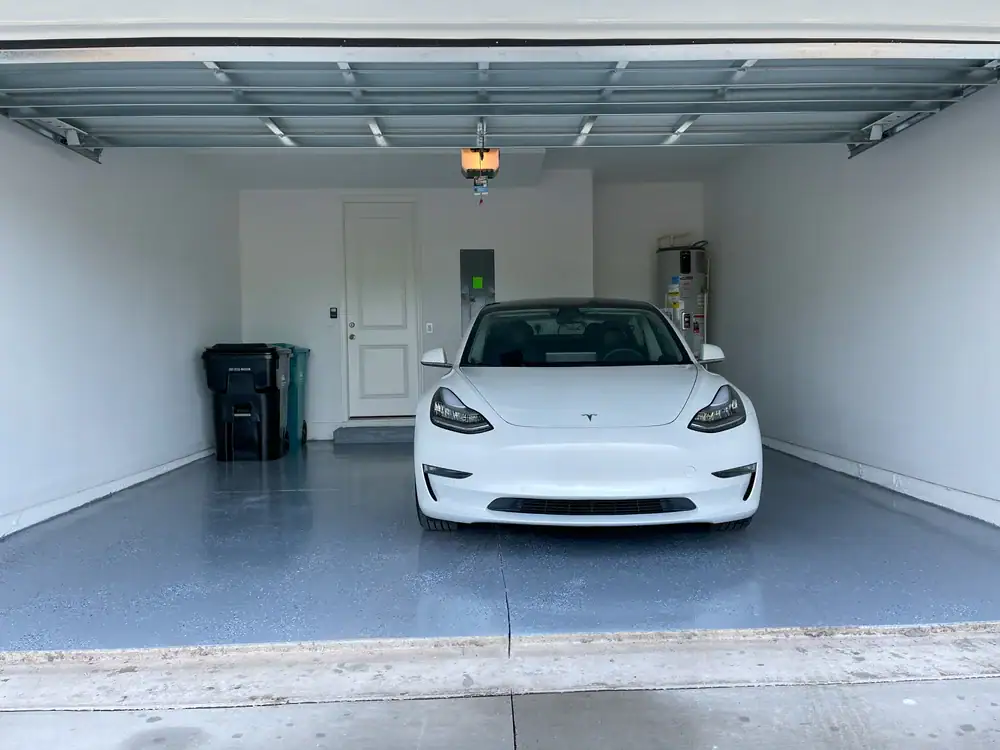
Professional Epoxy Flooring Sunset FL
Your concrete stops being a problem. No more oil stains that won’t come out, no more surface that looks worse every month, no more wondering if you should’ve done something about it years ago.
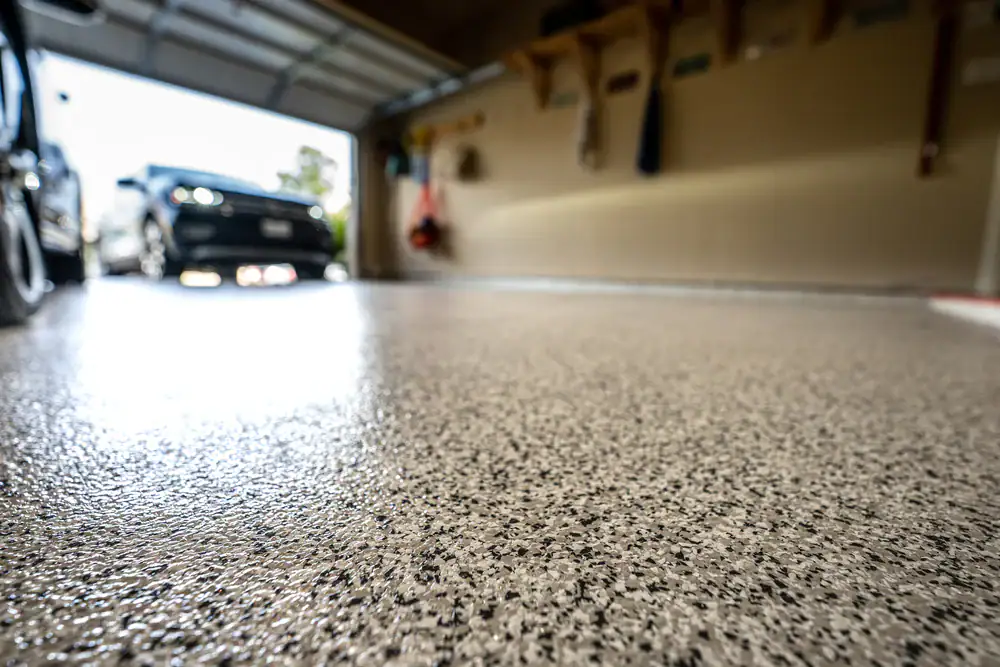
A proper epoxy garage floor handles the stuff garages actually deal with—spilled fluids, dropped tools, hot tires, humidity that never quits. You’re not babying it. You sweep it when it needs it, mop it occasionally, and it keeps looking clean.
It’s chemical resistant, so automotive fluids and cleaning products don’t leave permanent marks if you wipe them up within a reasonable time. The surface stays smooth and sealed, which means dust and dirt don’t embed themselves into porous concrete anymore. And in South Florida, where moisture comes from below and humidity hangs in the air, that sealed surface matters more than most people realize until they’ve dealt with a floor that failed.
You’re also getting a floor that doesn’t crack or peel when installed correctly with materials designed for this climate. That’s the difference between a DIY kit from a big box store and a professional epoxy floor coating done by people who’ve handled hundreds of garages in Florida’s heat and salt air.
Epoxy Flooring Contractor Sunset FL
We’ve been installing epoxy floors across South Florida since 2020. We’ve worked with the Coast Guard, US Army, City of Doral, City of Sunny Isles, and county facilities that can’t afford to redo floors every few years.
That same approach applies to your garage in Sunset, FL. You’re getting the same materials, the same prep work, the same attention to moisture issues that we bring to commercial and government projects. We use Sherwin Williams and Fosroc products because they hold up, and we’ve seen what happens when contractors cut corners with cheaper alternatives.
Most projects finish in a day. You get transparent pricing upfront, a one-on-one consultation where we actually look at your space, and follow-up after the job. If you need something done fast, we can turn around projects in 24-48 hours when the schedule allows.
Garage Floor Coating Installation Process
First, we prep the concrete. That means grinding down the surface to open up the pores so the epoxy bonds properly. If there are cracks or damage, we address those before any coating goes down. This step matters more in Florida than almost anywhere else because of ground moisture and the way concrete behaves in high humidity.
Next, we apply a moisture-tolerant primer if your slab needs it. Not every floor does, but many in South Florida do, especially if the concrete is older or shows signs of moisture vapor. Skipping this is why most DIY jobs and cheap contractor work fail within a few years.
Then comes the epoxy base coat, followed by color flakes or a solid finish depending on what you chose. We broadcast the flakes while the epoxy is still wet so they lock in permanently. After that cures, we apply a clear topcoat—usually polyaspartic, which cures faster and handles UV exposure better than standard epoxy topcoats.
You can walk on it within 24 hours. You can park on it within 48-72 hours depending on the system we used. And then you’re done. The floor’s ready for whatever your garage throws at it for the next 15-20 years.

Ready to get started?
Epoxy Garage Floor Options Sunset
You’re getting a multi-layer system, not a single coat of paint. That includes surface prep, crack repair if needed, a bonding primer, the epoxy base, decorative flakes or solid color, and a protective topcoat that’s slip-resistant and UV-stable.
In Sunset and the surrounding South Florida area, we’re also accounting for the climate. That means using moisture-tolerant systems when the concrete needs it, fast-curing polyaspartic topcoats that don’t yellow in the sun, and materials rated for high heat and humidity cycling. Florida concrete behaves differently than concrete in other states, and the products have to match.
Most two-car garages run between 400-500 square feet. Professional epoxy flooring costs typically fall between $3-8 per square foot depending on the system, prep work required, and finish you choose. Metallic epoxy costs more. Solid colors with flakes cost less. We’ll walk you through options during the consultation so you know exactly what you’re paying for.
The other thing you’re getting is a floor installed by people who’ve done this for military facilities and municipal buildings. We follow the same standards for your home that we do for government contracts—proper safety equipment, OSHA guidelines, and materials that meet commercial durability specs.
How long does garage epoxy flooring actually last in Florida’s climate?
Professional epoxy garage floors last 15-20 years in South Florida when installed correctly with the right materials. That’s not a marketing claim—it’s what happens when you use moisture-tolerant primers, commercial-grade epoxy, and polyaspartic topcoats designed for heat and humidity.
The floors that fail early are usually DIY kits or jobs done by contractors using cheap products that can’t handle moisture vapor coming up through the concrete. Florida’s ground stays wet, and concrete is porous. If the epoxy isn’t bonded properly or the system isn’t designed for moisture, it peels. Usually within 2-3 years.
We’ve installed floors for government and military facilities that can’t afford to redo surfaces every few years. Those same systems work in residential garages. You’re not repainting every five years or dealing with coatings that bubble up when summer humidity hits. You’re getting a floor that holds up because the prep work and materials were done right the first time.
What’s the difference between epoxy floor coating and the kits from home improvement stores?
The kits are single-component coatings that sit on top of the concrete. Professional epoxy is a multi-layer system that bonds into the concrete after proper surface prep. That difference is why DIY jobs show 90% more peeling after five years compared to professional installations.
The kits also don’t account for moisture, which is a massive issue in Florida. If you apply a box store coating over concrete that has moisture vapor coming through it—which most Florida slabs do—the coating lifts. It might look fine for six months, but then it starts bubbling or peeling in sections, and there’s no fixing it without stripping everything and starting over.
Professional epoxy floor installation includes grinding the concrete to open the surface, applying moisture barriers or primers when needed, using two-part epoxy that chemically bonds to the slab, and finishing with a UV-stable topcoat. You’re also getting someone who knows how to read the concrete and adjust the process based on what your specific slab needs. That’s not something a kit and a YouTube video can replicate, especially in South Florida’s climate.
How much does epoxy flooring cost for a typical garage in Sunset?
Most two-car garages in Sunset run 400-500 square feet. Professional garage floor coating for that size typically costs $1,600-$4,000 depending on the system, prep work, and finish. Solid colors with decorative flakes are on the lower end. Metallic epoxy or floors that need significant crack repair cost more.
Three-car garages or larger spaces run higher, usually starting around $3,500 and going up based on square footage and condition. If your concrete has major damage, needs extensive grinding, or requires a moisture mitigation system, that adds to the cost. We’ll tell you that upfront during the consultation—no surprises when the job’s half done.
The cost breaks down to about $3-8 per square foot for most residential projects in South Florida. That’s more than a DIY kit, but you’re getting a floor that lasts 15-20 years instead of peeling in three. You’re also not spending your weekend grinding concrete and dealing with epoxy that sets up before you’re ready. For most people, the time saved and the durability gained make professional installation worth it. We work with Sherwin Williams, which gives us better pricing on better products, and we pass that advantage along.
Can epoxy flooring handle Florida’s humidity and moisture issues?
Yes, but only if it’s installed with the right prep and materials. Florida concrete deals with moisture vapor rising from the ground, high humidity in the air, and temperature swings that cause expansion and contraction. Standard epoxy systems that work fine in dry climates fail here unless you account for those conditions.
We use moisture-tolerant primers and epoxy systems designed to bond even when some vapor is present. For slabs with higher moisture levels, we apply barriers that stop vapor transmission before the epoxy goes down. We also use polyaspartic topcoats that cure fast and handle UV exposure without yellowing, which matters in garages that get direct sunlight or stay hot year-round.
The other piece is surface prep. If the concrete isn’t ground properly, the epoxy doesn’t bond into the surface—it just sits on top. That’s fine until moisture or heat causes it to lift. We grind every floor to the right profile, which gives the epoxy something to grab onto. It’s not the fastest way to do it, but it’s the only way that holds up long-term in South Florida. That’s why our floors last 15-20 years and cheap jobs start peeling within a few.
Is epoxy garage flooring slippery when wet or covered in fluids?
Not if it’s finished correctly. We add slip-resistant aggregate to the topcoat, which creates texture without making the floor rough or hard to clean. You can adjust the level of slip resistance based on what the space needs—more for commercial shops, less for residential garages that stay dry most of the time.
The texture is subtle. You don’t feel it when you walk barefoot, but it gives tires and shoes grip when the floor is wet. That’s important in Florida, where humidity and rain mean your garage floor sees moisture regularly even if you’re not washing cars or spilling fluids.
Plain concrete is actually more slippery than textured epoxy when wet, which surprises people. Concrete gets smooth over time from wear and oil absorption, and it doesn’t shed water the way a sealed epoxy surface does. A properly finished epoxy floor coating pushes water to the edges and gives you traction in the middle. If you’re concerned about slip resistance for a specific use—like a shop where fluids are common—we can increase the aggregate during the topcoat application. It’s adjustable based on what you’re dealing with day-to-day.
How soon can I use my garage after epoxy floor installation?
You can walk on it within 24 hours. You can park on it within 48-72 hours depending on the system we used and the temperature during curing. Full chemical resistance and hardness take about seven days, but the floor is functional well before that.
Polyaspartic topcoats cure faster than traditional epoxy topcoats, which is why we use them in Florida. They’re less sensitive to humidity and temperature during the curing process, and they reach usable hardness quicker. That matters if you need your garage back fast or if we’re working in summer when heat and moisture are constant.
Most projects finish in one day. We start early, prep and coat the floor, and you’re walking on it the next morning. If you need faster turnaround for a specific reason, we can sometimes adjust the schedule or use rapid-cure systems that cut the timeline even more. The key is letting the floor cure properly before you park heavy vehicles or drag heavy equipment across it. Rushing that step is how you end up with tire marks or scuffs that could’ve been avoided by waiting an extra day.
Other Services we provide in Sunset
Leave a Reply