


Garage Epoxy Flooring in Tradition, FL
Your Garage Floor Shouldn’t Look Like That
Hear from Our Customers
Epoxy Garage Floor Coating Services
You’ve seen what happens to garage floors around here. The concrete cracks, stains set in from oil drips, and the surface stays rough no matter how many times you sweep it. If you’ve tried a DIY epoxy kit, you already know how that story ends—peeling edges, bubbles, and a floor that looks worse than when you started.
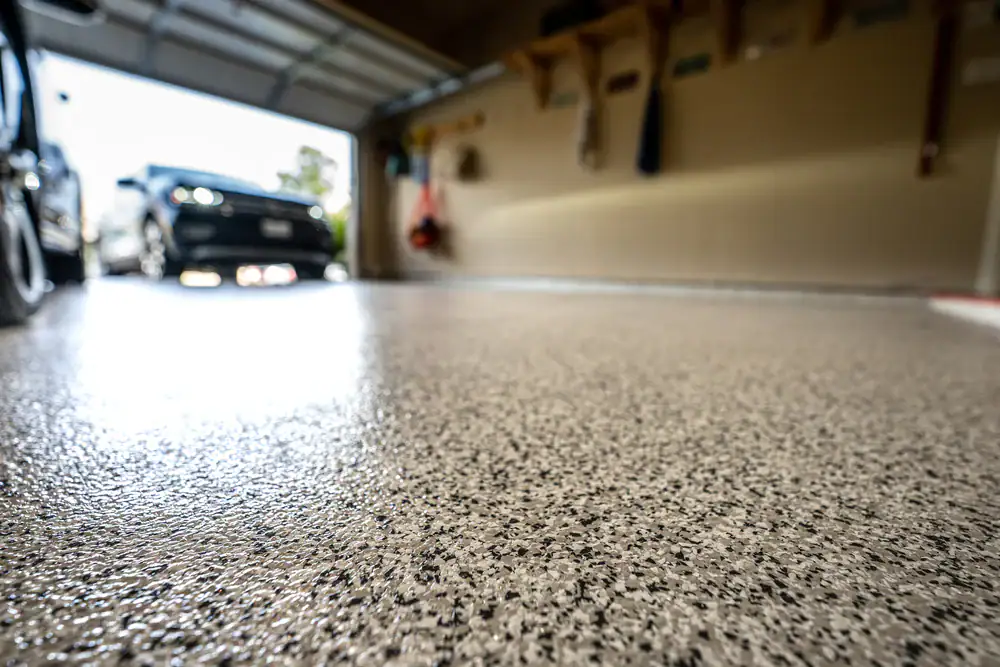
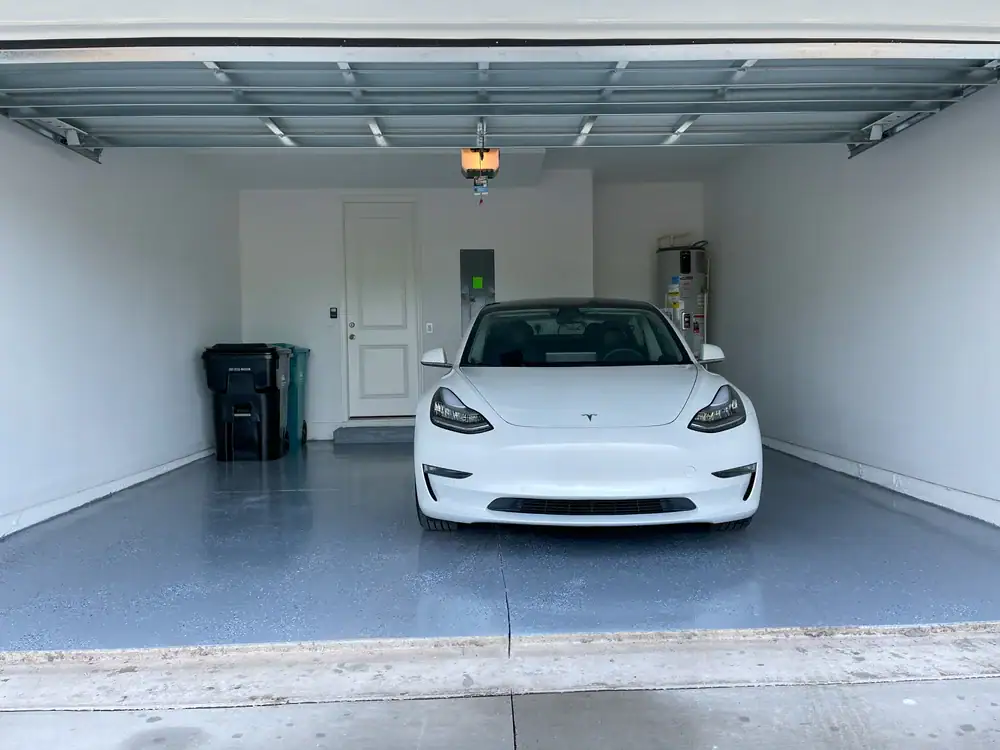
An epoxy garage floor from us changes that. The surface becomes resistant to chemicals, easy to clean, and actually improves how your garage looks and functions. No more avoiding certain spots or worrying about what spills where.
This isn’t about making your garage pretty for the sake of it. It’s about creating a space that works harder, lasts longer, and doesn’t punish you every time the temperature climbs or a storm rolls through. You get a floor that can handle hot tires, heavy toolboxes, and Florida’s humidity without breaking down in two years.
Epoxy Flooring Contractors in Tradition
We specialize in epoxy flooring and polished concrete across Florida. We’ve worked with the Coast Guard, the U.S. Army, the City of Doral, and Sunny Isles Beach—projects where the floor actually matters and failure isn’t an option.
Tradition homeowners deal with specific challenges: newer homes with concrete slabs that still hold moisture, garages that double as workshops or gym space, and a climate that tests every coating you put down. We’ve handled all of it. Our crews are full-time employees, not subcontractors, and we use products from Sherwin-Williams and Fosroc because they hold up when cheaper options don’t.
You’re not getting a sales pitch. You’re getting a straightforward conversation about what your floor needs, what it’ll cost, and how long it’ll take. Most garage projects wrap up in 24 to 48 hours.
Garage Floor Coating Installation Process
First, we prep the surface. That means diamond grinding or shot blasting to remove any existing coatings, contaminants, or weak spots. This step is where most DIY jobs and cheap contractors fail—they skip it or rush through it. We don’t. The coating only bonds as well as the surface allows, so we make sure the concrete is clean, level, and ready.
Next, we apply a moisture-tolerant primer if needed. Florida’s humidity doesn’t take days off, and neither does the moisture in your concrete slab. The primer creates a barrier so the epoxy can cure properly without bubbling or delaminating.
Then comes the epoxy floor coating itself. We mix it on-site, apply it evenly, and make sure the thickness is consistent across the entire floor. If you want a specific finish—high-gloss, slip-resistant, metallic—we handle that during this stage.
Finally, we seal it with a topcoat that adds UV resistance and extra durability. Once it cures, your garage is ready to use. No guessing, no peeling, no callbacks six months later because something went wrong.
Ready to get started?
Garage Floor Painting and Coating Options
When you hire us for garage epoxy flooring in Tradition, FL, you’re getting a system designed for this climate. That means UV-resistant resins that won’t yellow under Florida sun, moisture-tolerant primers that handle humidity, and topcoats built to resist hot tire pickup—a common problem when your garage hits 95+ degrees in the summer.
You’re also getting surface prep that actually matters. We use industrial-grade equipment to grind or blast your concrete, not a rented floor buffer from the hardware store. The difference shows up in how long the coating lasts. Properly prepped floors hold their bond for 10 to 20 years. Shortcuts get you 18 months if you’re lucky.
We work with your schedule. Most residential garages in Tradition are done within two days, start to finish. We show up when we say we will, we don’t subcontract the work to someone else, and we don’t leave until the job is complete. You’ll get transparent pricing up front during a one-on-one consultation—no surprises, no upsells, no pressure.
Homes in Tradition are newer, well-maintained, and often come with two-car garages that see daily use. A coated floor isn’t just cosmetic. It protects your concrete, makes cleaning easier, and adds measurable value if you ever sell. Buyers here pay premiums for finished garages, and a professional epoxy floor coating signals that the home has been cared for.
How long does epoxy flooring last in a Florida garage?
A professionally installed epoxy garage floor in Florida should last 10 to 20 years if the prep work is done right and the products are rated for high heat and humidity. The key is surface preparation and using coatings designed for coastal climates, not generic big-box kits.
DIY epoxy fails in Florida because the instructions don’t account for moisture in the slab, temperature swings, or UV exposure. Most homeowners see peeling or bubbling within 18 to 36 months. Professional systems use moisture-tolerant primers, UV-resistant resins, and topcoats that handle hot tire pickup—all things that matter in Tradition’s climate.
If someone tells you their epoxy will last forever, they’re overselling. But if we’re using the right products and doing real surface prep, you should get at least a decade of solid performance with minimal maintenance.
What’s the cost to epoxy a garage floor in Tradition?
Cost depends on the size of your garage, the condition of the concrete, and what finish you want. For a standard two-car garage in Tradition, expect to pay between $1,500 and $4,000 for a professional installation. That includes surface prep, primer, epoxy application, and a protective topcoat.
If your concrete has cracks, moisture issues, or old coatings that need removal, the price goes up because the prep work takes longer. Metallic finishes, custom colors, or slip-resistant additives also add to the cost. But those aren’t upsells—they’re options that change how the floor performs and looks.
DIY kits run $200 to $600, but they fail fast in Florida’s climate. You’ll spend more redoing it or hiring someone to fix it than you would’ve spent doing it right the first time. We give transparent pricing during the consultation so you know exactly what you’re paying for before we start.
Can you apply epoxy over an existing garage floor coating?
Sometimes, but usually it’s better to remove the old coating first. If the existing layer is peeling, bubbling, or poorly bonded, putting new epoxy over it just means you’re building on a weak foundation. The new coating will fail wherever the old one does.
We test the existing surface to see if it’s worth keeping. If it’s a solid, well-adhered coating with no damage, we can scuff it up and apply a new layer. But if there are any signs of delamination or moisture intrusion, we strip it down to bare concrete and start fresh.
Most garage floor coatings in Florida weren’t installed with proper prep, so they don’t last. Removing them adds time and cost to the project, but it’s the only way to guarantee the new system will hold. Shortcuts here mean you’re paying twice—once now, once later when it fails again.
How do I maintain an epoxy garage floor?
Maintenance is simple: sweep or blow out debris regularly, mop with a mild cleaner when needed, and avoid dragging sharp metal objects across the surface. That’s it. Epoxy floors don’t need waxing, sealing, or special treatments.
If you spill oil, brake fluid, or other chemicals, wipe them up when you can. Epoxy resists stains, but leaving harsh chemicals sitting for weeks isn’t ideal. For tougher spots, a degreaser and a scrub brush will handle it.
Over time, high-traffic areas might show wear, especially near the garage door or where you park. A fresh topcoat every 5 to 10 years keeps the floor looking new and adds another layer of protection. But day-to-day? You’re just keeping it clean like any other floor. The coating does the heavy lifting.
Why do DIY epoxy kits fail so often in Florida?
Florida’s climate is the main reason. DIY kits are designed for average conditions—not 90% humidity, concrete slabs that hold moisture, or summer heat that turns your garage into an oven. The instructions don’t account for those variables, so the coating doesn’t cure right or bond properly.
Surface prep is the other issue. Most homeowners rent a floor buffer or do a light acid etch, but that’s not enough to remove contaminants, open the concrete’s pores, or create a profile for the epoxy to grip. Without industrial grinding or shot blasting, the bond is weak from the start.
Then there’s the product itself. Big-box epoxy kits use thinner formulations with lower solids content, which means they don’t hold up to heavy use or UV exposure. They’re fine for a basement in Ohio. They’re not fine for a garage in Tradition where the floor sees daily traffic, temperature swings, and moisture year-round.
Will epoxy flooring make my garage slippery when wet?
It can, depending on the finish. A high-gloss epoxy without any texture will be slick when wet, especially if you’re walking in from the rain or washing your car. But that’s fixable during installation.
We add slip-resistant additives to the topcoat if you want more traction. These are tiny particles—usually aluminum oxide or silica—that create texture without making the floor rough or hard to clean. You won’t notice them visually, but you’ll feel the difference underfoot.
Most homeowners in Tradition opt for some level of slip resistance, especially if the garage opens directly to the driveway or if kids and pets use the space. It’s a small adjustment during installation that makes the floor safer without sacrificing the clean, finished look.
Other Services we provide in Tradition
Leave a Reply