


Garage Epoxy Flooring in Walton, FL
Garage Floors That Actually Hold Up in Florida
Hear from Our Customers
Epoxy Garage Floor Coating Walton FL
Your garage floor takes a beating. Oil stains, tire marks, moisture creeping up through the concrete, and Florida’s relentless humidity working against you every single day. You’ve probably noticed the discoloration, maybe some cracking, and that constant layer of dust no matter how often you sweep.
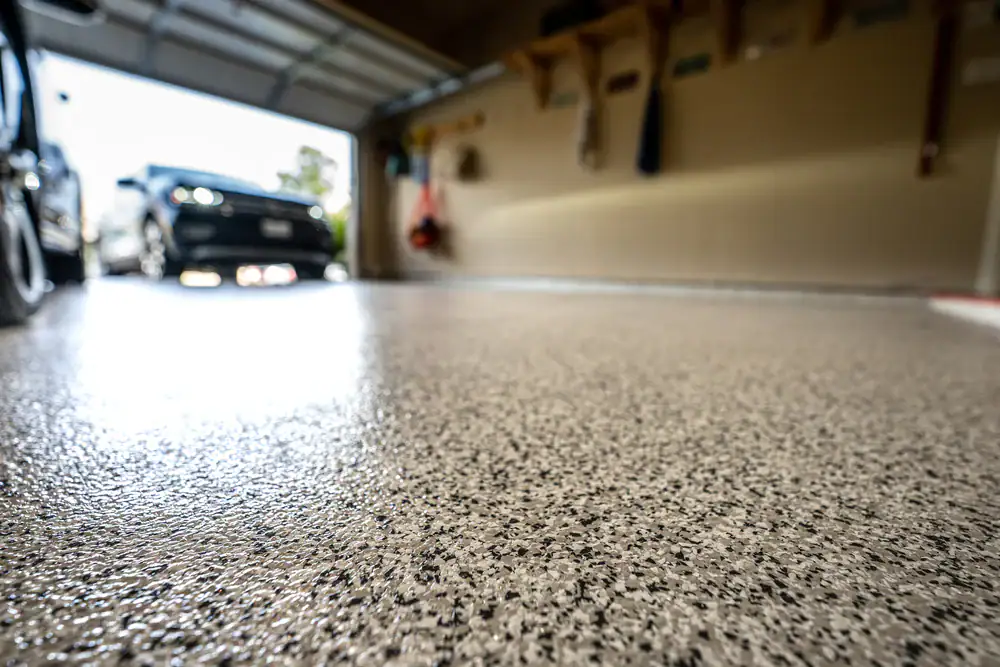
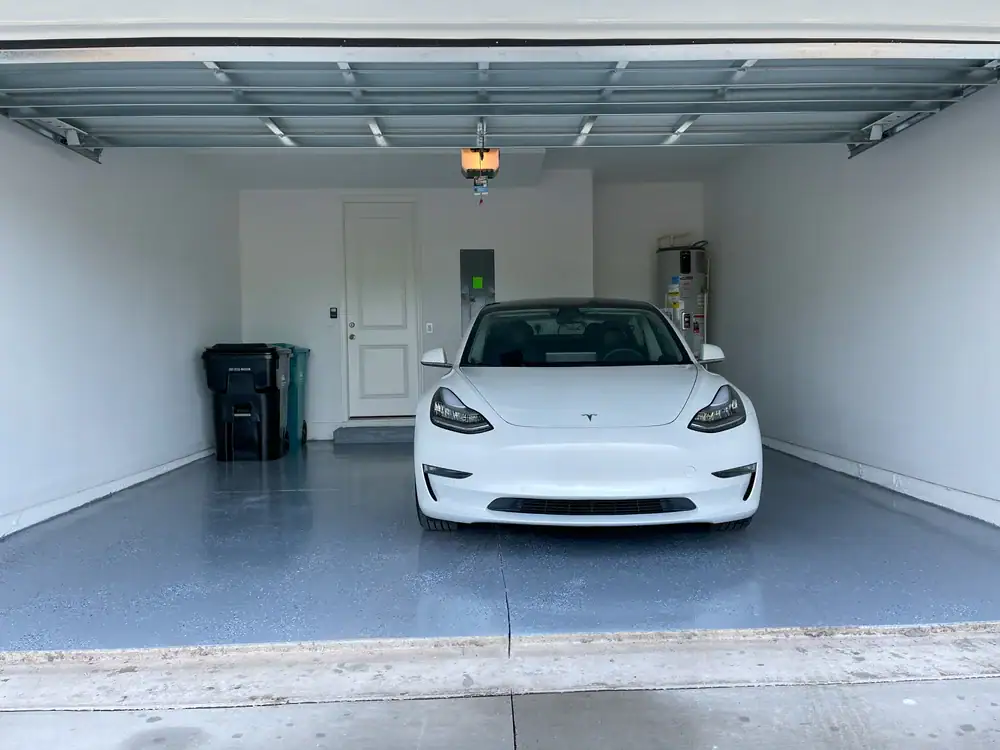
An epoxy garage floor changes that. It seals the concrete completely, blocking moisture from wicking up and causing mold or odor issues. It resists chemicals, won’t absorb oil or fluids, and handles the weight of vehicles without chipping or wearing down. You get a surface that’s easier to clean, looks sharp, and actually lasts—10 to 20 years when installed correctly.
The difference shows up immediately. Your garage stops feeling like a neglected space and starts functioning like an extension of your home. And if you’re thinking about resale value, homes with quality epoxy flooring in Walton often see a 5-10% bump in asking price. One Florida homeowner gained $45,000 above asking after buyers saw their coated garage during showings.
Epoxy Flooring Contractors Walton FL
We’ve been installing epoxy and polished concrete floors across Florida since 2020. We’ve worked with the Coast Guard, US Army, City of Doral, City of Sunny Isles, and county facilities—projects where the floor has to perform under serious conditions. That same level of work goes into every residential garage we coat in Walton.
We’re not a franchise or a national chain. We work directly with homeowners, handle our own installations, and use premium products from Sherwin Williams and Fosroc. You’ll talk to the same people from consultation to completion, and if something needs attention after the job, we’re still here.
Walton’s climate isn’t easy on concrete. The sandy soil shifts after heavy rain, humidity stays high year-round, and salt air from the coast accelerates wear. We account for all of that before we ever mix a batch of epoxy. You’re not getting a one-size-fits-all approach—you’re getting a floor system designed for this exact environment.
Garage Floor Epoxy Installation Process
We start with a consultation at your property. You’ll walk us through what you’re dealing with—stains, cracks, moisture issues, whatever’s going on. We assess the concrete condition, check for underlying problems, and talk through your options. No pressure, no upselling. Just a clear breakdown of what your garage needs and what it’ll cost.
Once you’re ready to move forward, we prep the surface. That means grinding down the concrete to open the pores, repairing any cracks or damage, and making sure the slab is completely clean and dry. This step matters more than most people realize. If the prep isn’t done right, the coating won’t bond properly, and you’ll have problems within a year or two. We don’t skip it.
After prep, we apply the epoxy system in layers. Depending on your needs, that might include a moisture barrier, a base coat, decorative flakes for texture and slip resistance, and a clear topcoat for UV and chemical protection. In Florida’s humidity, drying times run 25-50% longer than in drier climates, so we factor that into the schedule. Most residential garages are fully cured and ready for vehicles within a few days.
You’ll get a follow-up call after the job to make sure everything’s holding up the way it should. If you ever have questions or concerns down the road, you can reach us directly.
Ready to get started?
Garage Floor Coatings for Walton Homes
This isn’t just a coat of paint. You’re getting a multi-layer flooring system engineered to handle Florida’s unique conditions. That includes surface preparation, crack and damage repair, moisture mitigation if needed, epoxy base layers, optional decorative flake broadcasting, and a high-performance topcoat that resists UV damage, chemicals, and abrasion.
Walton homeowners deal with specific challenges. The area’s sandy soil shifts easily, especially after storms or flooding, which leads to slab movement and cracking. High humidity allows moisture to penetrate concrete pores, and when temperatures swing, that trapped water expands and contracts, causing spalling and surface damage. We address these issues during prep and material selection, using humidity-resistant formulations that won’t delaminate or bubble.
The result is a garage floor that’s waterproof, stain-resistant, and easy to maintain. Routine sweeping and occasional mopping keep it looking new. You won’t deal with oil absorption, concrete dust, or discoloration anymore. And because the coating is slip-resistant even when wet, it’s safer for your family.
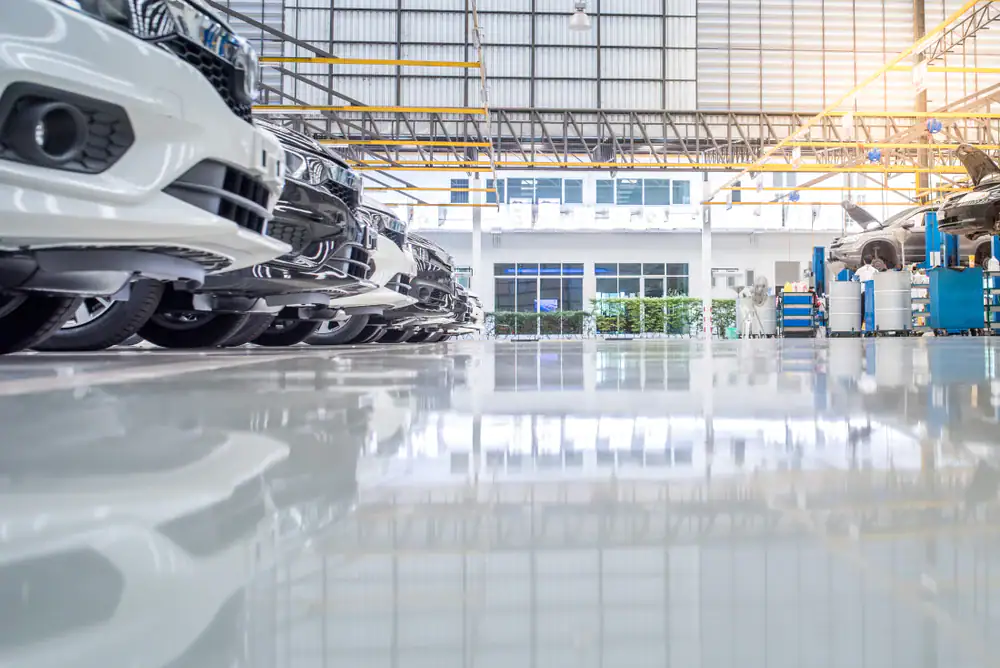
We also handle commercial and industrial projects—warehouses, parking decks, safety line striping—so the technical knowledge and material quality you’re getting comes from working on demanding applications. Your residential garage benefits from that same level of expertise and product performance.
How long does garage epoxy flooring actually last in Florida’s climate?
A properly installed epoxy garage floor in Walton will last 10 to 20 years, even with Florida’s humidity and temperature swings. The key word there is “properly installed.” Over 70% of DIY epoxy projects fail within 18 to 36 months because the prep work wasn’t done right or the wrong products were used for the climate.
Florida’s conditions are tough on coatings. High humidity slows curing times by 25-50%, and if the concrete isn’t completely dry before application, moisture gets trapped under the epoxy and causes bubbling or delamination. We use moisture meters to verify the slab is ready, and we apply humidity-resistant formulations designed for coastal and tropical environments.
You’ll also get longer life if you avoid certain mistakes after installation. Don’t use acidic cleaners or harsh chemicals that can break down the topcoat. Don’t drag heavy metal objects across the surface without protection. And if you park a hot vehicle on the floor within the first week, you risk leaving tire marks in epoxy that hasn’t fully cured. We’ll walk you through all of this during the consultation so you know exactly how to maintain it.
Why do so many garage floor coatings fail in Walton and the surrounding area?
Most failures come down to three things: poor surface prep, wrong product selection, and ignoring Florida’s humidity. Concrete in Walton sits on sandy soil that shifts after rain and flooding. When the soil settles unevenly, the slab cracks. If those cracks aren’t repaired before coating, they’ll telegraph through the epoxy and eventually cause the coating to fail.
Humidity is the other major issue. Florida’s moisture levels make it harder for solvents and resins to cure properly. If you apply a standard epoxy designed for dry climates, it won’t bond the way it should. Moisture vapor transmission through the concrete can also cause coatings to lift or bubble if a proper moisture barrier isn’t used. We test for this before every installation.
Then there’s the prep work. A lot of contractors skip the grinding step or don’t clean the surface thoroughly. Epoxy needs an open, porous surface to bond to. If there’s oil, dirt, or a slick finish on the concrete, the coating won’t stick. We mechanically grind every floor to ensure proper adhesion, and we repair any damage before we start applying product. That’s why our installations hold up when others don’t.
What’s the cost difference between DIY epoxy kits and professional installation?
DIY kits from big-box stores run $200 to $600 for a two-car garage, depending on the brand. Professional installation typically costs $1,500 to $4,000 for the same space, depending on the condition of your concrete and the coating system you choose. That’s a significant gap, which is why a lot of homeowners try the DIY route first.
Here’s what usually happens. The DIY coating looks decent for the first few months, then starts peeling at the edges or developing hot tire pickup where your car parks. Within a year or two, it’s failing in multiple spots, and now you’re facing the cost of stripping it off and starting over. That removal process often costs as much as professional installation would have in the first place.
Professional installation includes surface grinding, crack repair, proper moisture testing, commercial-grade materials, and a multi-layer system that’s designed to last. You’re also getting a team that’s done this hundreds of times and knows how to handle Florida’s climate challenges. The upfront cost is higher, but the cost per year of use is actually lower because you’re not redoing it every two years. And if you’re planning to sell your home, a professionally coated garage adds measurable resale value—DIY kits don’t.
How soon can I park my car on a new epoxy garage floor?
You can typically walk on the floor after 24 hours, but you’ll need to wait 5 to 7 days before parking a vehicle on it. That timeline stretches in Florida because of the humidity. Epoxy cures through a chemical reaction, and high moisture levels in the air slow that process down. Rushing it causes problems.
If you park a car too soon, the weight and heat from the tires can leave permanent marks in epoxy that hasn’t fully hardened. Hot tire pickup is one of the most common complaints we hear from people who used other contractors or tried DIY kits. It happens when the coating isn’t fully cured and the heat from your tires softens the surface just enough to leave an imprint.
We’ll give you a specific timeline based on the products we use and the conditions during your installation. In most cases, you’ll want to keep vehicles off the floor for a full week to be safe. If you need your garage back faster, we can discuss polyaspartic coatings, which cure much quicker—sometimes within 24 hours. They cost a bit more, but they’re a good option if you can’t afford to have your garage out of commission for several days.
Can epoxy flooring handle Florida’s humidity and moisture issues long-term?
Yes, but only if it’s installed with the right prep and materials. Epoxy creates a waterproof barrier over your concrete, which actually helps protect the slab from moisture damage. The problem is when moisture is already in the concrete or coming up through it due to hydrostatic pressure. If that’s not addressed before installation, the coating will fail.
We test for moisture vapor transmission before every job. If your slab is releasing too much moisture, we’ll apply a moisture mitigation primer or recommend a different coating system that’s designed to handle it. Walton’s high water table and sandy soil make this more common than in other parts of the country, so it’s something we check for automatically.
Once the epoxy is down and fully cured, it prevents new moisture from seeping into the concrete. That means no more mold growth, no musty odors, and no surface damage from water sitting on the floor. You’ll also notice the garage feels less humid overall because moisture isn’t evaporating up through the slab anymore. It’s one of those benefits people don’t expect but appreciate once they experience it.
What maintenance does an epoxy garage floor actually require?
Not much. Sweep or blow out debris regularly so dirt and sand don’t get ground into the surface. Mop with a mild cleaner and water when it needs it—usually every few weeks depending on use. That’s about it. Epoxy doesn’t absorb stains, so oil drips and spills wipe up easily as long as you don’t let them sit for weeks.
Avoid using acidic or citrus-based cleaners. They can dull the finish over time and break down the topcoat. Stick with pH-neutral cleaners or simple dish soap and water. If you spill something harsh like battery acid or paint thinner, clean it up right away. The coating will resist it, but leaving chemicals sitting on any surface for extended periods isn’t a good idea.
You might want to add a fresh topcoat every 5 to 10 years depending on traffic and wear. That’s not a full reinstallation—just a new clear layer to refresh the shine and protection. We can handle that when the time comes. Other than that, epoxy is one of the lowest-maintenance flooring options available. You’re not sealing it annually like stained concrete, and you’re not replacing it every few years like garage floor mats or tiles.
Other Services we provide in Walton
Leave a Reply