


Garage Epoxy Flooring in West Little River, FL
Garage Floors That Actually Last in Florida
Hear from Our Customers
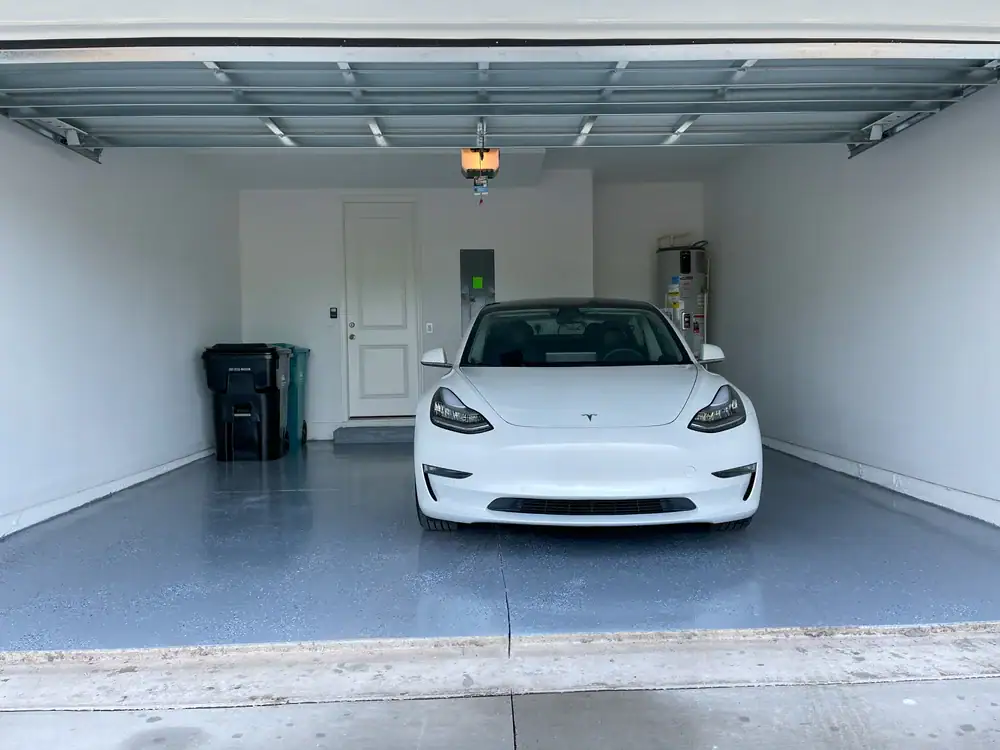
Professional Epoxy Garage Floor Installation
Your garage floor takes a beating. Oil drips, hot tires, Florida’s relentless humidity, and whatever else life throws at it. Most coatings fail within a few years because they weren’t designed for this climate or installed with the right prep work.
When you choose professional epoxy flooring, you’re looking at 15 to 20 years of performance. That’s not marketing talk—that’s what happens when the system includes UV inhibitors, moisture barriers, and proper surface preparation designed specifically for South Florida conditions.
You get a floor that resists chemicals, wipes clean in minutes, and doesn’t peel or bubble when the humidity spikes. It’s not just about looks. It’s about a floor that holds up to your actual life without constant maintenance or early replacement.
The difference shows up in year three, year five, year ten. While DIY kits from the hardware store start flaking and discoloring, a professionally installed epoxy garage floor keeps performing exactly like it did on day one.
Veteran-Owned Epoxy Flooring Contractor
We’re a veteran-owned company that’s been serving West Little River and the greater South Florida area since 2020. We’ve installed epoxy flooring for the U.S. Coast Guard, Army facilities, the City of Doral, the City of Sunny Isles, and county projects across the region.
That experience matters when you’re dealing with Florida’s climate. We’ve seen what works and what fails. We know how moisture vapor pressure affects concrete in this area, and we know how to prevent the problems that show up 18 months after a cheap installation.
We work with Sherwin Williams and Fosroc products because they meet the standards we’d use on a military installation. You get the same materials, the same process, and the same attention to detail whether it’s your two-car garage or a 10,000-square-foot commercial space. We’re not the cheapest option in West Little River, and that’s intentional—you’re paying for a floor that lasts, not one that needs redoing in three years.
Garage Floor Coating Installation Process
Every project starts with moisture testing. South Florida concrete holds moisture differently than other regions, and if we don’t account for that, the coating fails. We use specialized equipment to measure vapor levels and determine exactly which sealing system your slab needs.
Next comes surface preparation. This is where most failures happen with DIY kits and budget contractors. We grind the concrete to open the pores, remove any existing coatings or sealers, and repair cracks properly. If the surface isn’t prepped right, nothing sticks long-term.
Once the slab is ready and climate conditions are optimal, we apply the epoxy system in layers. This includes the base coat, optional decorative flakes or metallic finishes if you want them, and a clear topcoat with UV inhibitors. We add slip-resistant aggregates in areas where water might collect.
The cure time is typically 24 to 48 hours before you can walk on it, and 72 hours before parking vehicles. Most residential garage projects take two to three days from start to finish. We monitor temperature and humidity throughout the process because Florida’s climate doesn’t give you much margin for error.
Ready to get started?
Epoxy Floor Coating Options and Features
You’re getting an industrial-grade epoxy floor coating system with moisture barriers and UV protection built in. That’s not standard in most residential applications, but it’s necessary in West Little River where humidity levels run 20% higher than the national average.
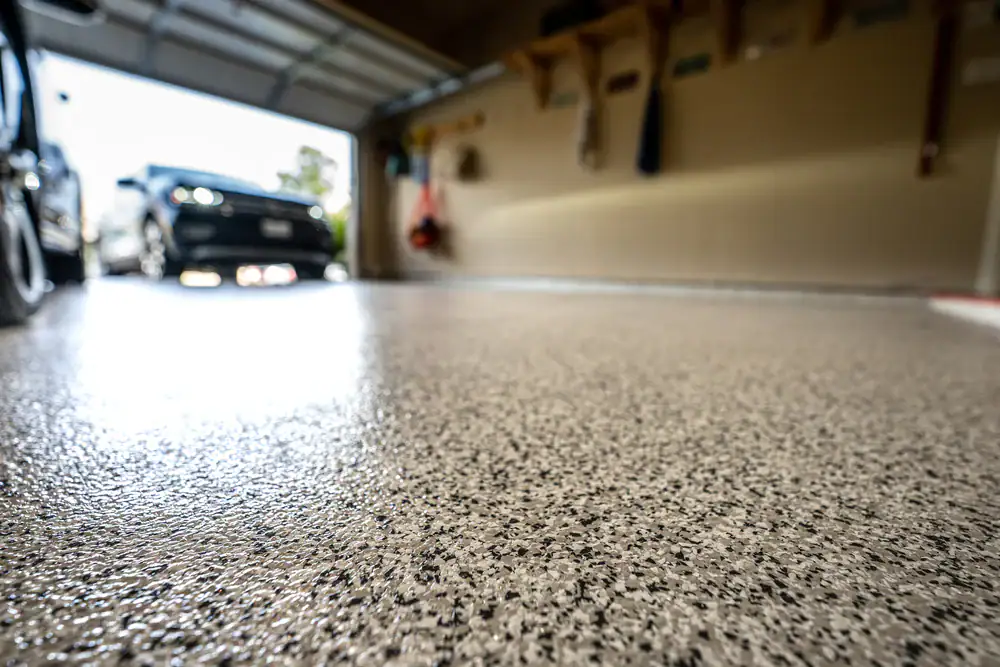
The system includes complete crack repair, surface grinding, and a multi-layer application process. You can choose solid colors, decorative flake patterns, or metallic finishes depending on the look you want. All options include a clear topcoat that protects against chemicals, stains, and UV degradation.
We’re also addressing the safety issue that comes with Florida’s wet climate. Epoxy can get slippery when moisture is present, so we incorporate slip-resistant additives in the final coat. You get traction without sacrificing the smooth, easy-to-clean surface.
One thing that sets professional installation apart in this market: we’re managing the entire moisture control process. In West Little River, water vapor transmission through concrete is one of the top reasons coatings fail early. We test for it, seal against it, and monitor conditions during installation. That’s the difference between a floor that lasts two decades and one that starts peeling in two years.
This isn’t a cosmetic upgrade. It’s a functional improvement that increases your home’s resale value by an estimated 5 to 10 percent while eliminating the ongoing maintenance that comes with bare or painted concrete.
How long does epoxy flooring last in Florida’s humid climate?
Professionally installed epoxy garage floors last 15 to 20 years in residential settings, even with Florida’s humidity and temperature swings. The key is using systems specifically formulated for high-moisture environments and installing them with proper surface prep and climate controls.
DIY kits and budget installations typically fail within two to five years because they don’t account for moisture vapor pressure. South Florida concrete releases water vapor at much higher rates than other regions, and if that moisture gets trapped under the coating, you’ll see bubbling, peeling, and delamination.
A professional system includes moisture barriers, UV inhibitors, and proper curing protocols that handle the climate conditions in West Little River. That’s why the lifespan is three to four times longer than what you’d get from a hardware store kit. You’re not just paying for materials—you’re paying for a process that actually works in this environment.
What’s the difference between professional epoxy and DIY garage floor kits?
The main differences are material quality, surface preparation, and climate adaptation. DIY kits use thinner coatings that aren’t designed for Florida’s moisture levels. They also assume you’re working with ideal concrete, which is rarely the case.
Professional epoxy flooring uses industrial-grade resins with higher solids content and better chemical resistance. More importantly, we’re grinding the concrete to create proper adhesion, repairing cracks correctly, and testing for moisture issues before any coating goes down.
In West Little River’s climate, those steps aren’t optional. We’ve seen countless garage floors where homeowners tried the DIY route, only to have the coating peel within 18 months. At that point, you’re paying to strip the failed coating and start over—which costs more than hiring a professional from the start. The math only works one way: do it right the first time, or pay twice.
How much does garage epoxy flooring cost in West Little River?
Professional epoxy garage floor installation typically runs between $5 and $12 per square foot in the West Little River area, depending on the condition of your concrete, the coating system you choose, and any decorative options like metallic finishes or custom flake patterns.
For a standard two-car garage (around 400 to 500 square feet), you’re looking at $2,000 to $6,000 for a complete professional installation. That includes moisture testing, surface preparation, crack repair, the epoxy system, and topcoat with UV protection.
It’s more expensive than a DIY kit, but the lifespan is three to four times longer and you’re not dealing with the failure points that come from improper installation. When you factor in the increased home value (typically 5 to 10 percent boost) and the elimination of ongoing maintenance costs, the return on investment is clear. You’re also avoiding the $1,200-plus repair bills that come from moisture damage when the floor isn’t sealed correctly from the start.
Will epoxy flooring hold up to oil stains and automotive fluids?
Yes. Epoxy floor coatings are highly resistant to automotive fluids including oil, gasoline, brake fluid, transmission fluid, and antifreeze. The chemical resistance is one of the main reasons epoxy is used in commercial garages and industrial facilities.
When spills happen, you can wipe them up without staining as long as you clean them within a reasonable timeframe. The non-porous surface doesn’t absorb liquids like bare concrete does, so there’s no permanent discoloration or odor retention.
That said, the quality of the epoxy system matters. Professional-grade products have better chemical resistance than consumer-grade kits. We use the same coatings specified for military and municipal projects, which means they’re tested against a wide range of chemicals and solvents. If your garage sees regular automotive work, you want a system that’s proven in harsher environments than a residential setting. That’s what you’re getting with a professional installation.
How do you prevent epoxy floors from peeling in humid conditions?
Preventing peeling starts with moisture testing and proper surface preparation. We test the concrete slab for moisture vapor transmission before any coating goes down. If the levels are too high, we apply a moisture mitigation system first—otherwise, water vapor will push up through the epoxy and cause delamination.
Surface prep is the other critical factor. We mechanically grind the concrete to remove any existing sealers, open the pores, and create a profile that allows the epoxy to bond properly. Acid etching doesn’t cut it in Florida’s climate—you need aggressive mechanical prep to get reliable adhesion.
We also monitor temperature and humidity during installation. If conditions aren’t right, we wait. Rushing the process in high humidity or extreme heat is how coatings fail. The cure time matters too—we don’t let you use the floor until it’s fully cured, even if that means an extra day of waiting. These steps are why professional installations last 15 to 20 years while DIY attempts often fail within two to three years in West Little River’s climate.
Can epoxy flooring be applied over existing garage floor coatings?
It depends on what’s already there and what condition it’s in. If you have an old epoxy coating that’s still adhered well with no peeling or bubbling, we can sometimes apply a new system over it after proper surface prep. But in most cases, the existing coating needs to come off completely.
Old paint, sealers, and failed epoxy have to be removed down to bare concrete. If we coat over a compromised surface, the new epoxy will only be as strong as whatever’s underneath it—which means it’ll fail just as quickly.
We grind off the old material mechanically, then treat the concrete as if it’s a new installation. That includes moisture testing, crack repair, and proper profiling. It adds time and cost to the project, but it’s the only way to ensure the new coating lasts. Shortcuts at this stage are why you see so many garage floors with peeling edges and bubbled sections. We’d rather take the extra day to do it right than have you call us back in two years with a failed floor.
Other Services we provide in West Little River
Leave a Reply