


Garage Epoxy Flooring in Westlake, FL
Florida-Engineered Garage Floors That Actually Last
Hear from Our Customers
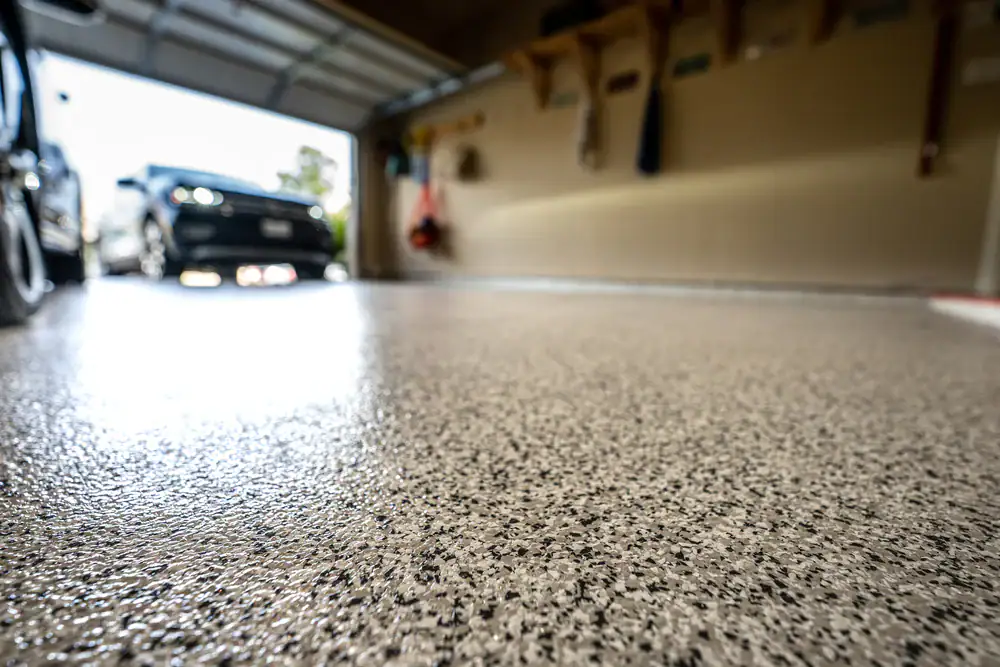
Epoxy Floor Coating Built for Westlake
You’ve seen what Florida does to concrete. The cracks that show up after a heavy rain. The oil stains that won’t come out. The flaking and peeling from moisture that gets trapped underneath.
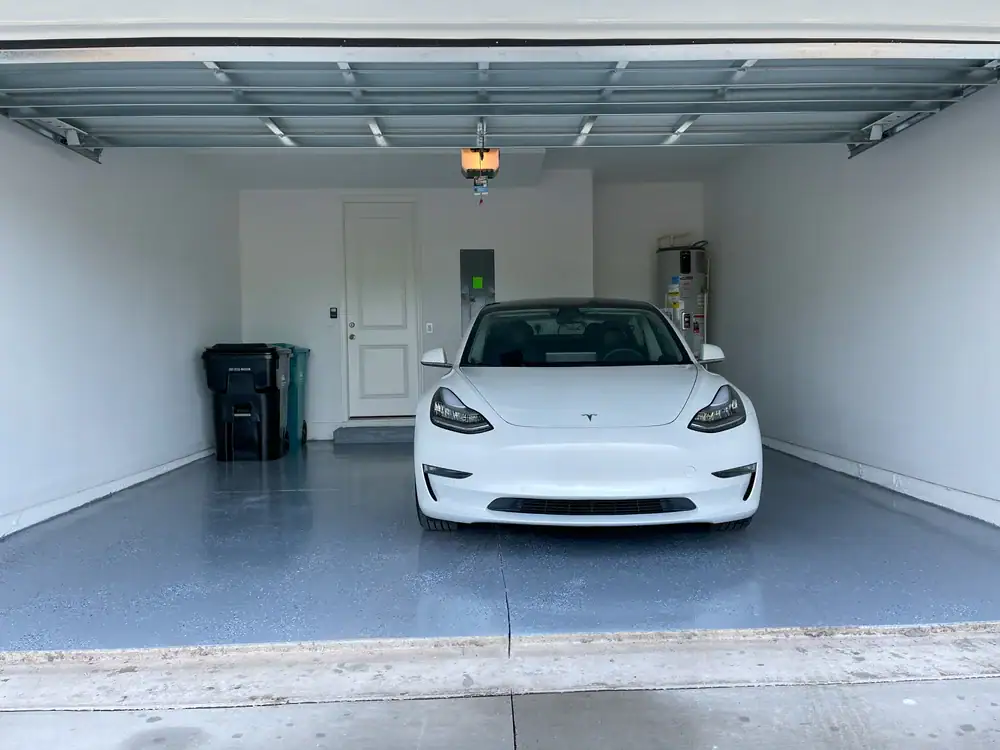
An epoxy garage floor from SPF Industrial changes that. You get a seamless, chemical-resistant surface that handles hot tires, spilled fluids, and South Florida’s relentless humidity without breaking down. No more stains soaking into porous concrete. No more wondering if your floor will hold up through another summer.
Most installations finish in a day. You’re back to using your garage within 48 hours. And the floor performs for 15-plus years without needing the constant maintenance that cheaper alternatives demand. Just sweep it weekly, mop it monthly, and it keeps looking sharp.
This isn’t about making your garage pretty. It’s about installing a garage floor coating that actually works in Florida’s climate and saves you from dealing with the same problems again in two years.
Westlake’s Epoxy Flooring Contractor
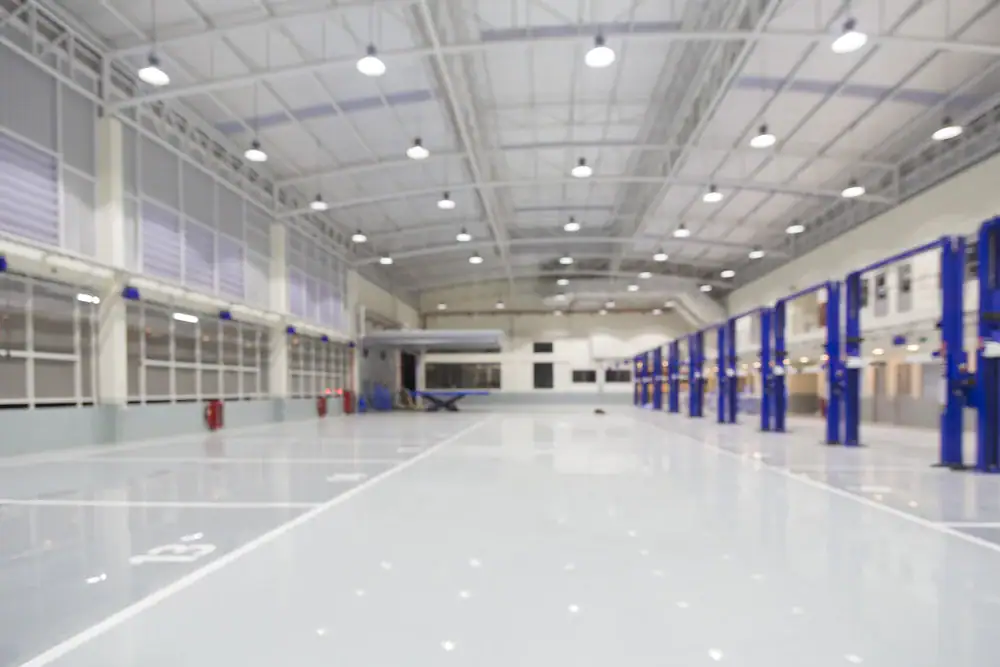
SPF Industrial has been installing commercial-grade epoxy flooring since 2020. We’ve worked with the U.S. Military, Coast Guard, City of Doral, and City of Sunny Isles. If our systems can handle the demands of government facilities and industrial spaces, your Westlake garage isn’t a problem.
We don’t use subcontractors. Every installation is done by our full-time team using professional-grade materials from Sherwin Williams and Fosroc. These aren’t the DIY kits you find at hardware stores that fail within a year.
Westlake homeowners deal with the same challenges as the rest of South Florida: sandy soil that shifts after storms, constant humidity that seeps into concrete, and summer heat that can soften inferior coatings. We test concrete moisture levels, monitor humidity during installation, and use epoxy systems specifically engineered for these conditions. You’re not getting a generic floor. You’re getting one built to last in this exact climate.
Our Garage Epoxy Flooring Process
First, we test your concrete. Moisture content has to be below 4% or the epoxy won’t bond properly. If humidity is too high, we use dehumidification equipment to bring it down. This step is why our floors don’t peel like the cheap ones do.
Next comes surface prep. We grind down the concrete to remove any existing coatings, contaminants, or weak surface layers. If there are cracks, we fill and repair them before moving forward. The concrete needs to be completely clean and profiled correctly for the epoxy to lock in.
Then we apply the epoxy system. Depending on your needs, this could be a solid color, a decorative flake finish, or a high-performance coating designed for heavy use. We’re not rushing through this. The application has to be done right because there’s no fixing it later without starting over.
Most garage floor coatings cure enough for light foot traffic within 24 hours. Full vehicle traffic is usually safe after 48 hours. You’ll get clear instructions on when you can start using the space again. And once it’s cured, you’ve got a floor that resists chemicals, won’t stain from oil or gasoline, and handles Florida heat without softening or marking from hot tires.
Ready to get started?
What’s Included in Garage Floor Coating
Every epoxy garage flooring installation includes moisture testing, surface preparation, crack repair, and the epoxy application itself. We’re not skipping steps to save time. If the concrete isn’t ready, we make it ready.
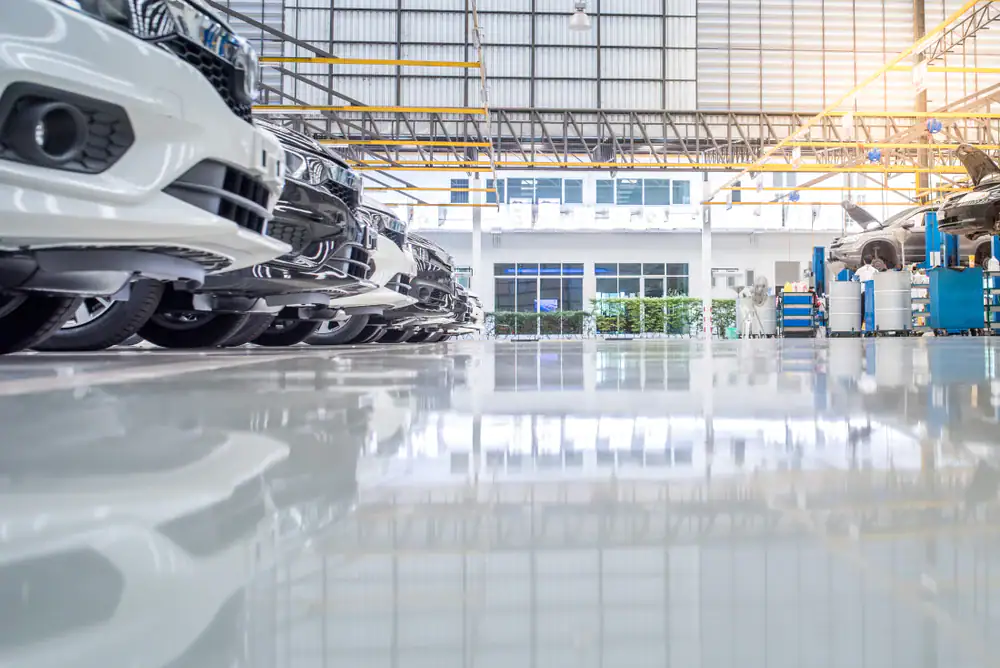
You also get materials designed for commercial and industrial use. We work with manufacturers like Laticrete, Koster USA, and Advanced Polymer Technology. These are the same products used in food processing plants, sports stadiums, and facilities that can’t afford downtime or failures.
In Westlake, the biggest issue we see is moisture. Florida’s humidity doesn’t take a day off, and if water gets trapped under your garage floor coating, it will fail. We monitor relative humidity during the entire process and won’t install until conditions are right. That’s why our floors stay bonded while others peel within months.
You’re also getting a floor that’s customizable. Choose from solid colors, decorative flakes, or textures that match your home’s style. And because the surface is seamless, there are no grout lines or seams where dirt and moisture can hide. It’s easier to keep clean than tile, and it performs better than any DIY kit you’ll find at a big-box store.
How long does garage epoxy flooring last in Florida’s climate?
A properly installed epoxy garage floor lasts 15 to 20 years in South Florida. That’s assuming professional installation with the right materials and surface prep. DIY kits and cheaper coatings usually fail within one to three years because they’re not designed for Florida’s heat and humidity.
The longevity comes down to three things: moisture control, surface preparation, and material quality. If moisture gets trapped under the epoxy, it will push the coating off the concrete. If the surface isn’t ground and cleaned properly, the bond won’t hold. And if you’re using consumer-grade products instead of commercial systems, they’re not built to handle the stress.
We test concrete moisture before every installation and won’t proceed until it’s below 4%. We grind the surface to create the mechanical bond the epoxy needs. And we only use professional-grade materials from manufacturers like Sherwin Williams and Fosroc. That’s why our floors are still performing decades later while others are peeling and cracking.
What causes epoxy garage floors to peel or fail?
Peeling happens when moisture gets trapped under the coating or when the surface wasn’t prepped correctly. Florida’s humidity makes this worse because water vapor is constantly trying to push through your concrete slab. If the epoxy isn’t applied under the right conditions, that moisture will eventually win.
Poor surface prep is the other major cause. If the concrete has oil stains, dirt, or a weak surface layer, the epoxy bonds to that contamination instead of the solid concrete underneath. When that contaminated layer breaks down, the whole coating comes with it. That’s why grinding and cleaning the surface is non-negotiable.
DIY kits fail faster because they’re thinner, less durable, and most homeowners don’t have the equipment to prep the surface correctly. You might save money upfront, but you’ll spend more fixing it later. Professional installation costs more because we’re doing the work that actually makes the floor last. We test moisture, grind the concrete, repair cracks, and use materials designed for heavy use in harsh climates.
How much does epoxy garage flooring cost in Westlake?
For a standard two-car garage in Westlake, you’re looking at around $2,300 to $3,500 depending on the size and the system you choose. A three-car garage typically runs closer to $3,500 to $5,000. The range depends on square footage, the condition of your existing concrete, and whether you want decorative finishes or a solid color.
That price includes everything: moisture testing, surface prep, crack repair, and the epoxy application. We’re not charging extra for steps that should be standard. If your concrete needs more extensive repairs or if moisture levels are high and require extra drying time, that can add to the cost, but we’ll tell you that upfront during the consultation.
Cheaper quotes usually mean corners are being cut. Either they’re skipping moisture testing, using thinner coatings, or rushing through surface prep. You’ll pay less now, but you’ll be dealing with a failed floor in a year or two. We price our work based on doing it right the first time so you’re not calling someone else to fix it later.
Can you install epoxy flooring over cracked or damaged concrete?
Yes, but the cracks need to be repaired first. Epoxy won’t fix structural problems in your concrete. If there are cracks, we fill and seal them before applying the coating. If the slab has shifted or there’s significant damage, we’ll assess whether it needs more extensive repair work before epoxy is even an option.
Florida’s sandy soil shifts after heavy rain, and that movement causes concrete slabs to crack. Small cracks can be filled and won’t affect the epoxy’s performance. Larger cracks or areas where the slab has settled might need grinding, resurfacing, or even concrete replacement depending on the severity.
During the consultation, we’ll look at your garage floor and tell you exactly what it needs. If it’s just surface cracks, that’s a straightforward repair. If there are deeper structural issues, we’ll explain your options and what each one costs. The goal is to give you a floor that performs for 15-plus years, and that only happens if the foundation underneath is solid.
How soon can I use my garage after epoxy installation?
You can walk on the floor after 24 hours. Full vehicle traffic is safe after 48 hours. The epoxy needs time to cure completely, and rushing that process can damage the coating before it’s fully hardened. We’ll give you specific instructions based on the system we install and the temperature and humidity levels during installation.
Most garage epoxy flooring projects finish in one day. We show up, prep the surface, apply the coating, and you’re done. The curing happens after we leave. You’re not dealing with days of downtime or having to park on the street for a week.
If you need faster turnaround, let us know during the consultation. We’ve handled emergency projects with 24 to 48-hour turnarounds for commercial clients, and we can sometimes accommodate tight schedules for residential work too. But the standard timeline is one day for installation and two days before you’re back to normal use. That’s faster than most flooring options and a lot less disruptive than tearing out and replacing concrete.
Does epoxy flooring work in Florida heat and humidity?
Yes, but only if it’s installed correctly with the right materials. Florida’s heat and humidity will destroy cheap coatings and DIY kits. Professional-grade epoxy systems are engineered to handle high temperatures and constant moisture without softening, peeling, or losing their bond to the concrete.
The key is controlling moisture during installation. We test the concrete’s moisture content and monitor relative humidity throughout the process. If conditions aren’t right, we delay the installation. Applying epoxy when moisture levels are too high guarantees failure. That’s why some floors peel within months while ours last decades.
We also use thermal-resistant epoxy systems that won’t soften when you drive a hot car into the garage. Cheaper coatings can leave tire marks or even deform under heat. The commercial-grade materials we use are designed for industrial environments where temperature and chemical exposure are constant. Your Westlake garage isn’t going to stress them. And because the coating is chemical-resistant, spilled oil, gasoline, and brake fluid wipe away without staining or damaging the surface.
Other Services we provide in Westlake
Leave a Reply