


Garage Epoxy Flooring in Westwood Lakes, FL
Floors That Actually Survive Florida’s Humidity
Hear from Our Customers
Epoxy Garage Floor Solutions for Westwood Lakes
You’ve probably noticed the bubbling. Maybe the peeling around the edges where moisture gets trapped underneath. Or the discoloration that showed up six months after someone else installed a coating that looked great at first.
Florida’s humidity doesn’t care about cheap epoxy. The moisture vapor coming up through your concrete slab will find every weak point in an improperly installed system. You end up with a floor that looks worse than when you started, and you’re out the money you spent trying to fix it.
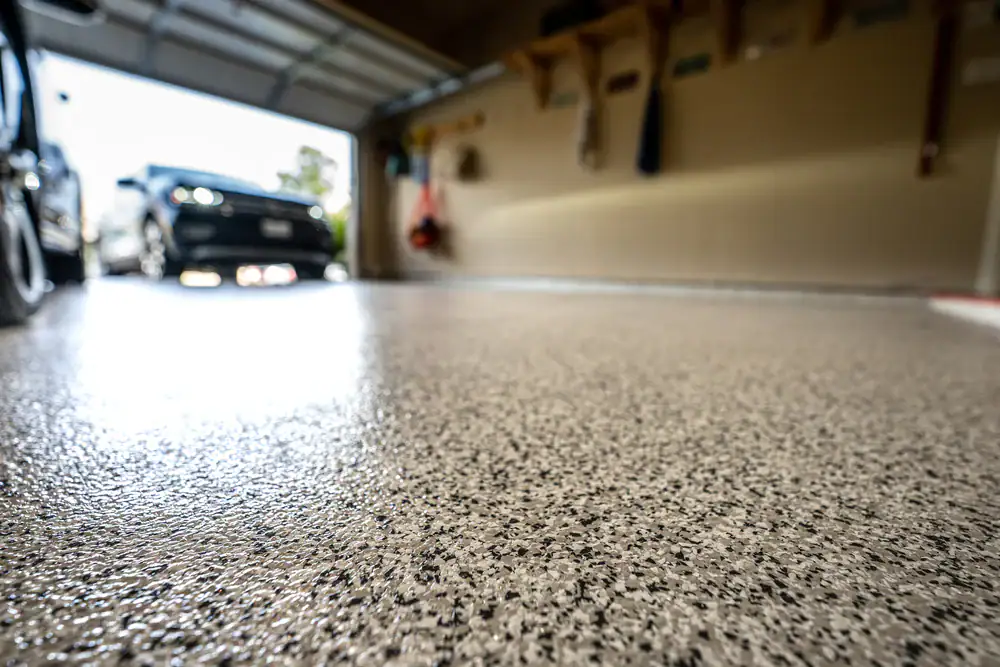
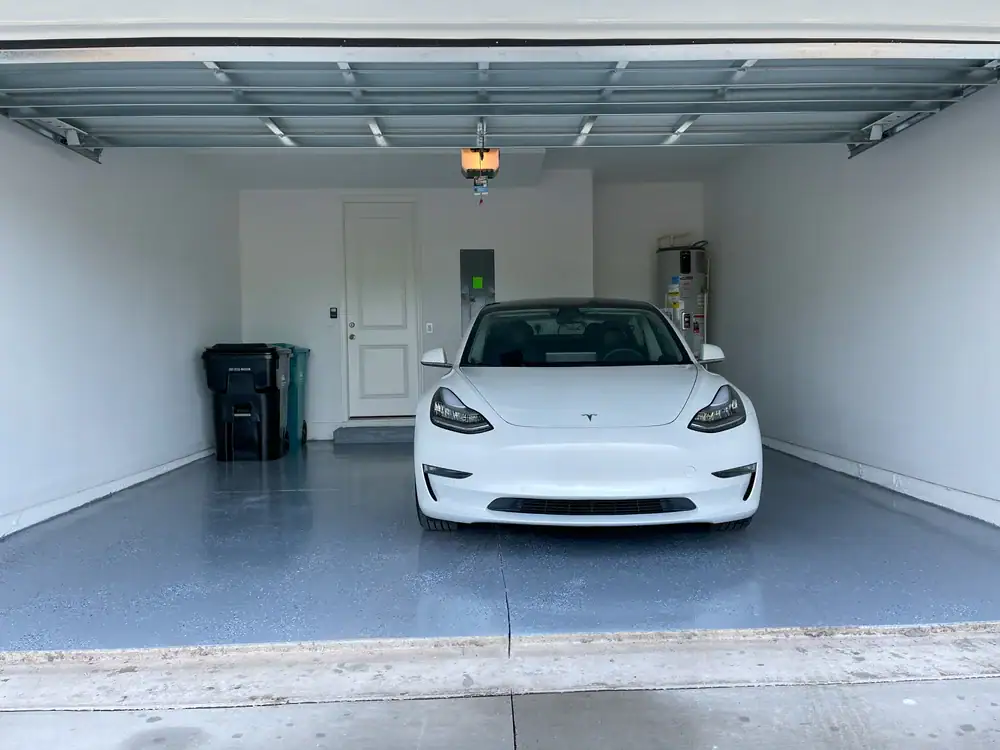
A properly installed epoxy garage floor handles what Florida throws at it. The surface stays intact when your car’s hot tires sit on it all afternoon. Oil and brake fluid wipe away without leaving stains. The coating doesn’t lift when ground moisture tries to push through from below. You get a floor that actually lasts instead of one that needs redoing in two years.
Epoxy Flooring Contractors Serving Westwood Lakes
We handle epoxy flooring and concrete polishing for residential and commercial clients across South Florida. We’ve worked with the Coast Guard, US Army, City of Doral, and Sunny Isles on projects where the floor actually matters.
Westwood Lakes homeowners deal with the same moisture problems everyone in this area faces. Your concrete sits in sandy soil that shifts. Rain and humidity create constant vapor pressure from below. We account for that during installation because we’ve seen what happens when someone doesn’t.
We use Sherwin Williams and Fosroc products. We diamond-grind the surface to create proper adhesion. We monitor temperature and humidity during installation. You get a floor installed correctly the first time.
Our Garage Floor Coating Process
We start by inspecting your concrete. We’re looking for cracks, moisture issues, and surface contamination that will cause problems later. If your slab has active moisture vapor issues, we address that first with a moisture vapor barrier system that can handle up to 16 pounds per 1,000 square feet.
Surface preparation comes next. We use diamond grinding equipment to remove any existing coatings, oils, and contaminants. This creates the mechanical bond your epoxy needs to stay attached permanently. Most coating failures happen because someone skipped this step or did it poorly.
We apply the epoxy system in layers. The primer goes down first, followed by the base coat and topcoat with UV inhibitors. We monitor temperature and humidity throughout because Florida’s climate affects curing. If conditions aren’t right, we use dehumidification equipment to control the environment.
Most garage floors are ready to walk on within 24 hours. You can drive on them after 48-72 hours depending on the system we installed. The floor will look good and perform well for 15-20 years if you maintain it properly.
Ready to get started?
Garage Floor Coatings Built for Florida
Your garage floor coating needs to handle Florida-specific problems. The UV-stable topcoat we use won’t break down from sun exposure when your garage door stays open. The chemical-resistant formulation protects against gasoline, motor oil, transmission fluid, and brake cleaner without staining or etching.
The system includes flexible resins that move with your concrete when temperature swings cause expansion and contraction. South Florida concrete never stays the same size. A rigid coating will crack. Our system flexes enough to stay intact while remaining hard enough to resist impact and abrasion.
Westwood Lakes sits in an area with high water tables and sandy soil. Your concrete slab deals with moisture vapor pressure year-round. We install a 100% solid epoxy moisture vapor barrier when your slab needs it. This prevents the bubbling and delamination that happens when moisture gets trapped under an impermeable coating.
You also get a non-porous, seamless surface. There’s nowhere for mold, mildew, or bacteria to grow. Spills sit on top instead of soaking in. You can clean the floor with a mop and basic cleaner. The coating maintains its appearance and chemical resistance with minimal maintenance for 15-20 years.
Why do garage floor coatings fail so often in Florida?
Moisture vapor is the main culprit. Your concrete slab sits on sandy soil with a high water table. Water vapor constantly moves up through the porous concrete, especially during Florida’s humid summer months and rainy season.
When someone installs an impermeable epoxy coating without addressing moisture issues first, that vapor gets trapped underneath. Pressure builds until it exceeds the bond strength between the coating and concrete. You see bubbles, blisters, and eventually large sections that peel away completely.
The second common failure point is surface preparation. Concrete needs to be completely clean and profiled correctly for epoxy to bond. Oil stains, dirt, existing sealers, and smooth surfaces all prevent proper adhesion. Diamond grinding creates the rough profile epoxy needs to grip mechanically. Most DIY kits and cheap installations skip this step because it requires expensive equipment and experience to do correctly.
How long does a professionally installed epoxy garage floor last?
A properly installed system using commercial-grade materials lasts 15-20 years in Florida’s climate. That assumes you’re not doing anything extreme like running a heavy equipment repair shop in your garage.
The key word is “properly.” The floor needs correct surface preparation, climate-appropriate products, and installation during suitable weather conditions. We monitor temperature and humidity throughout the process because Florida’s environment affects how epoxy cures. Install during a humid summer afternoon without controlling conditions, and you’ll get a coating that fails within months.
Compare that to DIY kits or budget installations using thin coatings. Those typically need redoing every 2-3 years. The upfront cost looks attractive until you factor in multiple reinstallations. You end up spending more money and dealing with more disruption than if you’d installed a professional system from the start.
What’s the difference between epoxy and the coating kits from hardware stores?
Hardware store kits use thin, water-based coatings that aren’t designed for heavy use or Florida’s climate. The coating is maybe 2-3 mils thick when applied. It sits on top of the concrete without penetrating or bonding deeply.
Professional epoxy systems use 100% solid, commercial-grade materials. The coating is significantly thicker and bonds mechanically to properly prepared concrete. These systems include UV inhibitors, flexible resins, and chemical-resistant formulations that handle automotive fluids, hot tire pickup, and thermal expansion.
The application process is also completely different. DIY kits assume you’ll clean the floor with degreaser and maybe etch it with acid. Professional installation involves diamond grinding the entire surface to remove contaminants and create the profile needed for permanent adhesion. We also address moisture issues, repair cracks and damage, and control environmental conditions during installation. You’re comparing a coating that sits on top to a system that becomes part of your concrete.
Can you install epoxy flooring over my existing garage floor coating?
Not if you want it to last. The new epoxy is only as strong as whatever it’s bonded to. If your existing coating is already failing or poorly adhered, adding another layer on top just delays the inevitable failure.
We remove existing coatings completely using diamond grinding equipment. This gets us back to bare concrete so we can inspect the slab condition and create proper surface preparation. Sometimes we find moisture problems, structural cracks, or contamination that wasn’t visible under the old coating. Addressing these issues before installing new epoxy is what makes the difference between a floor that lasts two years and one that lasts twenty.
There are rare situations where we can coat over existing epoxy if it’s in excellent condition, properly bonded, and the right type of product. But that’s the exception. Most existing garage floor coatings need complete removal before we can install a system that will perform correctly in Florida’s climate.
How much does professional garage epoxy flooring cost in Westwood Lakes?
Most residential garage floors in Westwood Lakes run between $3-12 per square foot depending on the system, surface condition, and any repairs needed. A standard two-car garage is roughly 400-600 square feet, so you’re looking at $1,200-7,200 for the project.
That range exists because every floor is different. A new concrete slab in good condition with no moisture issues costs less to coat than an older slab with cracks, oil stains, and active moisture vapor problems. The coating system also affects price. A basic solid-color epoxy costs less than a decorative flake system with multiple colors and a high-gloss topcoat.
The real cost comparison is long-term. A professional installation lasts 15-20 years. A DIY kit or budget coating needs redoing every 2-3 years. After three reinstallations of a cheap system, you’ve spent more money than the professional installation would have cost. You’ve also dealt with the hassle of prepping and recoating your garage multiple times instead of having it done correctly once.
What maintenance does an epoxy garage floor need?
Regular maintenance is straightforward. Sweep or blow out dirt and debris weekly. Mop with a mild cleaner and water monthly or when the floor looks dirty. That’s about it for routine care.
The seamless, non-porous surface doesn’t trap dirt or allow spills to soak in. Automotive fluids, oil, and chemicals wipe up easily if you get to them within a reasonable time. You don’t need special cleaners or treatments. Avoid harsh degreasers or acidic cleaners that can dull the finish over time.
The coating will show wear patterns eventually in high-traffic areas, usually near the garage door or where you walk around your vehicle. This is normal and doesn’t affect performance. If the appearance bothers you after 10-15 years, we can apply a new topcoat to refresh the look without redoing the entire system. Most homeowners don’t bother because the floor continues performing fine even with some visible wear.
Other Services we provide in Westwood Lakes
Leave a Reply