


SPF Industrial Specialty Performance Flooring
Safety Line Striping: Enhancing Organization and Safety in Warehouses
Discover how professional safety line striping transforms warehouse operations by reducing accidents, ensuring OSHA compliance, and improving workflow efficiency.
Introduction:
Summary:
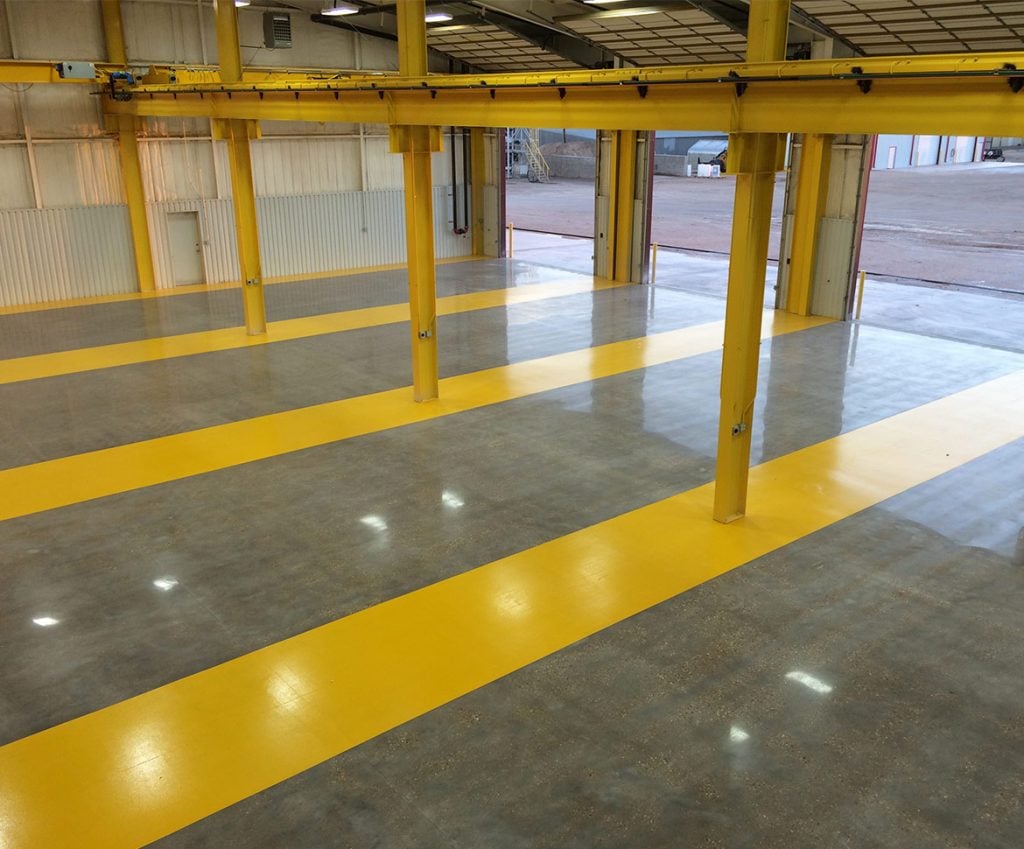
What Is Safety Line Striping and Why Warehouses Need It
Safety line striping creates visual guidance systems that separate vehicle traffic from pedestrian areas, mark equipment zones, and identify emergency pathways. Warehouse safety floor markings are extremely useful in dividing spaces and offering visual cues for the proper flow of traffic, as well as indicating areas where caution should be a priority.
Proper line striping helps ensure that traffic flows safely and smoothly, reducing accidents and improving overall warehouse safety. In Florida’s busy distribution centers, where space is at a premium and operations run around the clock, these markings become the silent traffic controllers that keep everyone moving safely.
The difference between a well-marked facility and one with faded lines is measurable. Clear, visible lines help workers navigate your warehouse more efficiently. With well-marked aisles, loading areas, and storage zones, operations run smoother, and productivity increases.
OSHA Requirements for Warehouse Floor Markings
OSHA-compliant warehouse line striping meets all necessary regulations, including clear markings for forklift lanes, pedestrian walkways, and fire lanes. But compliance goes deeper than just painting lines—it’s about creating a systematic approach to workplace safety that protects both your employees and your business.
OSHA floor marking guides help dictate what is necessary in warehouses throughout the U.S. Warehouse managers often draft floor plans of their own, but they take OSHA regulations into account while establishing a guide for efficient and safe traffic flow. The color-coding system isn’t arbitrary—it’s a universal language that workers understand regardless of which facility they’re in.
Yellow and black striped markings alert people to potential health hazards in the area. Facilities throughout the U.S. follow the same warehouse floor marking standards. This consistency means your team can work confidently, knowing that red means danger, yellow signals caution, and white indicates general traffic areas.
The financial impact of non-compliance extends beyond fines. The average cost of workers’ compensation claims is $41,003 USD. The average cost per OSHA safety violation is $13,494 USD. When you factor in lost productivity, equipment damage, and potential legal issues, proper floor markings become one of the most cost-effective investments you can make.
Critical Safety Zones That Require Professional Marking
Every warehouse has high-risk areas that demand specific marking approaches. Forklift lane markings provide clear and visible lines to guide forklifts safely through your warehouse. Pedestrian walkways create designated walkways to keep workers safe and separate from heavy equipment traffic. Loading dock striping ensures smooth and efficient loading and unloading processes with clearly marked loading dock areas. Safety zones mark designated areas for safety equipment and emergency procedures.
Aisles in warehouses where space is limited, and pedestrians squeeze past moving lifts. Blind corners and doorways where neither the pedestrian nor the forklift driver can see the other approaching. Without strict traffic control, clear walkways, and proper training, these accidents will happen. Professional marking addresses these danger zones before they become accident sites.
The intersection points deserve special attention. Creating designated pedestrian walkways is one of the most effective ways to reduce accidents. Clearly marked zones provide separation between forklifts and pedestrians, minimizing the risk of collisions. Additionally, proper signage—such as warning signs, floor markings, and pedestrian crossing indicators—ensures that both forklift operators and pedestrians are aware of traffic patterns and potential hazards.
Emergency equipment access represents another critical marking category. Areas to be kept clear for safety/compliance reasons (areas in front of electrical panels, firefighting equipment and safety equipment, such as eyewash stations, safety showers and first aid stations) must remain accessible at all times. Clear markings ensure these pathways stay open even during busy operations.
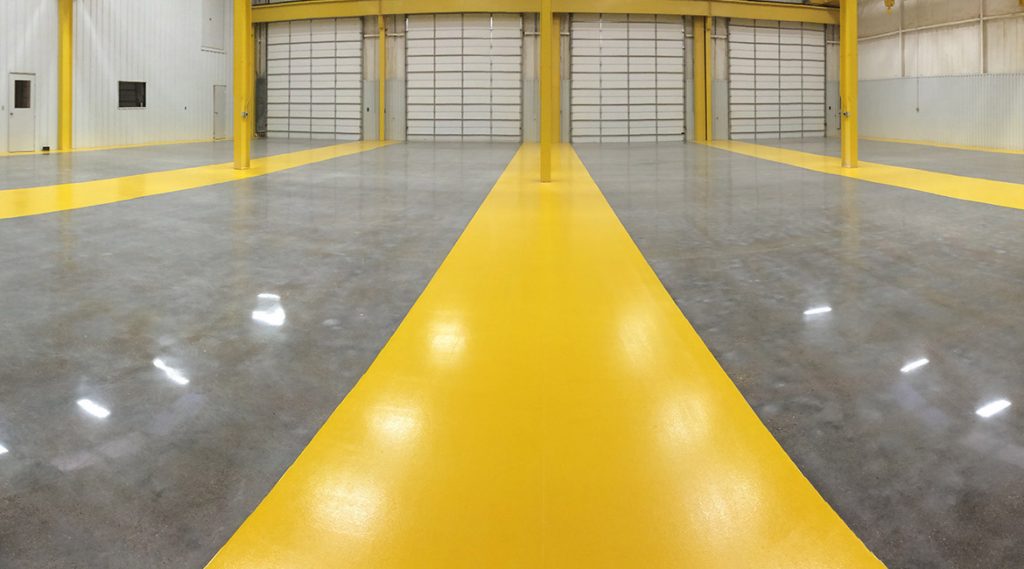
Choosing the Right Materials for Florida Warehouse Conditions
Florida’s climate presents unique challenges for warehouse floor markings. The relentless humidity and UV exposure destroy inferior sealers in just 1-2 years. Standard marking materials that work in other climates often fail quickly in our environment, leading to frequent reapplication and safety concerns.
In Palm Beach County, where humidity levels consistently run between 72-76%, standard sealers simply don’t cut it. That’s why we use UV-resistant formulations that won’t break down under Florida’s intense sun. The same principle applies to safety line striping—materials must be engineered for our specific conditions.
Professional-grade marking systems designed for Florida warehouses incorporate moisture-resistant bases and UV-stable pigments that maintain visibility and adhesion despite challenging conditions.
Epoxy vs Paint vs Thermoplastic: Material Performance Comparison
The material choice for your warehouse floor markings directly impacts longevity, visibility, and safety effectiveness. Each option offers distinct advantages depending on your facility’s specific needs and traffic patterns.
Standard paint represents the most economical initial option but requires frequent touch-ups in high-traffic areas. Most parking lots require restriping every 12–24 months depending on traffic volume, weather and the quality of the original paint. Faded lines aren’t just unsightly – they decrease safety. In warehouse environments with constant forklift traffic, paint-based markings may need attention even more frequently.
Epoxy-based marking systems provide superior durability and chemical resistance, making them ideal for warehouses handling industrial materials. In warehouses, clear floor markings guide forklifts and workers. We use durable epoxy or urethane coatings and laser guidance to create aisles, safety zones and walkways that stand up to heavy use. The initial investment pays dividends through extended service life and consistent visibility.
Thermoplastic striping is a type of reflectorized pavement marking material that is applied through a heat fusion process to the surface of asphalt and concrete. This striping process results in durable lasting reflective pavement markings. Many states and municipalities require that thermoplastic striping be applied for Lane Line Striping, Pedestrian Crosswalks, Stop Bars, Directional Arrows, and Pavement Messages due to its exceptional durability and visibility characteristics.
The choice between materials often comes down to balancing upfront costs with long-term performance. In Florida’s demanding environment, investing in higher-grade materials typically provides better value through reduced maintenance requirements and sustained safety performance.
Installation Process and Timeline Considerations
Professional safety line striping installation requires careful planning to minimize operational disruption while ensuring optimal results. The process begins with thorough surface preparation, which proves critical for adhesion and longevity in Florida’s humid conditions.
First, we test your concrete for moisture levels—a critical step that many contractors skip. Florida’s humidity means we can’t just guess; we need to know exactly what we’re working with to prevent sealer failure later. This same principle applies to floor marking preparation—understanding your substrate conditions ensures proper material selection and application techniques.
The actual installation timeline varies based on warehouse size and complexity, but most facilities can expect minimal disruption. We deliver fast quotes, next-day scheduling, and night/weekend work so you don’t disrupt business. We offer flexible scheduling to work around your operational requirements.
Surface preparation includes cleaning, minor repairs, and ensuring proper adhesion conditions. The marking application follows precise measurements and OSHA-compliant spacing requirements. Final inspection ensures all safety zones, pedestrian pathways, and equipment areas meet regulatory standards while supporting your operational workflow.
Quality installation extends beyond just applying markings. Our expert team leverages advanced technologies and industry best practices to ensure precise and neat line striping. We use laser-guided equipment and specialized application tools to achieve consistent line width, proper spacing, and optimal visibility characteristics that perform reliably over time.
Implementing Professional Safety Line Striping in Your Facility
The statistics surrounding forklift accidents highlight the critical need for comprehensive safety programs. By understanding the most common types of accidents and their root causes, organizations can implement targeted strategies to reduce risks. The most effective approach combines proper training, engineering controls, administrative policies, technological solutions, and a strong safety culture.
Your warehouse floor markings represent the foundation of this comprehensive approach. Clear, professionally installed safety line striping provides the visual guidance system that supports all other safety initiatives while improving operational efficiency.
The investment in professional safety line striping pays dividends through reduced accident rates, improved compliance, and enhanced productivity. When you’re ready to transform your warehouse safety and organization, SPF Industrial brings the expertise, materials, and commitment to excellence that South Florida facilities trust. Our team understands the unique challenges of Florida’s climate and the specific needs of modern warehouse operations.

Leave a Reply