


Self-Leveling Concrete in Crane Landing, FL
Floors That Don’t Fail Your Operations
Hear from Our Customers
Industrial Flooring Solutions Crane Landing
Uneven floors don’t just look unprofessional—they shut down operations. Equipment vibrates on unlevel surfaces. Workers trip on raised edges. Forklifts struggle with dips and cracks. Your insurance costs climb while productivity drops.
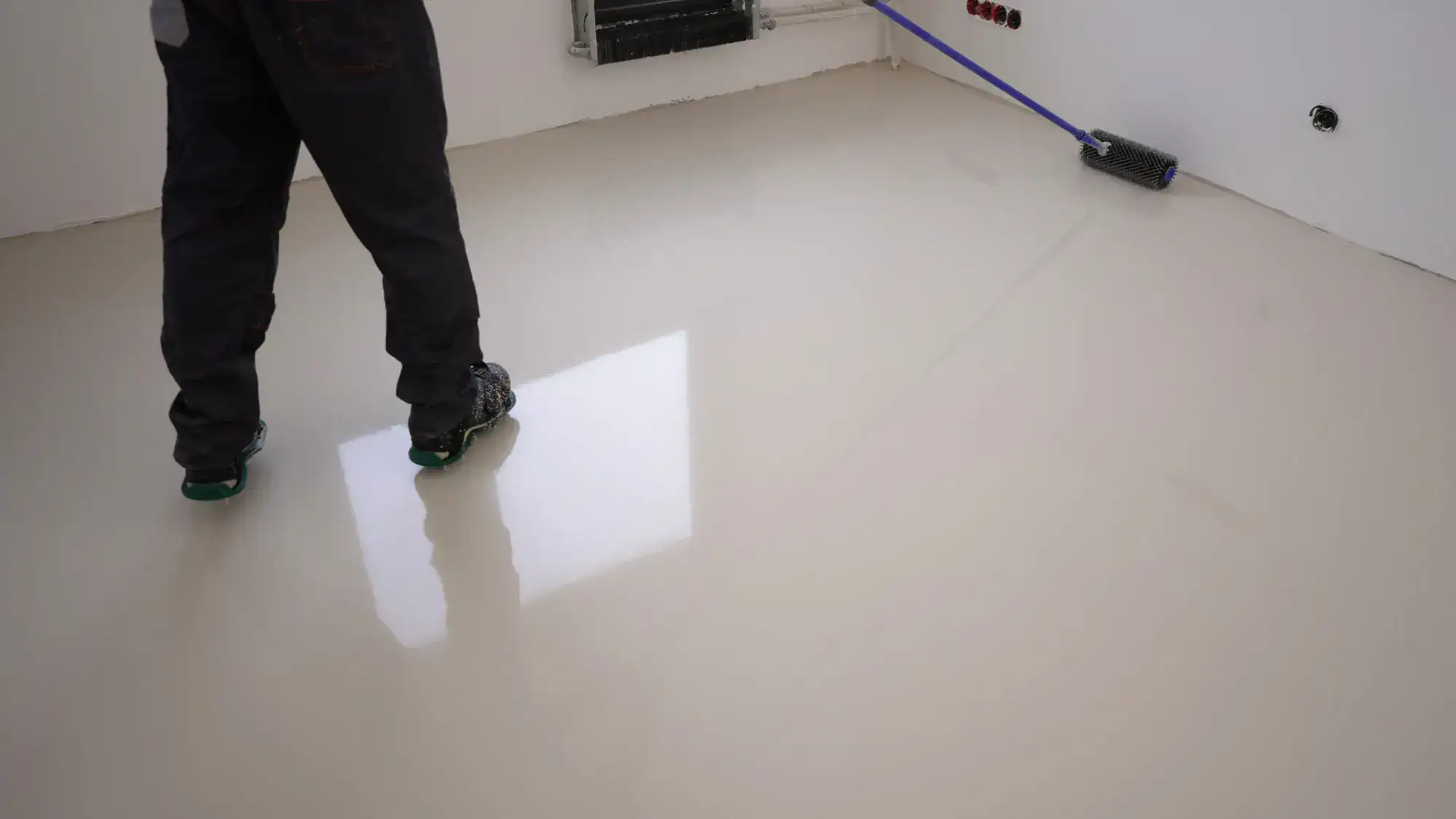
Self-leveling concrete eliminates these operational headaches permanently. You get a precision-smooth surface that handles whatever your facility demands. Heavy machinery runs smoothly. Workers move safely. Equipment lasts longer because it’s not fighting uneven surfaces.
The difference shows up in your bottom line immediately. Fewer accidents. Less equipment wear. Higher productivity. A facility that actually supports your business instead of fighting it.
Concrete Floor Contractor Crane Landing
When the US Coast Guard needs precision concrete work, they call SPF Industrial. Same with the US Army, City of Doral, and City of Sunny Isles. Government agencies don’t take chances with contractors—and neither should you.
We’ve been delivering military-grade concrete solutions across South Florida since 2020. Every project gets the same attention to detail that earned us contracts with the most demanding clients in the region.
Crane Landing facility managers choose us because we show up when promised, deliver exactly what we quote, and stand behind our work. No surprises. No excuses. Just floors that perform exactly as promised, backed by the track record that earned government trust.
Self-Leveling Concrete Process Florida
Most concrete problems start with poor preparation. Contractors rush the prep work, skip moisture testing, or ignore contamination issues. The result is floors that fail within months.
We start every project with thorough surface assessment and preparation. Your existing concrete gets cleaned, tested, and properly profiled for adhesion. Any cracks or structural issues get addressed before we apply the self-leveling compound. This takes time, but it’s what separates permanent solutions from temporary fixes.
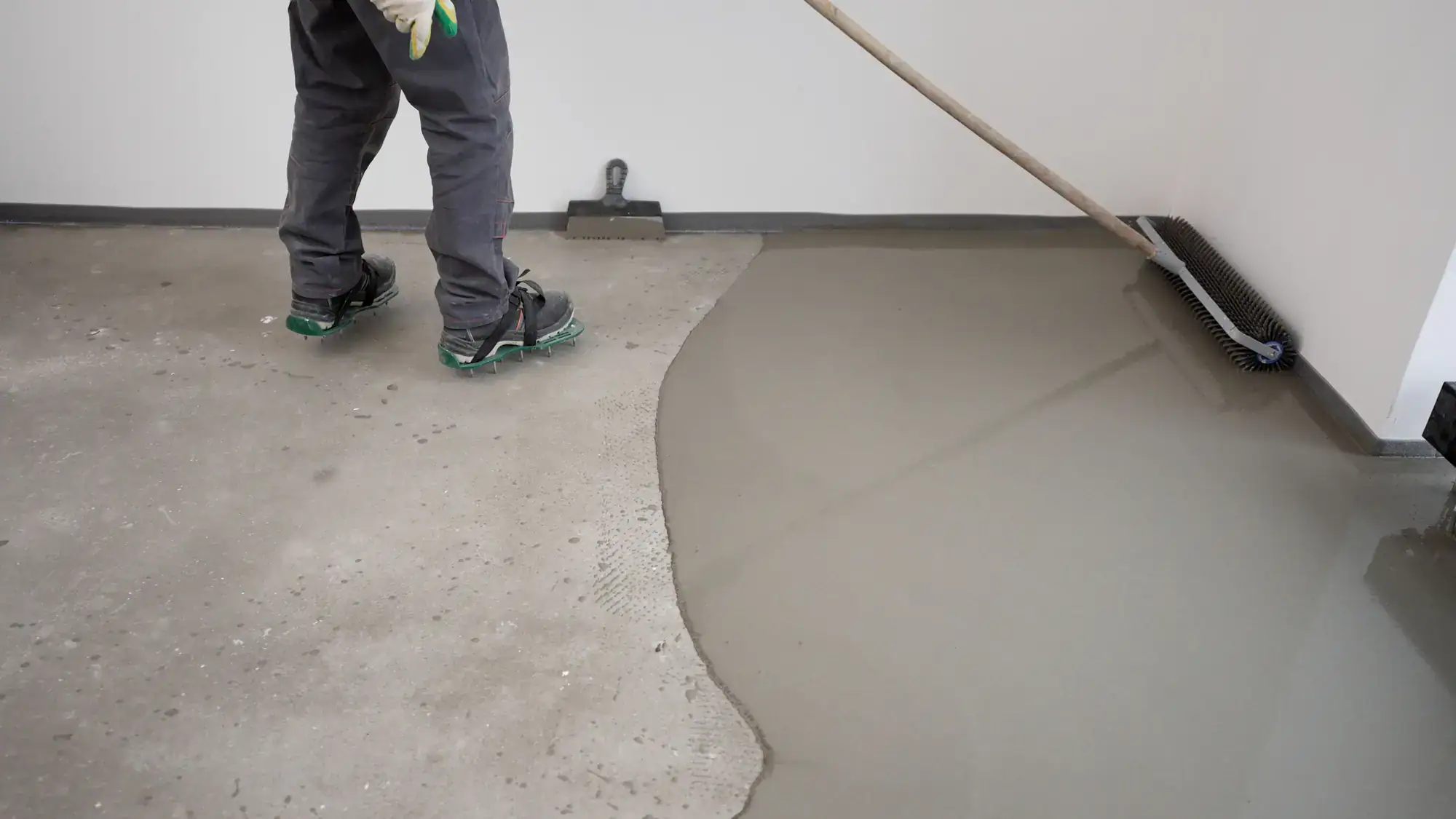
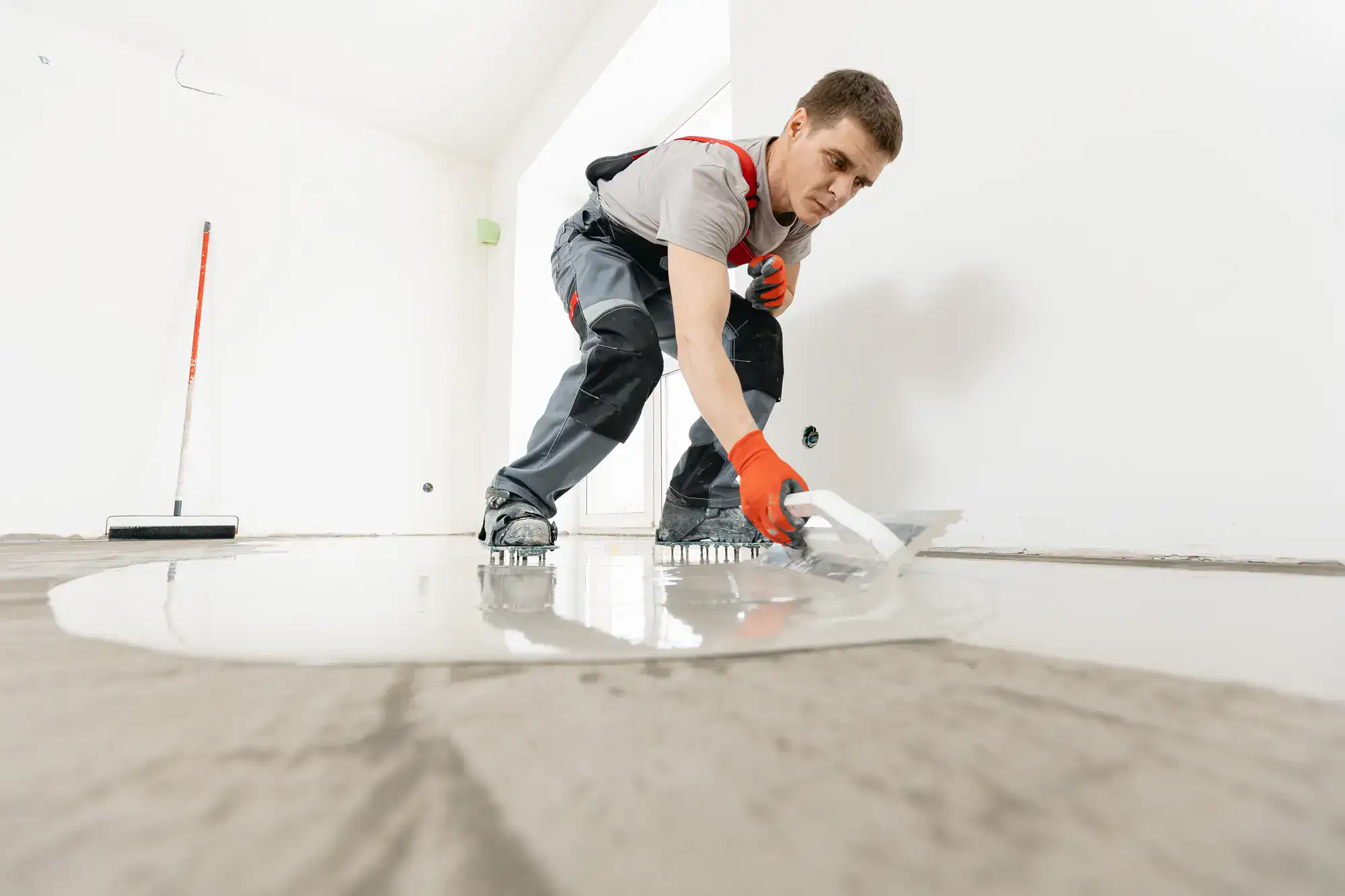
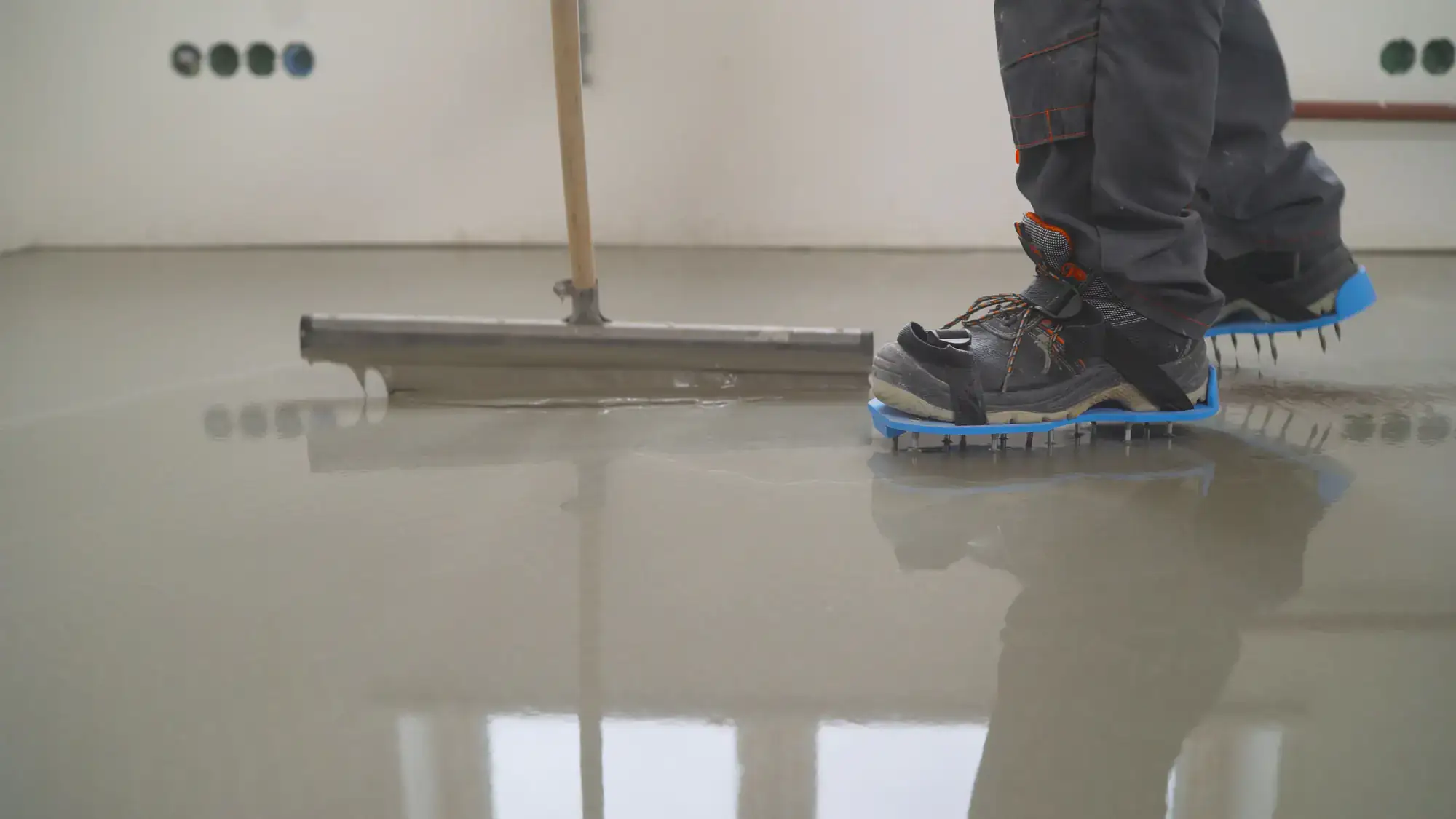
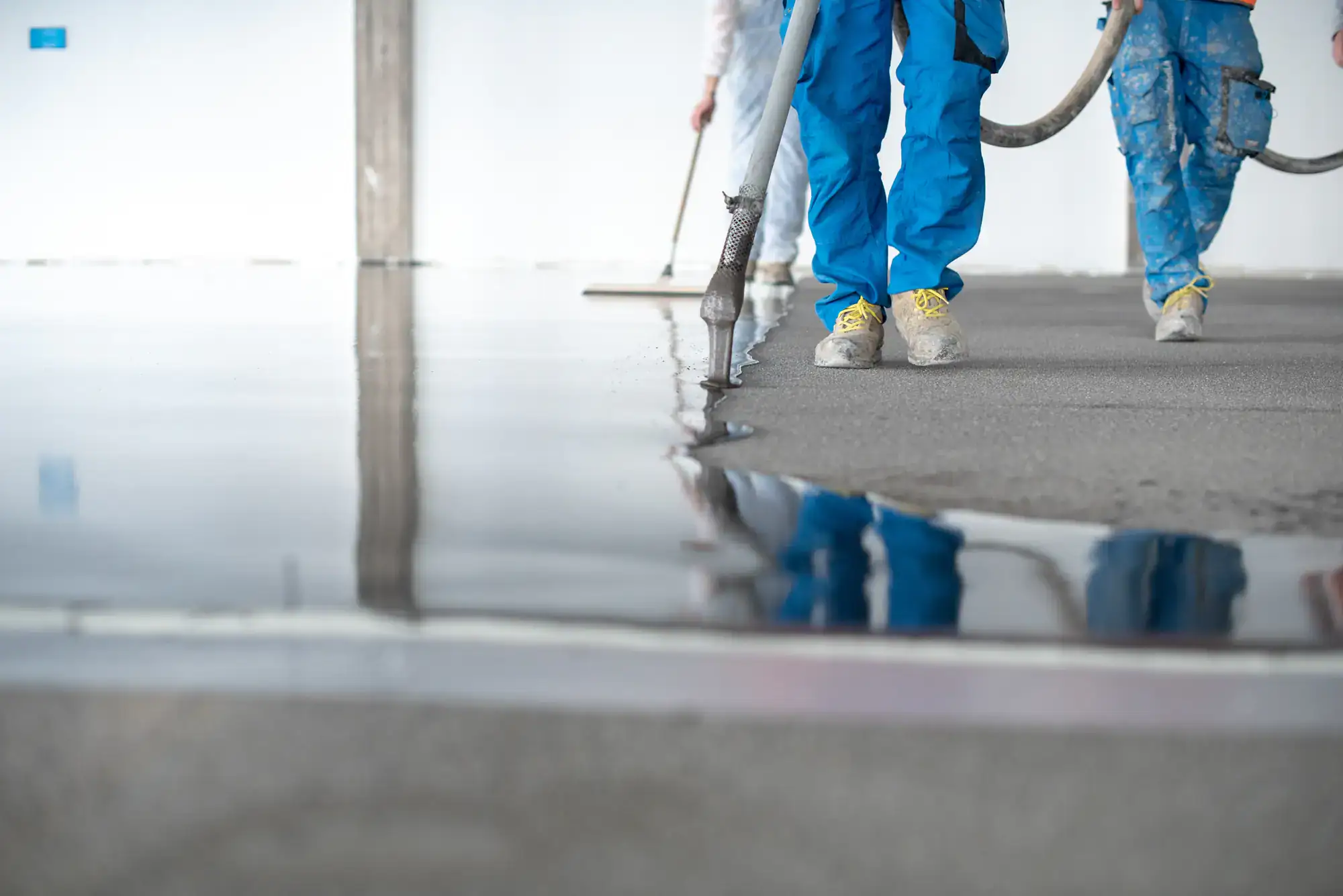
The self-leveling compound goes down using precision equipment that ensures proper thickness and coverage. We monitor curing conditions throughout the process, adjusting for Florida’s humidity and temperature variations. You can walk on the surface in 3-4 hours, with full operational capability restored within 24-48 hours.
Ready to get started?
Commercial Self-Leveling Concrete Crane Landing
Florida’s industrial facilities face conditions that destroy standard flooring systems. High humidity attacks adhesion. Temperature swings cause expansion and contraction. Chemical exposure from operations and cleaning compounds creates ongoing damage.
Your self-leveling concrete system gets engineered for these exact conditions. We use materials from Sherwin Williams and Fosroc that are specifically formulated for Florida’s climate and industrial demands. Chemical resistance gets built in where needed. Moisture management prevents the adhesion failures that plague other installations.
Each project includes proper assessment of your specific operational demands. Heavy machinery areas get reinforcement. Chemical exposure zones get specialized protection. High-traffic areas get durability enhancements. The result is a floor system that actually improves your operational efficiency instead of just looking better.
How fast can you restore operations after self-leveling concrete installation?
You can walk on the surface in 3-4 hours. Light equipment and normal operations resume within 24 hours. Heavy machinery and full operational loads are typically safe within 48 hours, though we verify this with testing based on your specific requirements.
Florida’s humidity affects curing times, which is why we monitor conditions throughout the process and adjust our timeline accordingly. We’ll give you exact timing based on current weather conditions and your operational needs. Most Crane Landing facilities are back to full operations within two days of starting the project.
What makes self-leveling concrete better than just replacing the entire floor?
Self-leveling costs roughly half what full replacement runs, but the real advantage is downtime. Floor replacement shuts down operations for a week or more. Self-leveling typically restores full operations within 48 hours.
The performance is identical—you get a surface with equal or better compressive strength than new concrete. But you avoid the demolition mess, disposal costs, and extended shutdown that comes with replacement. For most industrial facilities, the reduced downtime alone justifies choosing self-leveling over replacement.
Can your self-leveling concrete handle the chemical exposure in our facility?
Yes, but the specific formulation depends on what chemicals you’re dealing with. We engineer each system based on your actual exposure risks—oils, acids, cleaning compounds, or whatever your operations involve.
Our experience with military and government facilities has exposed us to every type of chemical challenge. We’ll assess your specific situation and incorporate the right additives and sealers to ensure long-term chemical resistance. This isn’t guesswork—we have proven formulations for virtually every industrial chemical exposure scenario.
How do you ensure proper adhesion in Florida’s humid climate?
Moisture is the biggest threat to concrete adhesion in Florida. We start every project with moisture testing of your existing concrete. If moisture levels are too high, we address the source before proceeding.
Surface preparation includes proper profiling to create mechanical adhesion, not just chemical bonding. We also use moisture-tolerant primers where needed and adjust our installation schedule to work with humidity levels rather than against them. This preparation work takes time, but it’s what prevents the adhesion failures that plague rushed installations.
What thickness do we need for heavy industrial equipment?
Most industrial applications need 1/4 to 1/2 inch thickness. Areas with severe unevenness or heavy point loads may require up to 4 inches. The exact thickness depends on your current floor condition and equipment requirements.
We’ll measure your existing surface and assess your equipment loads to determine minimum thickness requirements. Thicker applications cost more and take longer to cure, but they’re sometimes necessary to achieve the performance you need. Our assessment gives you the exact specifications needed for your specific operational demands.
Do you work around our operational schedule for emergency repairs?
Absolutely. Most of our industrial clients can’t shut down for floor repairs, so we’re experienced in working nights, weekends, or during scheduled maintenance windows. Emergency response is part of what we do.
For critical repairs, we can often complete work within a single shift to minimize operational impact. Larger projects get phased so essential areas remain operational while we work on other sections. We coordinate everything with your facility management to ensure minimal disruption to your operations while delivering the quality results you need.
Other Services we provide in Crane Landing