


Self-Leveling Concrete in Hialeah, FL
Get Floors Level, Fast, Right
Hear from Our Customers
Industrial Flooring Solutions Hialeah
Your uneven concrete isn’t just an eyesore—it’s costing you money. Every trip hazard is a liability. Every gap under equipment reduces efficiency. Every flooring failure means downtime you can’t afford.
Self-leveling concrete fixes this. You get a smooth, flat surface that’s ready for whatever comes next. Whether you’re prepping for new flooring, need a finished surface that can handle heavy traffic, or want to eliminate those annoying bumps and dips, the result is the same: a floor that works like it should.
The difference is immediate. No more uneven surfaces causing equipment vibration. No more gaps that collect debris. Just a clean, professional foundation that lets you focus on running your business instead of managing floor problems.
Concrete Floor Contractor Hialeah
We’ve been handling South Florida’s unique flooring challenges since 2020. We’ve worked on everything from Coast Guard facilities to Miami International Airport—projects where failure isn’t an option.
Here’s what makes Hialeah different: the humidity. Miami’s air holds 20% more moisture than most places, which means concrete behaves differently here. Standard approaches that work elsewhere often fail in our climate. We use moisture-resistant products from Sherwin Williams and Fosroc specifically because we understand how Florida’s environment affects concrete curing and adhesion.
Our team has completed projects for the City of Doral, US Military facilities, and hundreds of commercial spaces across South Florida. We’re licensed, insured, and manufacturer-certified because when you’re dealing with industrial spaces and commercial properties, there’s no room for shortcuts.
Self-Leveling Concrete Process Hialeah
First, we assess your existing surface. Not all concrete is ready for self-leveling—especially in Florida’s humid climate. We test for moisture levels using ASTM-approved methods and check for any contamination that could prevent proper adhesion.
Next comes preparation. We clean thoroughly, remove any loose material, and create the right surface profile. This step determines whether your floor lasts years or fails in months. We use industrial grinders and vacuum systems because surface prep can’t be rushed.
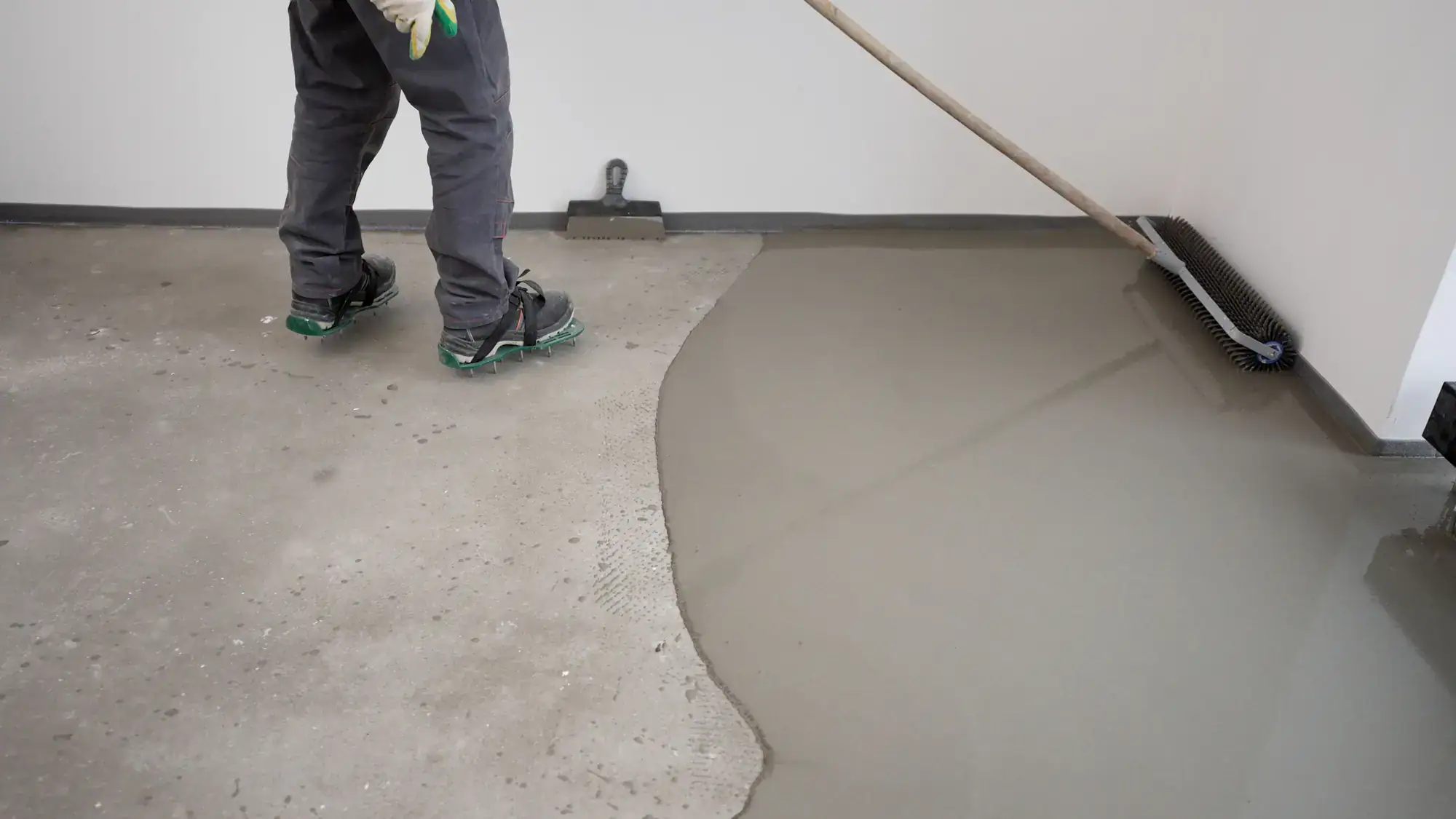
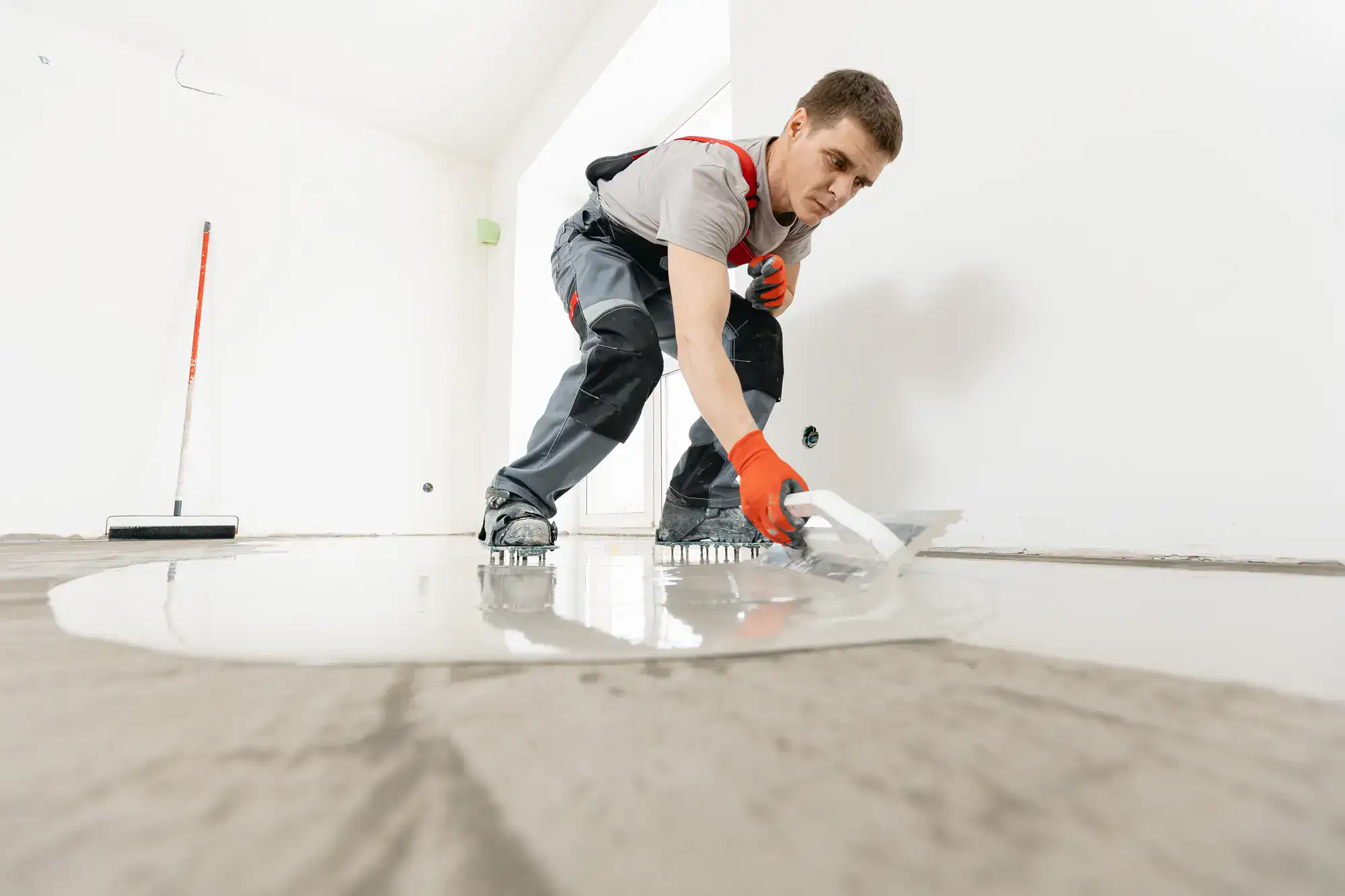
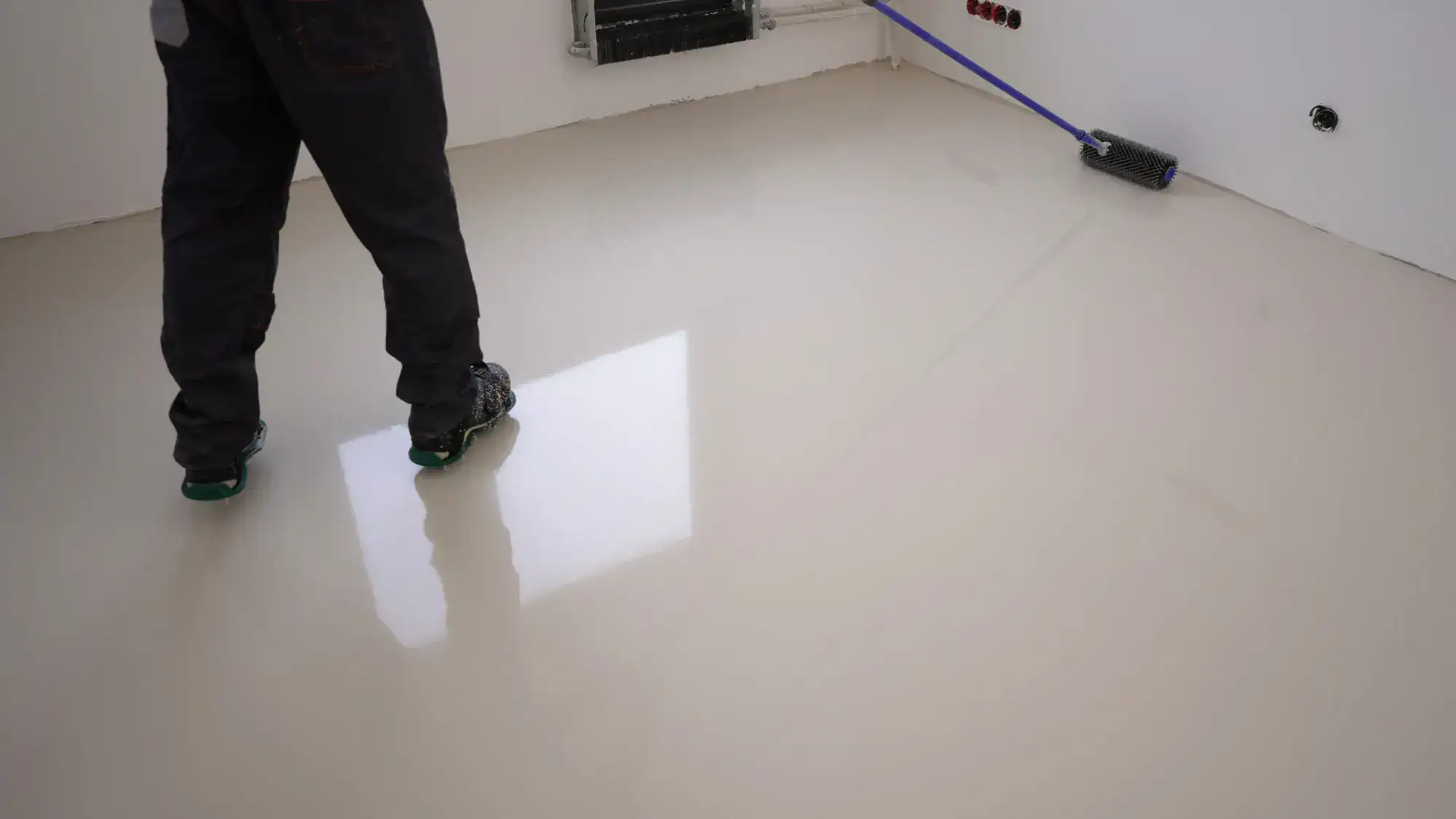
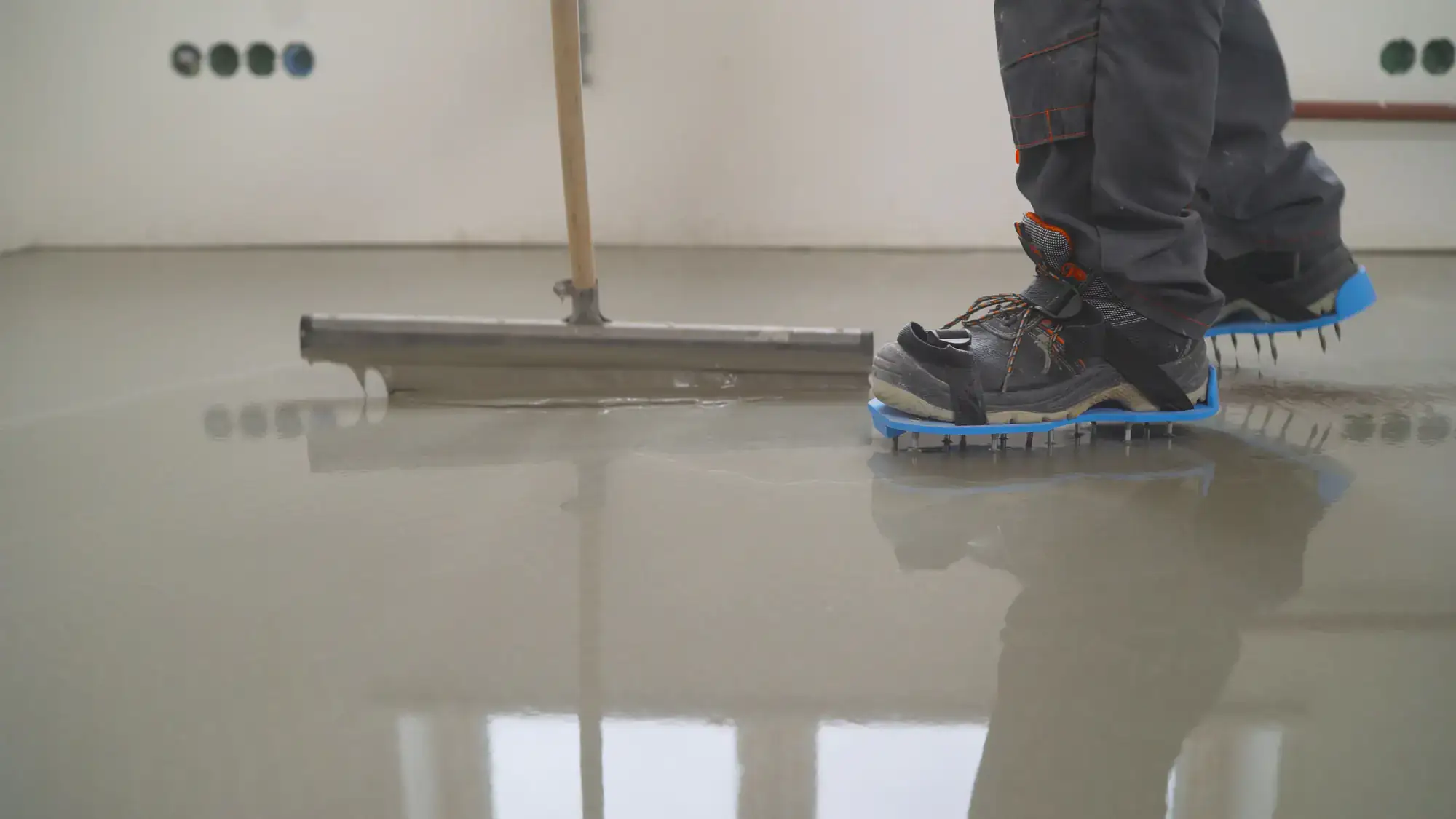
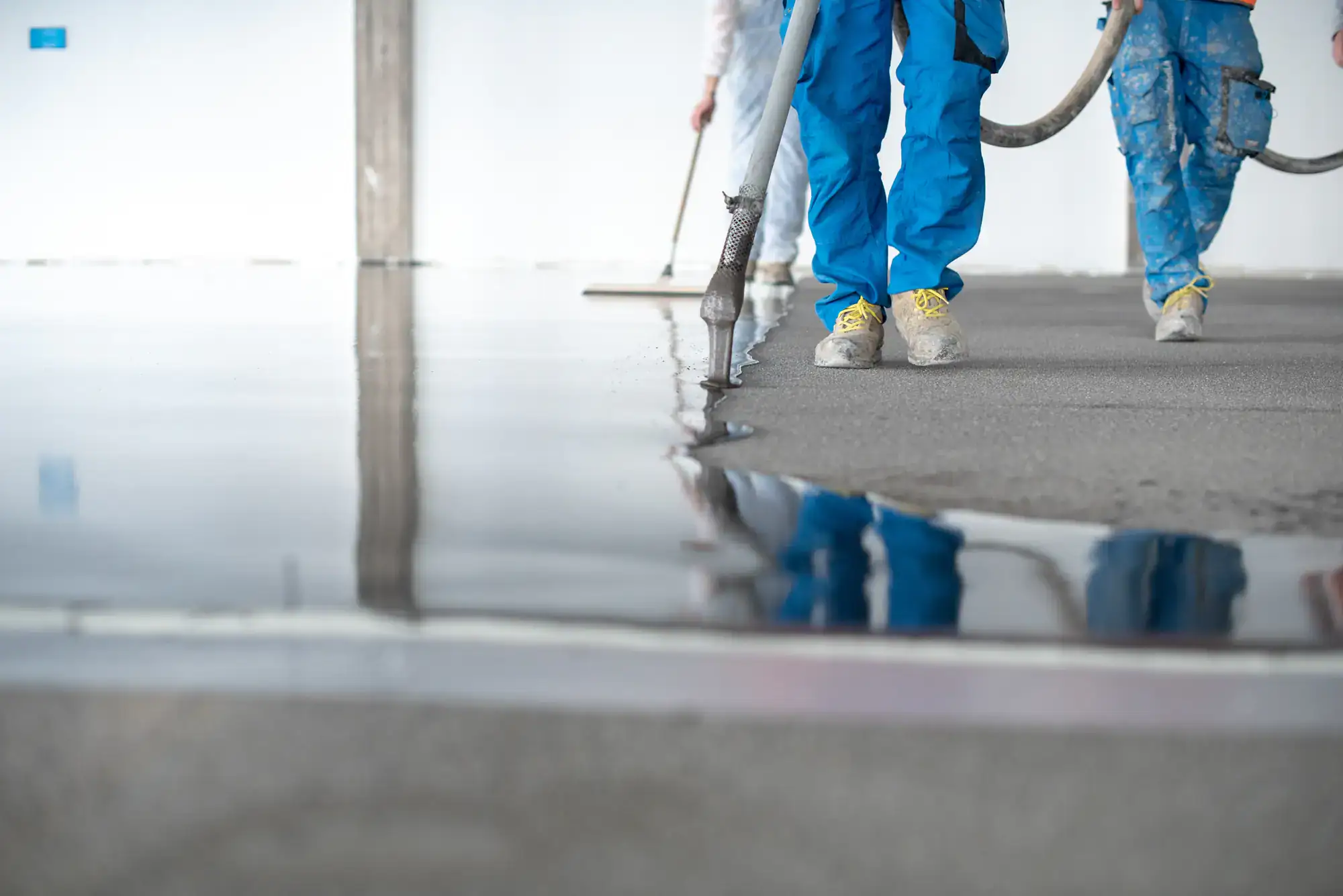
Then we apply the self-leveling concrete. This polymer-modified cement flows like liquid but cures to a compressive strength higher than traditional concrete. It self-levels to eliminate bumps and fills low spots automatically. Most applications are walkable in 3-4 hours and ready for floor coverings within 48 hours.
The final step is quality control. We verify thickness, check for proper cure, and ensure the surface meets your specific requirements before calling the job complete.
Ready to get started?
Smooth Concrete Floors Hialeah
Self-leveling concrete in Hialeah faces unique challenges. The high humidity can slow curing times and affect adhesion if not handled correctly. We use climate-specific primers and moisture-tolerant systems designed for coastal environments.
Our self-leveling solutions work over existing concrete, wood, VCT, ceramic tile, and plywood surfaces. The material can be applied from feather edge to several inches thick in a single pass, eliminating the need for multiple applications. Once cured, it provides an ideal substrate for tiles, vinyl, carpets, epoxy coatings, or can serve as a finished floor in industrial applications.
For Hialeah’s industrial and commercial spaces, this means faster project completion with less disruption. Warehouses can be back to full operation within hours instead of days. Retail spaces can install new flooring without extensive downtime. Manufacturing facilities get level surfaces that improve equipment performance and safety.
The result is a durable, long-lasting surface that resists cracking, chipping, and the moisture-related problems common in South Florida. It’s engineered to handle heavy loads, chemical exposure, and the thermal cycling that comes with Florida’s climate variations.
How long does self-leveling concrete take to cure in Florida’s humidity?
In Florida’s high humidity, self-leveling concrete is typically walkable in 3-4 hours and ready for most floor coverings within 48 hours. However, humidity levels above 80% can extend these times significantly.
We use moisture-resistant formulations and climate control during application to ensure proper curing. Industrial dehumidifiers may be used during the curing phase to prevent premature exposure to airborne moisture, which can cause surface defects or adhesion problems.
The key is controlling the environment during those critical first hours. Miami’s air holds 20% more moisture than the national average, so standard curing times don’t always apply. We adjust our approach based on current conditions and use products specifically designed for coastal climates.
Can self-leveling concrete be applied over existing concrete floors?
Yes, self-leveling concrete can be applied directly over existing concrete, but proper preparation is essential. The existing surface must be structurally sound, clean, and free of contaminants like oil, grease, or curing compounds that could prevent adhesion.
We test the existing concrete for moisture content using ASTM F2170 standards and check for alkaline salts that can cause adhesive failures. If moisture levels are too high—common in Florida—we address the source before proceeding.
Surface preparation typically involves grinding or acid etching to create proper texture for bonding. Any cracks or significant damage must be repaired first. The existing concrete should be at least 28 days old and fully cured. When done correctly, self-leveling concrete bonds permanently to the substrate and performs as well as new construction.
What thickness of self-leveling concrete do you recommend for commercial spaces?
For most commercial applications in Hialeah, we recommend 1/4 inch to 1.5 inches thickness, depending on the existing surface condition and intended use. Light commercial spaces like offices or retail typically need 1/4 to 1/2 inch to achieve proper leveling.
Industrial facilities with heavy equipment or forklift traffic often require 3/4 inch to 1.5 inches for adequate durability. The material can be applied in a single pass up to 4 inches thick if needed for severe leveling issues.
Thickness also depends on the substrate. Concrete surfaces usually need less material than wood or tile substrates. We calculate the exact amount needed after measuring elevation differences across your floor. Too thin and you won’t get proper strength; too thick wastes material and increases cost unnecessarily.
How does Florida’s climate affect self-leveling concrete performance?
Florida’s high humidity and temperature swings create unique challenges for self-leveling concrete. Humidity above 80% slows chemical curing and can cause surface defects. Heat above 90°F accelerates curing too quickly, potentially causing cracking or poor surface finish.
We address this by using moisture-resistant products and climate-specific application techniques. Vapor barriers may be required to prevent ground moisture from affecting the cure. We also schedule applications during optimal weather conditions when possible.
Coastal salt air can also affect long-term performance. We use corrosion-resistant reinforcement and sealers designed for marine environments. The polymer-modified formulations we use are specifically engineered to handle thermal cycling and moisture exposure common in South Florida. Proper preparation and product selection make the difference between a floor that lasts decades versus one that fails within years.
What’s the difference between self-leveling concrete and regular concrete for flooring?
Self-leveling concrete contains polymer modifiers and superplasticizers that allow it to flow like liquid while maintaining strength. Regular concrete requires extensive manual leveling, screeding, and finishing—work that’s difficult to do perfectly over large areas.
Self-leveling concrete eliminates human error in the leveling process. It automatically finds level and creates a smooth surface without troweling. The compressive strength is typically higher than regular concrete, and it can be applied much thinner—often 1/4 inch versus several inches for regular concrete.
Installation time is dramatically reduced. What might take days with regular concrete can be completed in hours with self-leveling. There’s no need for forms, screeds, or extensive finishing work. The material cures faster and can accept foot traffic much sooner, reducing project downtime significantly.
Do you provide moisture testing before self-leveling concrete installation?
Yes, moisture testing is mandatory for all our self-leveling concrete projects in Florida. We use both calcium chloride testing (ASTM F1869) and relative humidity testing (ASTM F2170) to measure moisture emission rates and internal slab conditions.
Florida’s high humidity means concrete often retains more moisture than acceptable limits. Trapped moisture can cause blistering, delamination, or complete coating failure. We test multiple areas across the floor to identify problem zones.
If moisture levels exceed manufacturer specifications, we address the source before proceeding. This might involve extended drying time, vapor barriers, or moisture-mitigating primers. The testing process takes 60-72 hours, but it prevents expensive failures later. We also maintain controlled environmental conditions during testing—75°F ± 10°F with 50% ± 10% relative humidity—to ensure accurate results.
Other Services we provide in Hialeah