


VCT Removal in Golf, FL
Safe VCT Removal Without Subfloor Damage
Hear from Our Customers
Professional Flooring Removal Golf FL
You’re looking at old VCT that needs to go, but you know removal isn’t simple. The adhesive underneath is stronger than most people realize, and one wrong move damages your subfloor – turning a flooring project into an expensive repair nightmare.
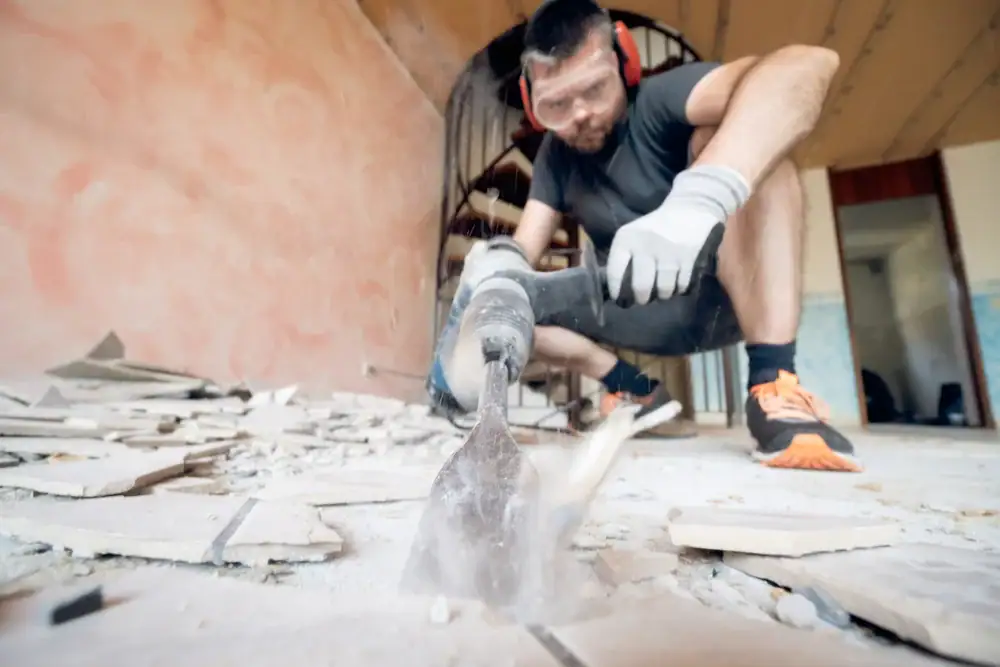
Here’s what happens when we handle your VCT removal properly. Your subfloor stays intact and smooth. No gouges, no adhesive residue, no dust coating everything in sight. We use professional-grade equipment that lifts tiles and adhesive cleanly, then grind away any remaining thinset until your surface is perfectly prepared.
Your new flooring installer will thank you. More importantly, your new floor will last longer because it’s going down on a properly prepared surface. No bubbles, no premature failure, no callbacks.
Trusted Golf FL Flooring Contractor
We’ve been serving Golf and surrounding South Florida communities since 2020, but our experience runs deeper. We’ve completed projects for the US Coast Guard, Army facilities, and municipal buildings throughout the region – clients who don’t accept shortcuts or subpar work.
Golf’s commercial properties and homes deserve the same level of precision we bring to government contracts. Whether you’re renovating a retail space on Golf Road or updating flooring in your home, we approach every project with the same attention to detail that earned us contracts with the most demanding clients in the region.
Our veteran-owned company operates on a simple principle: do the job right the first time. No surprises, no hidden costs, no damage to clean up after we leave.
VCT Removal Process Golf Florida
First, we assess your specific situation. VCT installed before the 1970s requires asbestos testing – we handle that coordination if needed. For newer installations, we move straight to setup, which includes dust containment barriers and floor protection for areas we’re not working on.
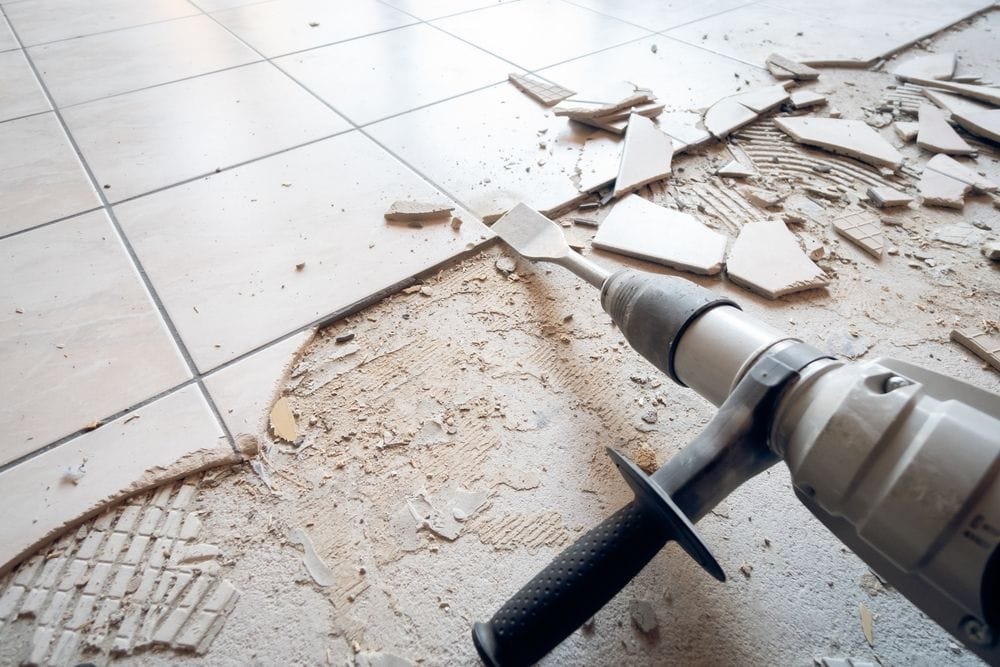
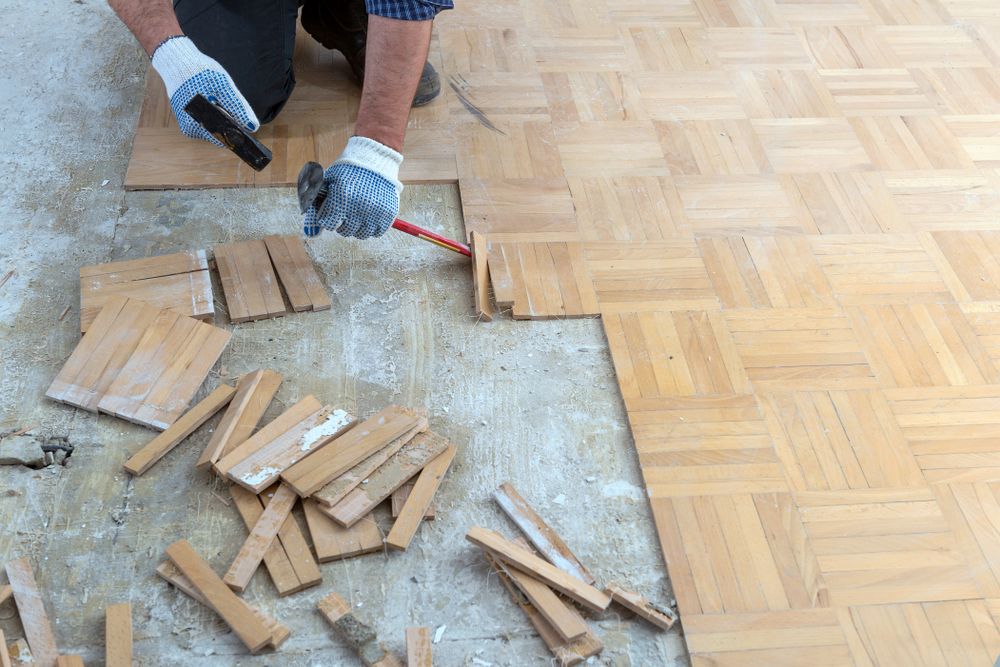
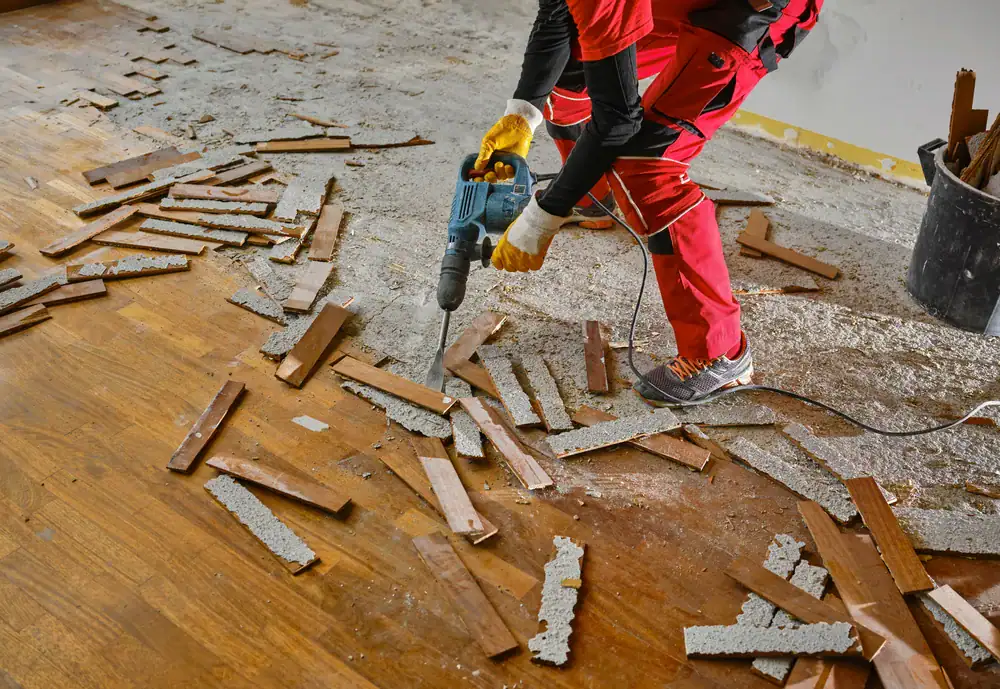
Next comes the actual removal. We use ride-on scrapers for large areas and precision walk-behind equipment for detailed work. The tiles come up first, then we address the adhesive layer systematically. Our grinders remove every trace of thinset and adhesive, leaving your subfloor smooth and ready.
Finally, cleanup and inspection. We vacuum all debris, remove our protective barriers, and do a final walk-through with you. All removed materials get properly disposed of – nothing stays on your property. You’re left with a clean, prepared surface ready for whatever flooring comes next.
Ready to get started?
Complete VCT Removal Golf FL
Your VCT removal project includes complete tile and adhesive removal, dust containment throughout the process, and thorough debris cleanup. We bring our own equipment – no need for you to rent or buy anything.
Golf’s mix of older commercial buildings and newer residential properties means we see every type of VCT installation. Older buildings often have multiple layers of flooring, while newer construction typically has cleaner, more straightforward removal. Either way, we’ve handled it before.
The South Florida climate creates its own challenges. High humidity can make adhesives more stubborn, and dust control becomes even more critical in our enclosed spaces. Our equipment and processes account for these local conditions, ensuring consistent results regardless of the specific challenges your building presents.
How long does VCT removal take for a typical commercial space?
Removal speed depends on several factors, but our professional equipment typically handles 200-400 square feet per hour for VCT, depending on adhesive type and subfloor condition. A standard 2,000 square foot retail space usually takes 1-2 days for complete removal and surface preparation.
The timeline also depends on what we find underneath. Single-layer VCT over concrete moves faster than multiple flooring layers or installations over wood subfloors. We’ll give you a realistic timeline during our initial assessment, and we stick to it – your business schedule matters.
For Golf area businesses, we often work evenings or weekends to minimize disruption to your operations. Emergency projects get priority scheduling when needed.
What happens if there’s asbestos in my old VCT flooring?
VCT installed before 1980 may contain asbestos, particularly in the adhesive layer. We coordinate professional testing before starting any removal work on older installations – this protects both you and our crew.
If asbestos is present, the project shifts to certified hazmat contractors who follow strict EPA protocols. This isn’t something to handle yourself or trust to unqualified contractors. The health risks are serious, and improper handling can create liability issues for your property.
Most Golf area properties with VCT were built after 1980, so asbestos is less common. But we test when there’s any doubt – better safe than sorry on something this important.
Will VCT removal damage my concrete subfloor underneath?
Professional VCT removal shouldn’t damage your subfloor when done correctly. We use specialized scrapers and grinders designed specifically for this work – the right tools make all the difference.
The key is understanding how different adhesives respond to removal techniques. Some soften with heat, others require mechanical removal, and some need chemical assistance. Amateur contractors often use the wrong approach, gouging concrete or leaving adhesive residue that prevents proper bonding of new flooring.
Our experience with everything from Coast Guard facilities to Golf area homes means we’ve seen every type of VCT installation. We know which techniques work for each situation without risking subfloor damage.
How do you handle dust control during VCT removal?
Dust containment is critical for VCT removal, especially in occupied buildings. We set up plastic barriers to isolate the work area and use industrial-grade vacuum systems that capture dust at the source.
Our equipment includes HEPA filtration to handle fine particles that regular shop vacuums miss. This is particularly important in Golf’s commercial spaces where air quality affects employees and customers, or in homes where family members might have respiratory sensitivities.
We also coordinate with your HVAC system – sometimes it’s better to shut down air circulation during removal to prevent dust spread. Every situation is different, but dust control is always part of our planning process.
Can you remove VCT from areas with heavy equipment or fixtures?
Yes, we regularly work around heavy equipment, built-in fixtures, and tight spaces. Golf’s commercial properties often have equipment that can’t be moved, so we’ve developed techniques for precision removal in constrained areas.
Walk-behind scrapers handle areas where our ride-on equipment won’t fit. Hand tools take care of corners and edges around immovable fixtures. The process takes longer in these situations, but the results are the same – complete removal without damage to surrounding areas.
We coordinate with you on any equipment that can be temporarily relocated to make the job more efficient. Sometimes moving a few pieces of equipment saves hours of detailed hand work.
What preparation do I need to do before VCT removal starts?
Minimal preparation is required on your part. Clear the area of movable furniture and equipment, and ensure we have access to electrical outlets for our equipment. We handle everything else, including protective covering for adjacent areas.
For Golf area businesses, coordinate with employees about work schedules and access requirements. We can work around your business hours, but some coordination helps the project run smoothly.
If your building has special ventilation requirements or security protocols, let us know during scheduling. Government and healthcare facilities often have specific requirements we need to plan for, and we’re experienced with these situations.
Other Services we provide in Golf